"The AI Slop machine is now here, old man!"
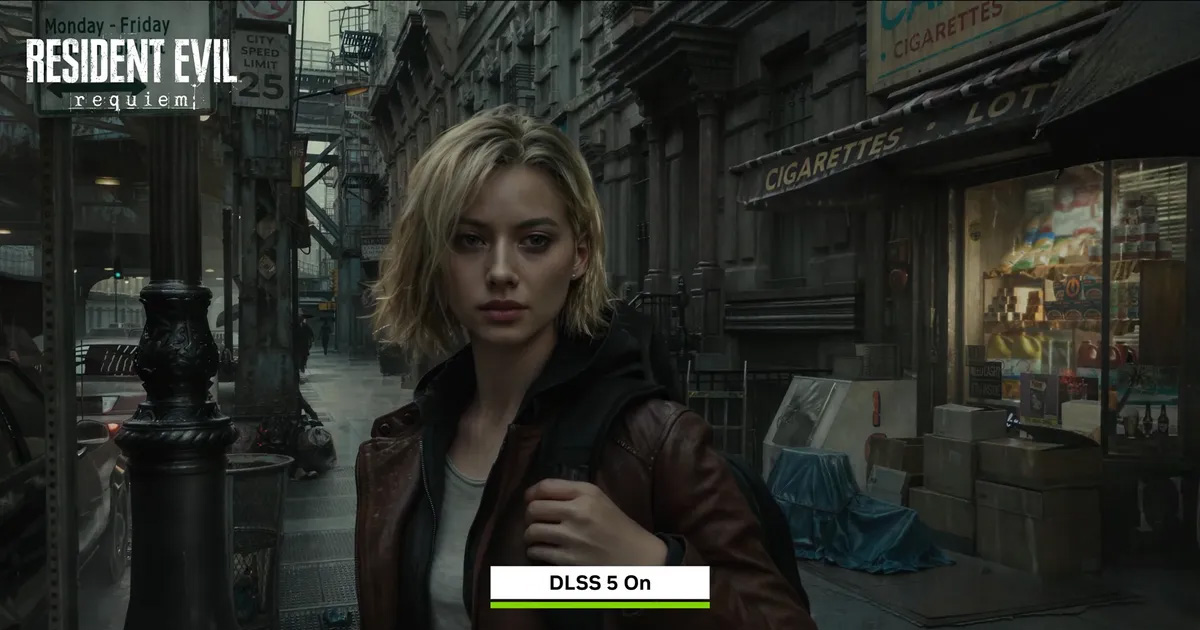
NVIDIA took the stage at GTC 2026 and called DLSS 5 "the biggest breakthrough in computer graphics," but things seem to have backfired badly as now many gamers and related enthusiasts aren’t liking it, in fact, it has now been slapped as AI slop, which is the worst insult one could now take in 2026. Let’s dive in!
NVIDIA DLSS 5
What Even Is DLSS?
DLSS, which stands for Deep Learning Super Sampling, is Nvidia's AI-powered upscaling technology that has been baked into its RTX graphics cards since 2018. The basic premise is that, instead of rendering a game at your monitor's full resolution, which puts enormous strain on the GPU, DLSS renders the game at a lower resolution and then uses AI to upscale the image back up to look sharper. If done well, the result you get is higher frame rates with image quality that's close enough to native rendering that it would go unnoticed.
But when it first launched, gamers weren't impressed. Early versions of DLSS were noticeably blurry and soft compared to native rendering, and the technology had a reputation problem it couldn't shake for a while. But later versions, particularly DLSS 3 and the more recent DLSS 4 and 4.5, got very good. Frame generation, which creates entirely new frames using AI to push frame rates even higher, became a real and useful feature for supported games. By the time DLSS 4.5 landed, it was widely regarded as a mature technology. But with DLSS 5, the trouble has now started.
- Also, read
What DLSS 5 Changes
Every previous version of DLSS, from 1 through 4.5, was working at the pixel level. It was always about taking what the GPU rendered and making it look better or run faster. The underlying game visuals, the character models, the textures, the art direction, all of that was untouched. DLSS was thus a finishing layer on top of what the developers made.
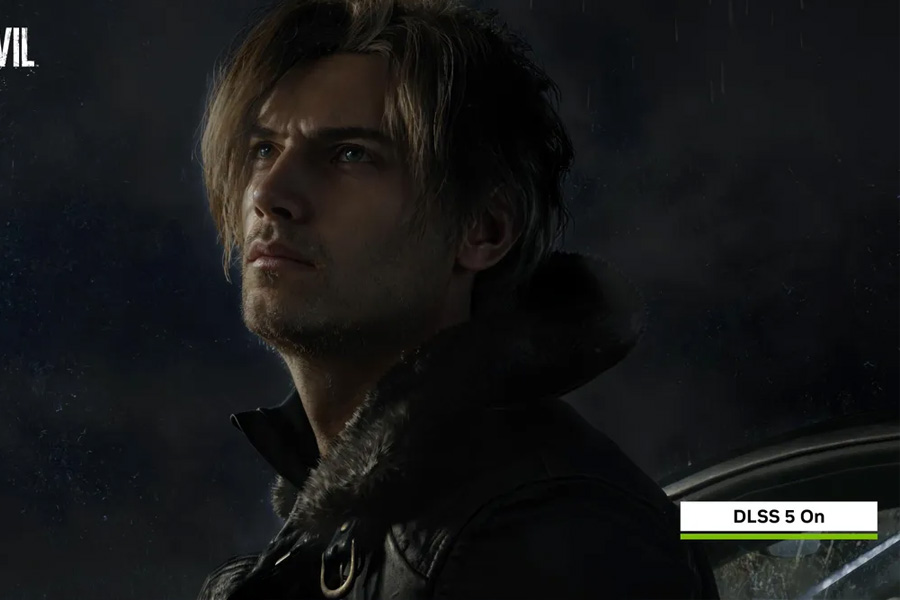
DLSS 5 goes slightly, or even a level deeper. Instead of working on rendered pixels, it deconstructs the 3D elements of a scene individually, breaks down characters into components like skin, hair, and clothing, and then uses a generative AI model to render them with more detail than the original assets contain.
The Demo
NVIDIA's showcase footage for DLSS 5, shown during a two-hour GTC keynote, lasted about one minute. The before-and-after clips showed the technology applied to Resident Evil Requiem, Starfield, and a few other games. The character Grace Ashcroft from Resident Evil was the most-shared example, and the comparison images showed her face redrawn by the AI into something noticeably different from the original character model. It had a very smooth skin, altered features, and pore textures that are very typical of what you generally find in a stock AI image generator. This makes the new DLSS 5 version look very much like a beauty filter.
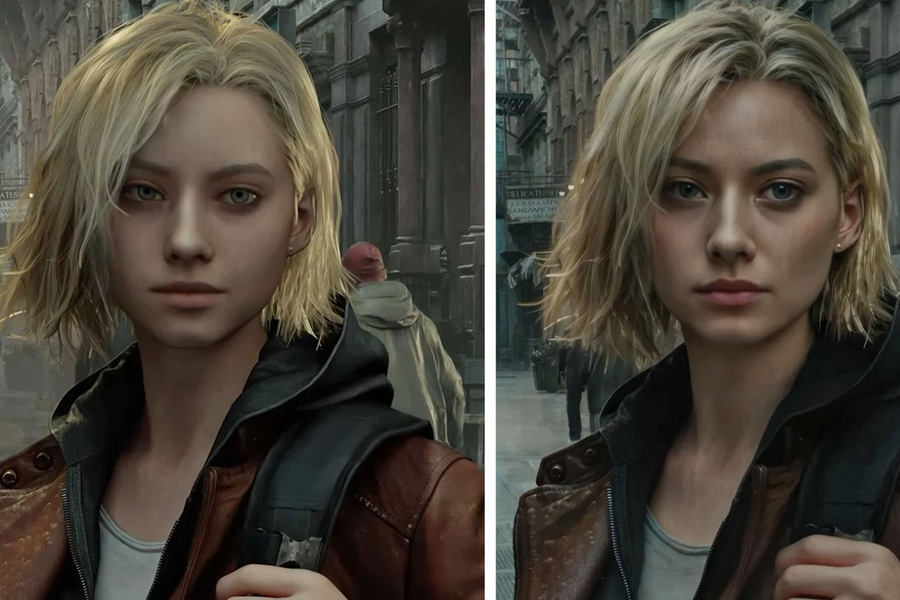
And because of that, widespread disapproval spread within hours. The phrase "AI slop", which is one of the most devastating insults you can throw at someone for using AI-generated media, has now become rampant, and it seems the American company is itself not liking it. YouTuber The Sphere Hunter called it "a betrayal of these games' artistry" and described it as "painting over handcrafted, intentional 3D art with shiny, wrinkly, sunken-in, porous, puckered, fraudulent, filtered nonsense." Meanwhile, the Indie developer Guselect said on socials that it was: "bad ending: now every game is AI slop." Artists and developers were also particularly vocal. Meanwhile, one commentator called it basically "Scarlett Johansenification of videogames."
This is so disrespectful to the intentional art direction of devs. If devs wanted to lean in to hyper realism they would. This also drastically changes key aspects of visuals like character features, focal points, lighting and so on. What a terrible invention. Nvidia should shelve this one 😭
[image or embed]— Karla Ortiz (@kortizart.bsky.social) 17 March 2026 at 03:06
"Gamers Are Completely Wrong”
At a Q&A following the reveal, Huang responded to the backlash by saying the critics were "completely wrong." He reiterated that developers have full control over how DLSS 5 applies, that it aligns with their original artistic intent through the game's own data, and that nothing about it is forced on anyone.
Telling a large and already-frustrated gaming community that they are completely wrong about something they watched with their own eyes was definitely not a great move, regardless of how technically accurate the explanation was. One forum commenter put it simply: "The customer is never wrong in matters of taste." Another one added: "When people question that direction, tell everyone they're wrong. People love that."
Behind the Backlash…
But it must be said that the technical arguments about developer control almost miss the point when it comes to what's actually driving the reaction. The concern most people are raising has been regarding the question of homogenization. That every game, regardless of its intended visual identity, will eventually get pushed through the same AI model and start to look like variations of the same thing.
NVIDIA DLSS 5 Availability and Conclusion
DLSS 5 is set to launch in fall 2026, with support confirmed for games including Resident Evil Requiem, Starfield, Hogwarts Legacy, Assassin's Creed Shadows, Phantom Blade Zero, and around a dozen others. While the YouTube reveal currently sits at 84% dislikes, the real test will come when players can use it on their own hardware, in actual gameplay, with implementations that developers have had time to properly tune.
- Meanwhile, check out our review of the X8 Pro and X8 Pro Max
Article Last updated: March 22, 2026



![Top Ride Sharing Apps in Nepal [Updated]](https://media.gadgetbytenepal.com/2026/03/Top-Ride-Sharing-Apps-in-Nepal.jpg)