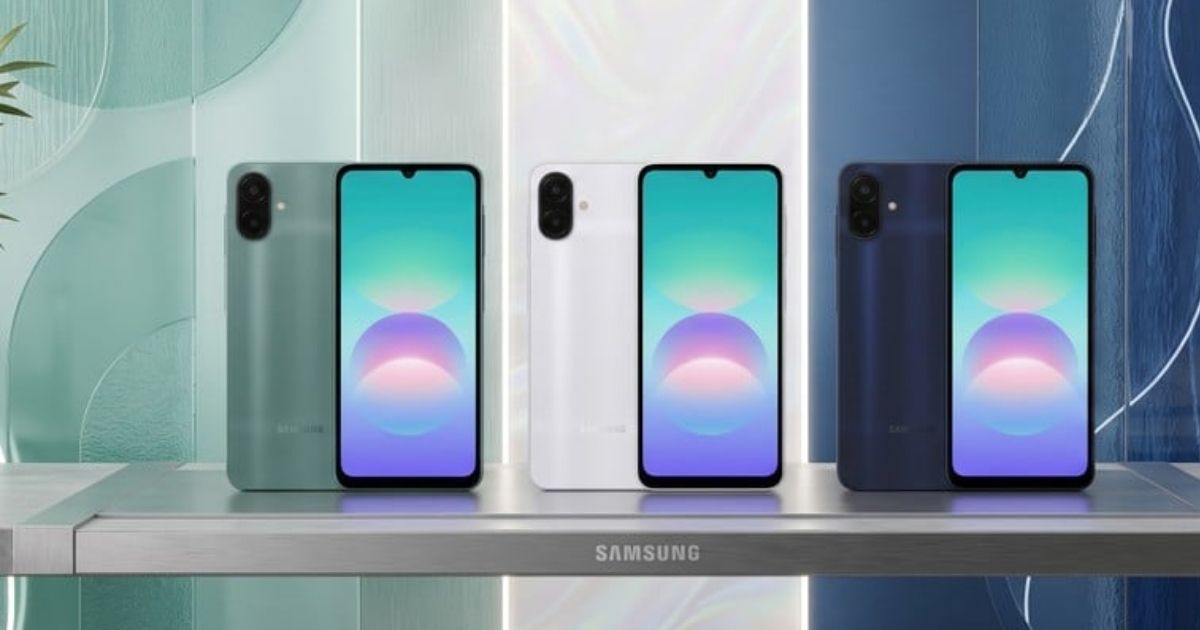
Looking for the best premium midrange smartphones in Nepal? Explore our updated 2026 list of premium midrange phones offering powerful performance, impressive cameras, and stunning displays.

If you’re looking for the best premium midrange smartphones in Nepal, this guide covers our top recommendations you can buy right now. As of 2026, the premium midrange segment continues to grow rapidly, offering excellent value for money as flagship prices climb well beyond NPR 100,000. With devices like the Samsung Galaxy S26 Ultra priced at NPR 212,999 and the latest iPhones costing even more, many buyers are turning to upper midrange smartphones that deliver near-flagship performance, premium designs, capable cameras, and fast charging without the flagship-level price tag.
How to find the best premium midrange phones in Nepal?
This segment used to be dominated by brands like Apple, Samsung, Xiaomi, and OnePlus before. And phones in this category basically deliver a premium smartphone experience at a sub-flagship price. So things like a high refresh rate OLED display, a great set of cameras with OIS, and powerful performance are all pretty common in this space. But these days, Vivo, Nothing, and POCO have come up with some really interesting phones as well. Unfortunately, Apple's base iPhone 17 and iPhone 16 cost a significant amount of money here in Nepal. So you won't be seeing an iPhone in this list. Anyway, for now, let's look at some of the best premium midrange phones that are currently available in Nepal.
Best premium midrange phones in Nepal:
6. Samsung Galaxy A57
We're kicking off our list of the best premium midrange phones in Nepal with Samsung's Galaxy A57. This is the most premium entry in the “Galaxy A” lineup, and there are a couple of things we really like about this phone. Like its design, which kinda resembles the more expensive Galaxy S26 lineup. And besides just looking premium, the Galaxy A57 also feels quite premium to hold because of its glass sandwich build, Gorilla Glass Victus+ protection, and an IP68 rating to round things off.
And it probably goes without saying that this Samsung-made phone has a great display. It's still not an LTPO panel that can dynamically switch between 1 – 120Hz to save power, but it gets plenty bright, the colors look amazing—and overall—we had a blast interacting with this screen. The typing experience on the Galaxy A57 deserves a special shoutout as well, thanks to its tight, crisp haptics.
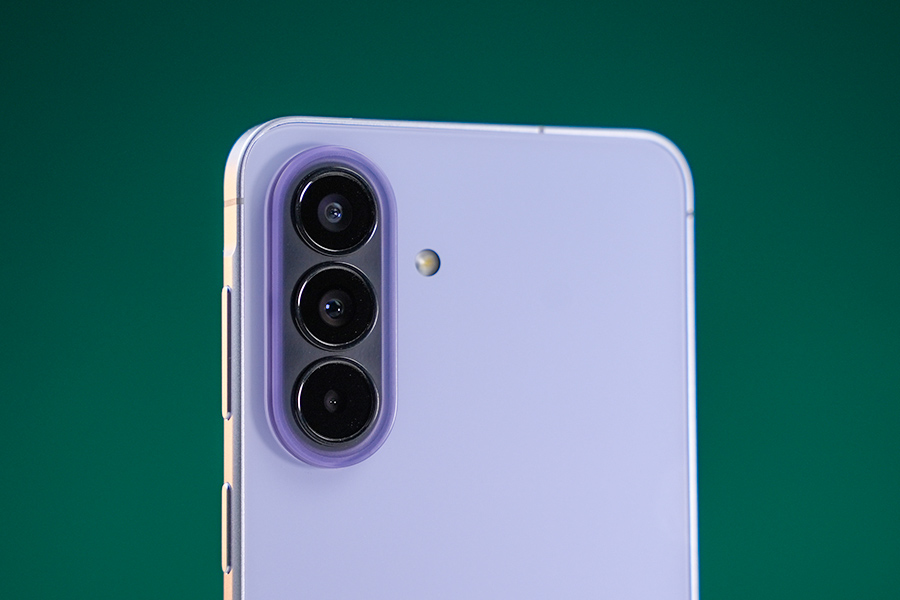
You probably already know this, but Samsung's "One UI" is among our favorite Android skins as well. And the new Android 16-based One UI 8.5 on the Galaxy A57 is easily the most refined version of One UI we've seen. It actually reminds me of that Radiohead song… “Everything In Its Right Place”. That's exactly how I feel about One UI 8.5.
But of course, the Galaxy A57 is not without its flaws. And the biggest weakness we discovered about this guy is in the camera department.
Because other than its 50MP primary and 12MP front camera, there's hardly anything worth mentioning. Samsung still doesn't trust us with a telephoto camera on a “Galaxy A” phone, while other brands have been aggressively adopting a zoom camera on their premium midrange phones lately. Likewise, although the Exynos 1680 chip powering the Galaxy A57 is powerful enough for handling casual everyday work, its gaming performance is easily the worst in this segment.
| Pros | Cons |
|---|---|
| A premium design | Average cameras |
| Best-in-class software experience | Subpar gaming experience |
| Nice display, decent battery life |
Samsung Galaxy A57 Specifications:
- Design, build: 161.5 x 76.8 x 6.9 mm, 179 gm, IP68 rated
- Display: 6.7-inch AMOLED screen, FHD+, 120Hz refresh rate, Corning Gorilla Glass Victus+
- Chipset: Samsung Exynos 1680 (4nm mobile platform)
- Memory: 8/12GB RAM, Up to 512GB storage (non-expandable)
- Software & UI: One UI 8.5 on top of Android 16
- Rear Camera: Triple (50MP main, 12MP ultrawide, 5MP macro)
- Front Camera: 12MP (hole-punch)
- Security: Fingerprint sensor (optical in-display)
- Battery: 5000mAh with 45W charging (power adapter not provided)
- Samsung Galaxy A57 Price in Nepal: NPR 84,999 (8/256GB) | NPR 89,999 (12/256GB)
- Read our Samsung Galaxy A57 review


5. OnePlus Nord 6
Next up is the upcoming OnePlus Nord 6. It's the successor to our favorite midrange phone of last year—the OnePlus Nord 5—so there's a lot riding on this thing as well. And it looks like OnePlus has done its homework to make the Nord 6 a proper upgrade over last year's model.
For starters, it is now powered by Qualcomm's new Snapdragon 8s Gen 4 chip. Which brings notable performance upgrades over Snapdragon 8s Gen 3 on the OnePlus Nord 5. And if you're a gamer, the Nord 6 should definitely be on your radar since it has a 165Hz display, and OnePlus has also optimized multiple popular titles like PUBG, Call of Duty, and Free Fire. Just like on the more expensive OnePlus 15R (review) and OnePlus 15 (review).

The battery life is another thing to look forward to on the OnePlus Nord 6. Its global variant already has a massive 7,500 mAh battery, but if OnePlus Nepal decides to bring its Indian model, you can expect multi-day battery life even under extensive usage. Since the Nord 6's Indian variant has a ridiculous 9,000 mAh battery!
The Nord 6 also looks a lot cleaner than before, but it seems the camera is once again where OnePlus has dropped the ball. There's still no telephoto lens onboard, you still get a measly 8MP ultrawide shooter, whereas the selfie camera has been downgraded from a 50MP sensor to a 32MP unit this time.
| Pros | Cons |
|---|---|
| 165 fps gaming! | Weak camera setup |
| An easy multi-day battery life | A bit overpriced |
| A clean, robust design |
OnePlus Nord 6 Specifications:
- Design, build: 162.5 x 77.5 x 8.5 mm, 217 gm, IP66 + IP68 + IP69 + IP69K rated
- Display: 6.78-inch AMOLED screen, FHD+, 165Hz refresh rate, Crystal Guard protection
- Chipset: Snapdragon 8s Gen 4 (4nm mobile platform)
- Memory: 8/12GB LPDDR5X RAM, 256GB UFS 4.1 storage (non-expandable)
- Software & UI: OxygenOS 16 on top of Android 16
- Rear Camera: Dual (50MP main, 8MP ultrawide)
- Front Camera: 32MP (hole-punch)
- Security: Fingerprint sensor (optical in-display)
- Battery: 7500mAh with 80W charging (power adapter not provided)
- OnePlus Nord 6 Price in Nepal: NPR 89,999 (8/256GB) | NPR 100,999 (12/512GB)
4. POCO X8 Pro Max
The bronze medal on our list of best premium midrange phones in Nepal goes to the new POCO X8 Pro Max. This is the first “Pro Max” phone POCO has launched, and we gotta say, it's a damn fine attempt at delivering that “Pro Max” experience, as the name suggests.
Starting with its battery life, since the POCO X8 Pro Max is rocking a gigantic 8,500 mAh battery. And we were honestly struggling to drain its battery 'cause this thing would go on and on for days at a time. Managing an impressive 12 hours of screen time under our usage. The X8 Pro Max fills up just as quickly thanks to its 100W charging support.

This is also among the best options on this list of premium midrange phones in Nepal, if gaming is your #1 priority. POCO X8 Pro Max has Mediatek's Dimensity 9500S chip inside, and we were easily playing the most demanding games at the highest settings here. From hitting 120 fps on PUBG and MLBB or a steady 60 fps on Genshin Impact. It stayed perfectly nice and cool as well, so yeah, those with gaming in their mind can confidently put this thing on their shopping list.
We were quite impressed by its clean design language, too. The RGB lights in the camera ring are a nice, unique touch—but besides that—this is a very nice-looking phone. But as you might expect, its cameras are simply not that great for the price. Just like the Galaxy A57 and the OnePlus Nord 6 before it, the X8 Pro Max doesn't feature a telephoto camera. And all in all, POCO simply didn't impress us with the camera experience here. Be it in photos or videos.
| Pros | Cons |
|---|---|
| Excellent gaming experience | Weak cameras |
| Unbelievable battery life | HyperOS still needs some refinement |
| A clean design |
POCO X8 Pro Max Specifications:
- Design, build: 162.9 x 77.9 x 8.2 mm, 218 gm, IP68 + IP69K rating
- Display: 6.83-inch AMOLED screen, 1.5K resolution, 120Hz refresh rate, Corning Gorilla Glass 7i
- Chipset: Dimensity 9500s (3nm mobile platform)
- Memory: 12GB LPDDR5X RAM, 256/512GB UFS 4.1 storage (non-expandable)
- Software & UI: HyperOS 3 on top of Android 16
- Rear Camera: Dual (50MP main, 8MP ultrawide)
- Front Camera: 20MP (hole-punch)
- Security: Fingerprint sensor (ultrasonic in-display)
- Battery: 8500mAh with 100W charging (100W power adapter provided)
- POCO X8 Pro Max Price in Nepal: NPR 79,999 (12/256GB) | NPR 89,999 (12/512GB)
- Read our POCO X8 Pro Max review
3. Nothing Phone (4a) Pro
We're also including the newly launched Nothing Phone (4a) Pro here. Nothing has been absolutely killing it in the midrange and upper midrange space lately, and the Phone (4a) Pro continues that tradition just fine. Even though Nothing did make a sorta controversial choice with its design.
So as you can see, the Phone (4a) Pro doesn't have the beloved “Glyph Matrix" like the one we saw on its predecessor. The Nothing Phone (3a) Pro (review). Instead, this thing has a circular monochromatic LED display called “Glyph Matrix” that made its debut with the infamous Nothing Phone 3 (review). Actually, the Glyph Matrix on the Phone (4a) Pro is 57% larger than on Nothing's flagship phone.
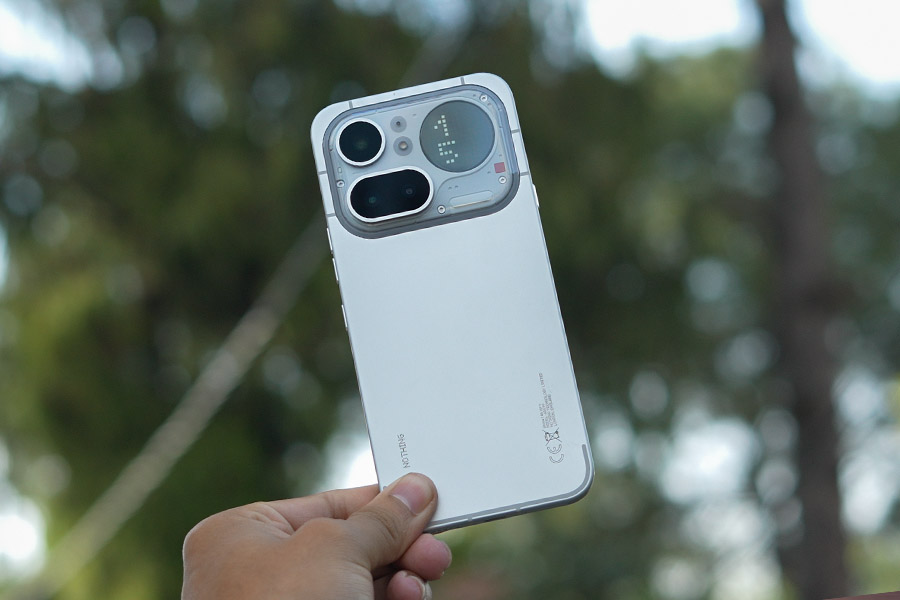
And just looking at its back design, we can't help but notice how top-heavy it is. It doesn't have that transparent design language like the regular Nothing Phone 4a (review), so the top half of the phone looks really busy. But of course, at the end of the day, design is a subjective thing, and it's entirely up to you whether you vibe with the Phone (4a) Pro's look or not.
Besides design, Nothing's software experience is also among the best in the business. Although we can't really recommend this one if you play a lot of games, ‘cause its Snapdragon 7 Gen 4 chip doesn’t really compete against some other phones I've discussed before.
That said, this is the first phone on our list of the best premium midrange phones in Nepal to feature a zoom lens. So the Phone (4a) Pro is rocking a 50MP periscope telephoto camera capable of 3.5x optical zoom, and we were thoroughly impressed with what it's capable of. From casual street photography to serious portrait shots, we could depend on it pretty much all the time.
Nothing's main and selfie camera are also superb, while the only thing that let us down (once again) was its subpar ultrawide lens. Plus, although the Phone (4a) Pro's 7 – 8 hours of battery life isn't “bad” by any stretch of imagination, the OnePlus Nord 6 or the POCO X8 Pro Max have far more impressive battery endurance.
| Pros | Cons |
|---|---|
| Eye-catching design | Not the best battery life |
| A versatile camera setup | The ultrawide camera could've been better |
| Clean, smooth software experience |
Nothing Phone (4a) Pro Specifications:
- Design, build: 163.6 x 76.6 x 7.9 mm, 210 gm, IP65 rating
- Display: 6.83-inch AMOLED screen, 1.5K resolution, 120Hz refresh rate, Corning Gorilla Glass 7i
- Chipset: Snapdragon 7 Gen 4 (4nm mobile platform)
- Memory: 8/12GB LPDDR5X RAM, 128/256GB UFS 3.1 storage (non-expandable)
- Software & UI: Nothing OS 4.1 on top of Android 16
- Rear Camera: Triple (50MP main, 8MP ultrawide, 50MP 3.5x periscope)
- Front Camera: 32MP (hole-punch)
- Security: Fingerprint sensor (optical in-display)
- Battery: 5080mAh with 50W charging (no power adapter provided)
- Nothing Phone (4a) Pro Price in Nepal: NPR 93,999 (12/256GB)
2. Vivo V70
Okay. At the number one two on our list of best premium midrange phones in Nepal is none other than the Vivo V70. We have been consistently pleased with Vivo's “V” series of phones in the past few years, and the V70 is easily one of the most impressive entries in this lineup.
I gotta talk about its cameras first (obviously), because this is where Vivo excels the most. The V70 brings familiar camera hardware as the Vivo V60 (review), but as we all know, post-processing optimization is just as important in the world of smartphone photography. And in our test, we were really pleased with how optimized its camera experience feels.

Yes, its 8MP ultrawide camera is the “odd one out”, but the rest of the camera on the Vivo V70 is really solid. We'd go as far as to say that it carries over some of the DNA from Vivo's camera-centric flagship phones like the Vivo X300 Pro (review). Its 3x telephoto camera definitely stands out with great colors, dynamic range—which is especially reflected in the portraits we took from this phone. The way Vivo handles the subject's skin tone, background separation is really impressive. Then there are all the Zeiss filters + bokeh options that mimic different professional Zeiss lenses.
The Vivo V70's sharp, flat design is another thing we're fond of. Whereas its 6,500 mAh battery was easily netting us roughly 8 – 9 hours of screen time on average, so that's quite impressive about this phone as well. The only thing we weren't too thrilled about with the Vivo V70 was its performance, since—just like the Nothing Phone (4a) Pro—this guy is also powered by a relatively weak Snapdragon 7 Gen 4 chip. It's more than enough for casual users, but it's not exactly a “match made in heaven” if you're a serious gamer.
| Pros | Cons |
|---|---|
| Premium flat design | Weak performance for gaming |
| Nice selfies | Poor ultrawide camera |
| Excellent portraits & strong battery life |
Vivo V70 Specifications:
- Design, build: 157.49 x 75.25 x 8 mm, 199 gm, IP68 + IP69 rating
- Display: 6.59-inch AMOLED screen, 1.5K resolution, 120Hz refresh rate, Schott Xensation Core glass protection
- Chipset: Snapdragon 7 Gen 4 (4nm mobile platform)
- Memory: 8/12GB LPDDR5X RAM, 256GB UFS 4.1 storage (non-expandable)
- Software & UI: OriginOS 6 on top of Android 16
- Rear Camera: Triple (50MP main, 8MP ultrawide, 50MP 3x telephoto)
- Front Camera: 50MP (hole-punch)
- Security: Fingerprint sensor (ultrasonic in-display)
- Battery: 6500mAh with 90W charging (90W power adapter provided)
- Vivo V70 Price in Nepal: NPR 84,999 (8/256GB) | NPR 102,999 (12/256GB)
- Read our Vivo V70 review
1. Xiaomi 17T
In the number one position for the best premium mid-range phone in Nepal right now is the Xiaomi 17T. It is priced cheaper than the Vivo V70, while still offering a pocketable form factor just like the Vivo V70. But the main reason the Xiaomi 17T takes the number one spot is because of its excellent performance.
You are getting the Dimensity 8500 Ultimate chip here, which is significantly better than what you get on phones like the Vivo V70, Galaxy A57, and Nothing Phone 4a Pro. So even after a few years, the Xiaomi 17T should still feel faster and more reliable.
Likewise, the cameras on the Xiaomi 17T are also extraordinary. It performs exceptionally well, and you also get a 5x telephoto zoom lens. Usually, in this price range, we only see 3x or 3.5x telephoto cameras, but here Xiaomi has given a proper 5x lens. And it captures amazing portraits, especially 5x portraits, along with some excellent macro shots as well.
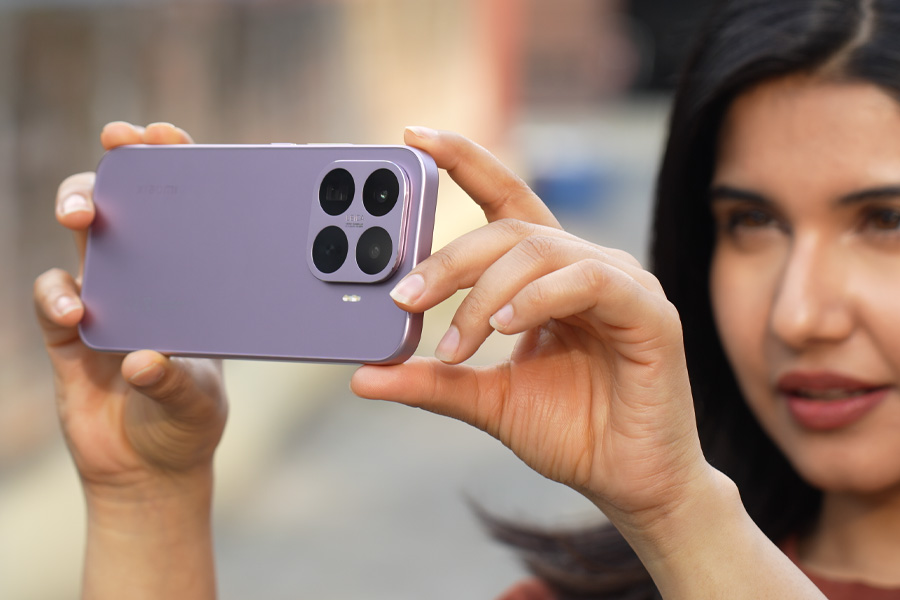
Because of the Leica optimization, the photos also have a very distinct character. You can take beautiful Leica-style portraits, including amazing black-and-white portraits. So overall, this is arguably one of the best camera phones in this price range.
After performance and cameras, the display experience is also really good. It has a 12-bit AMOLED display, whereas most phones at this price usually offer 8-bit or 10-bit panels. Battery life is also amazing, thanks to the large 6500mAh silicon-carbon battery. And to top it all off, the phone runs on Android 16, with four years of OS updates as well.
So overall, the Xiaomi 17T feels like a very well-balanced phone. Whether it is performance, cameras, display, battery, or software, everything here comes together really nicely, making it an excellent option if you are thinking of buying a premium mid-range phone in Nepal in 2026.
| Pros | Cons |
|---|---|
| Pocketable form factor | Plastic frame |
| Amazing 12-bit OLED display | HyperOS still has some bloatware |
| Excellent performance | Ads and app recommendations are still present |
| Good Leica-powered cameras | |
| Impressive 5x telephoto portraits and macro shots | |
| Good battery life |
Xiaomi 17T Specifications:
- Design, build: 157.6 x 75.2 x 8.17 mm, 200 gm, IP68 rating
- Display: 6.59-inch AMOLED screen, 1.5K resolution, 120Hz refresh rate, Gorilla Glass 7i protection
- Chipset: MediaTek Dimensity 8500 Ultra chipset, 4nm mobile platform
- Memory: 12GB LPDDR5X RAM, 256/512GB UFS 4.1 storage, non-expandable
- Software & UI: HyperOS 3.0 on top of Android 16
- Rear Camera: Triple camera setup (50MP main, 12MP ultrawide, 50MP 5x telephoto)
- Front Camera: 32MP selfie camera, hole-punch cutout
- Security: Optical in-display fingerprint sensor
- Battery: 6500mAh silicon-carbon battery with 67W HyperCharge
- Xiaomi 17T Price in Nepal: NPR 89,999 for 12/512GB
Summary list of the best premium midrange phones in Nepal
| S. No. | Best premium midrange phones in Nepal | Price | Best for |
| 1 | Xiaomi 17T (12/512GB) | NPR 89,999 | Best Balanced Specs |
| 2 | Vivo V70 (8/256GB) | NPR 84,999 | Best camera experience |
| 3 | Nothing Phone (4a) Pro (12/256GB) | NPR 93,999 | Unique design + reliable cameras |
| 4 | POCO X8 Pro Max (12/256GB) | NPR 79,999 | Best-in-class battery life + Good Gaming |
| 5 | OnePlus Nord 6 (8/256GB) | NPR 89,999 | Terrific gaming + |
| 6 | Samsung Galaxy A57 (8/256GB) | NPR 84,999 | Nice design, great software |
You might also be interested in:
Frequently Asked Questions
Article Last updated: July 5, 2026
![Xiaomi Mobile Price in Nepal [Updated 2026]](https://media.gadgetbytenepal.com/2026/01/Xiaomi-Mobile-Price-in-Nepal-2026.jpg)