A 2026 semi-flagship with a 6.78-inch 144Hz LTPO AMOLED, Dimensity 9500, triple Zeiss cameras led by a 200MP main sensor, and a 7100mAh battery with 90W charging
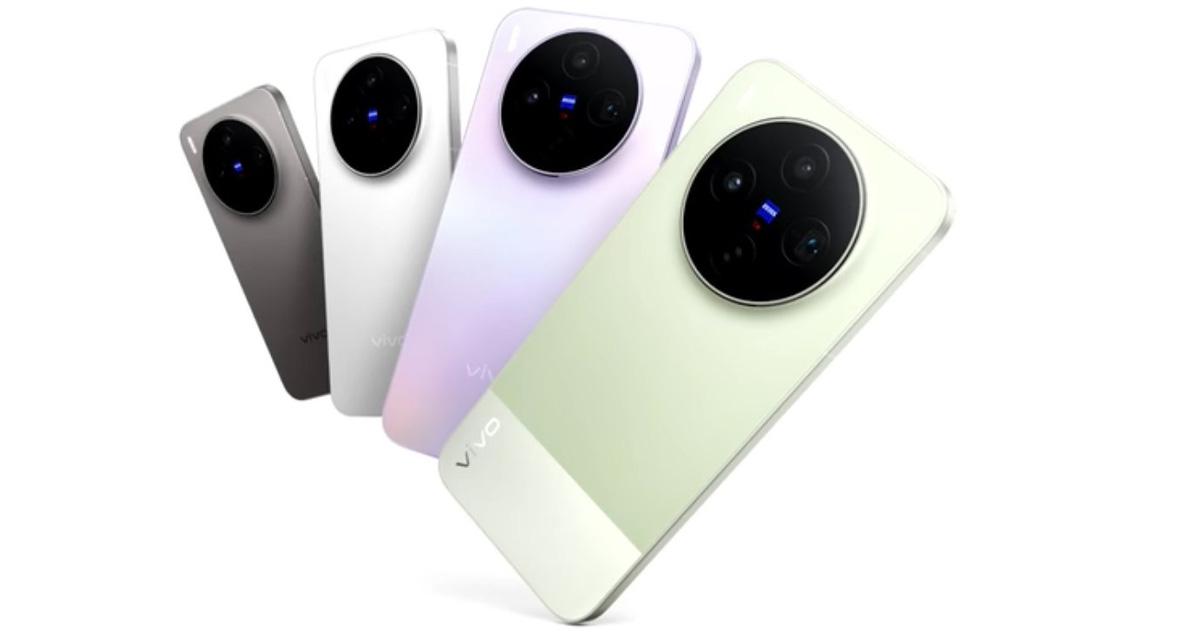
Vivo held its spring launch event in China just yesterday, where it launched the X300 Ultra. The company also introduced the X300s, which is a new phone that sits between the compact base X300 and the Ultra, but arguably offers the most balanced argument in the entire X300 lineup. Let's get into the details.
Vivo X300s Overview
Design and Display

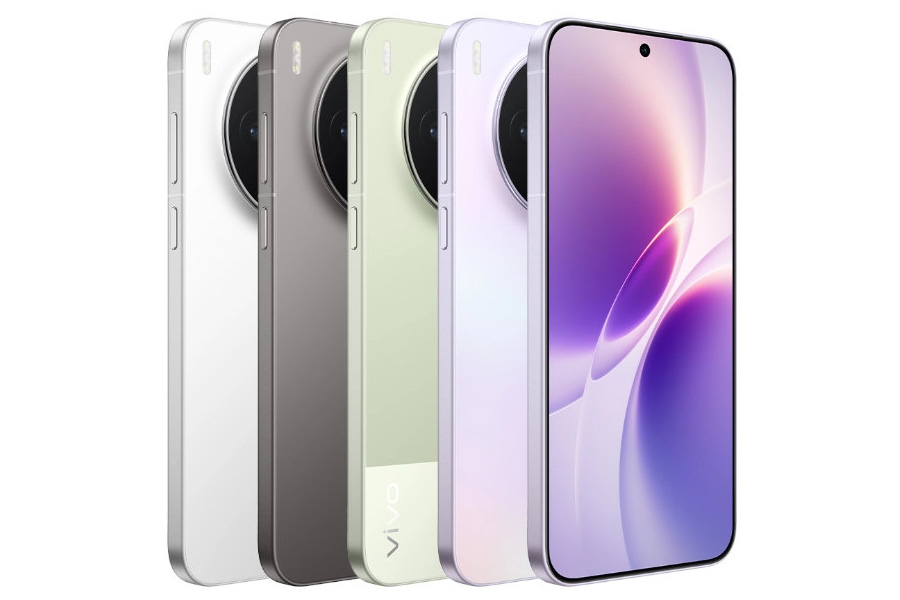
The X300s comes in the same general weight class as most other large-battery flagships but thinner than you'd expect for something carrying such a big battery. The build is glass front and back with an aluminum alloy frame, and the company has provided both IP68 plus IP69 ratings. The 3D ultrasonic fingerprint scanner sits under the display, and they are made available in 4 colors: Titanium Black, Silver, Dream Core Purple, and Film Green.
This is the second phone in the vivo X series to hit 144Hz (first being the X300 Ultra), and the panel backing that claim is a 6.78-inch flat LTPO AMOLED built on BOE's Q10 Plus luminescent substrate with 8T LTPO technology. Similarly, the resolution here sits at 1.5K with HDR10+, HDR Vivid, 2160Hz PWM dimming, full-brightness DC dimming, and a peak brightness of 4500 nits. The phone also covers 100 percent P3 wide color gamut coverage. And finally, the glass is protected by an Armor Glass protection.
Performance
The phone is powered by the Dimensity 9500 on 3nm, which handles everything here. It is paired with Vivo's V3+ imaging chip that takes the camera processing load off the main CPU and GPU.
It’s the same chip as in the X300 Pro, and so to speak, it’s probably only very slightly behind the Snapdragon 8 Elite Gen 5—if not on par with it in terms of everyday performance. Vivo has also paired it with a large vapor chamber and graphite sheet cooling, making it capable of sustaining performance over the long run.
Similarly, the memory options go from 12GB to 16GB LPDDR5X in quad-channel configuration, and storage ranges from 256GB to 1TB on UFS 4.1. For software, the Vivo X300 Ultra ships Android 16 with OriginOS 6 skin on top, providing up to five major OS upgrades promised.
Also, read
Camera
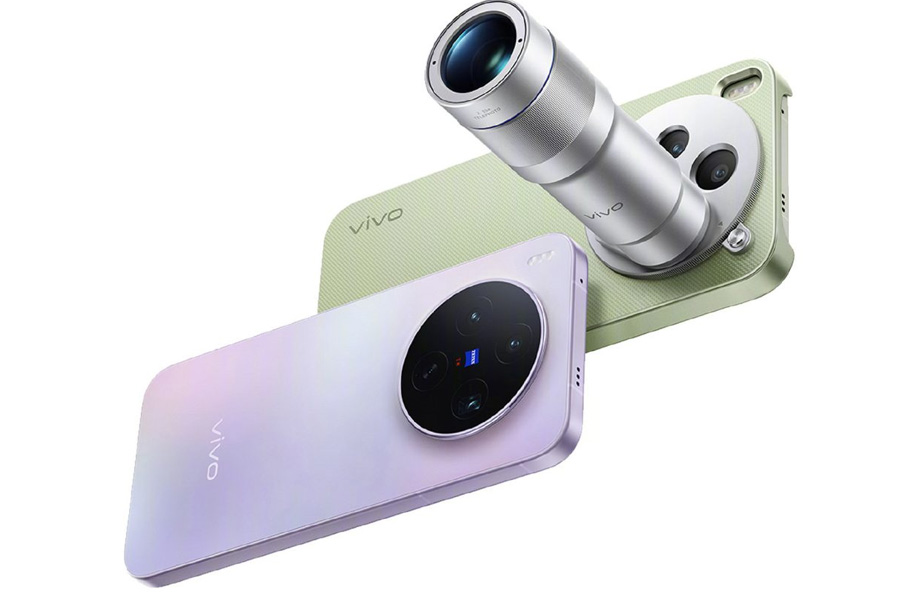
Regarding the optics, it comes with a triple rear system led by a 200MP Samsung HPB sensor on a 1/1.4-inch chip at f/1.68. This is also the same HPB sensor that the X300 Pro uses in its telephoto, now sitting in the main camera slot here. The telephoto on the other hand is a 50MP Sony LYTIA 602 on a 1/1.95-inch chip at f/2.57 with 3.5x optical zoom. The ultrawide is a 50MP Samsung JN1 at f/2.0 with autofocus. All three lenses carry Zeiss T* coating, and the whole system is backed by the V3+ imaging chip.
The new Zoom Flash II is also probably worth mentioning here. Vivo has switched to new LED materials that improve the color rendering index by 14 percent and support over ten distinct film-style lighting profiles. On the software side, through the Blueprint Color Palette, you can manually tune and save custom image filters.
Alongside the phone, Vivo launched the 200mm G2 teleconverter, a 153-gram accessory with a 15-element optical structure certified to Zeiss APO standards. At 96mm long, Vivo compares it to a lipstick in terms of portability, and it's specifically built to support 200mm portrait video recording. The front camera is a 50MP shooter at f/2.0.
Battery and Charging
The 7100mAh silicon-carbon battery is the largest Vivo has put in the X series to date, and it's slightly bigger than the X300 Pro' big cell. The battery lasts for around two days, and in our experience, it showed around 93 percent remaining after two hours of moderate use. It supports 90W wired charging with a 40W wireless, and reverse wireless charging as well.
Vivo X300s Specifications
- Design, build: 161.98 × 75.48 × 8mm, 217g, glass front and back, aluminum frame, IP68 + IP69; Titanium Black / Silver / Dream Core Purple / Film Green
- Display: 6.78-inch LTPO AMOLED, 1.5K (1260×2800), 144Hz, 4500 nits peak, 2160Hz PWM, HDR10+, HDR Vivid, Armor Glass
- Chipset: MediaTek Dimensity 9500 (3nm)
- Memory: 12GB / 16GB LPDDR5X quad-channel RAM; 256GB / 512GB / 1TB UFS 4.1, no microSD
- Software & UI: Android 16, OriginOS 6; up to 5 major OS upgrades
- Rear Camera:
- 200MP f/1.68 OIS (Samsung HPB, 1/1.4")
- 50MP f/2.57 periscope telephoto OIS 3.5x (Sony LYTIA 602, 1/1.95")
- 50MP f/2.0 ultrawide AF; Zeiss T* coating
- Front Camera: 50MP f/2.0; 4K video
- Security: 3D ultrasonic in-display fingerprint scanner
- Connectivity: 5G SA/NSA, Wi-Fi 7, Bluetooth 5.4 (aptX), NFC, GPS full-band, IR blaster
- Audio: Dual symmetric stereo speakers, Hi-Fi audio
- Battery: 7100mAh silicon-carbon, 90W wired, 40W wireless, reverse wireless charging
Vivo X300s Price in Nepal and Availability
The Vivo X300s is now available in China, starting at CNY 5,000. Expect the X300s to land somewhere in a similar range if it arrives here.
| Variant | Price in China (Official) | Price in Nepal (Expected) |
|---|---|---|
| 12GB + 256GB | CNY 5,000 | NPR 1,09,999 |
| 12GB + 512GB | CNY 5,500 | NPR 1,19,999 |
| 16GB + 512GB | CNY 6,000 | NPR 1,29,999 |
| 16GB + 1TB | CNY 7,000 | NPR 1,49,999 |
| 16GB + 1TB + Photographer Kit | CNY 8,000 | NPR 1,69,999 |
- Meanwhile, check out our video on Vivo X300 Pro vs iPhone 17 Pro Max
Article Last updated: March 31, 2026
![Apple iPhone Price in Nepal [Updated 2026]](https://media.gadgetbytenepal.com/2025/12/Apple-iPhones-price-in-Nepal.jpg)