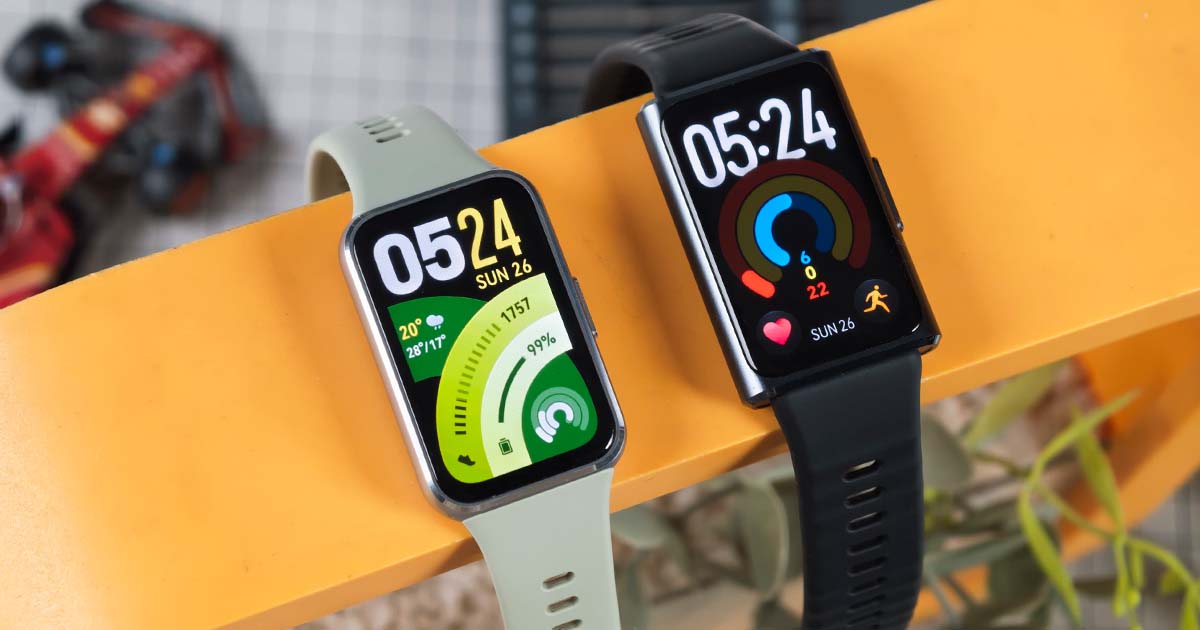
But why did Huawei go "Pro" with its fitness band this year?
Why Trust Gadgetbyte?
At Gadgetbyte, we invest substantial hours into rigorously testing each product or service we review, guaranteeing that you make informed purchases. Learn more about our testing process.
Review Overview
4.4
Design and build
8.5/10
Display
9/10
Software
8.5/10
Health and fitness tracking
9/10
Companion app
9/10
Value for money
9/10
Like clockwork, Huawei has once again shipped a fantastic budget fitness tracker with the Band 11. It solves all the issues we had with last year's Huawei Band 10—and surprisingly enough—there's also a "Pro" this year. Which is a little tricky to recommend.
So I was looking at this Counterpoint report on the global smartwatch market, and I learned that consumer demand for high-end smartwatches has been on a consistent rise. And people are opting to buy smartwatches with reliable health functionalities more than anything else.
But if you care about good health and fitness tracking, a budget smartwatch is easily your biggest enemy. Since most cheap smartwatches have an incredibly unreliable health tracking system. So like I always say—if you care about staying on top of your health without spending too much, you should get a fitness band instead of a cheap smartwatch. Always.
That’s why, today, I’m gonna be talking about two of the most exciting fitness bands of 2026!
So on one hand (literally), I've been wearing the new Huawei Band 11. I’ve also been testing Samsung’s Galaxy Fit 3 on my other hand for a little over a week, whereas I even compared it with the more expensive Huawei Band 11 Pro to see what the deal is with this “Pro” fitness band.
Huawei Band 11 and Band 11 Pro review: Specifications
| Huawei Band 11 | Huawei Band 11 Pro | Samsung Galaxy Fit 3 | |
| Dimensions | 42.6 x 28.2 x 8.99 mm | 43.5 x 28.2 x 8.99 mm | 42.9 x 28.8 x 9.9 mm |
| Weight | 16 – 17 gm | 18 gm | 18.5 gm |
| Durability | 5 ATM certified | 5 ATM + IP68 certified | |
| Display | 1.62-inch AMOLED | 1.6-inch AMOLED | |
| Software | HarmonyOS 6.0 | FreeRTOS | |
| Sensors | 9-axis IMU (Accelerometer, Gyro, Magnetometer), Optical heart rate, Ambient light | Accelerometer, Barometer, Gyro, Optical heart rate, Light | |
| Location tracking | Not available | Built-in GNSS | Not available |
| Battery | Up to 14 days | Up to 13 days | |
| Companion app | Huawei Health | Samsung Health | |
| (Android | iOS) | (Android) | ||
Price:
| Nepal | UK | Phillippines | |
| Huawei Band 11 (polymer) | NPR 9,990 | GBP 39.99 | PHP 2,399 |
| Huawei Band 11 (aluminum) | NPR 11,990 | GBP 49.99 | PHP 2,599 |
| Huawei Band 11 Pro | NPR 14,990 | GBP 54.99 | PHP 4,499 |
| Samsung Galaxy Fit 3 | NPR 7,999 | GBP 44.99 | PHP 2,490 |
Huawei Band 11 and Band 11 Pro review:
Design and build
- Huawei Band 11: 42.6 x 28.2 x 8.99 mm, 16 – 17 gm
- Huawei Band 11 Pro: 43.5 x 28.2 x 8.99 mm, 18 gm
- 5 ATM water resistance
- Polymer or aluminum alloy case
Alright.
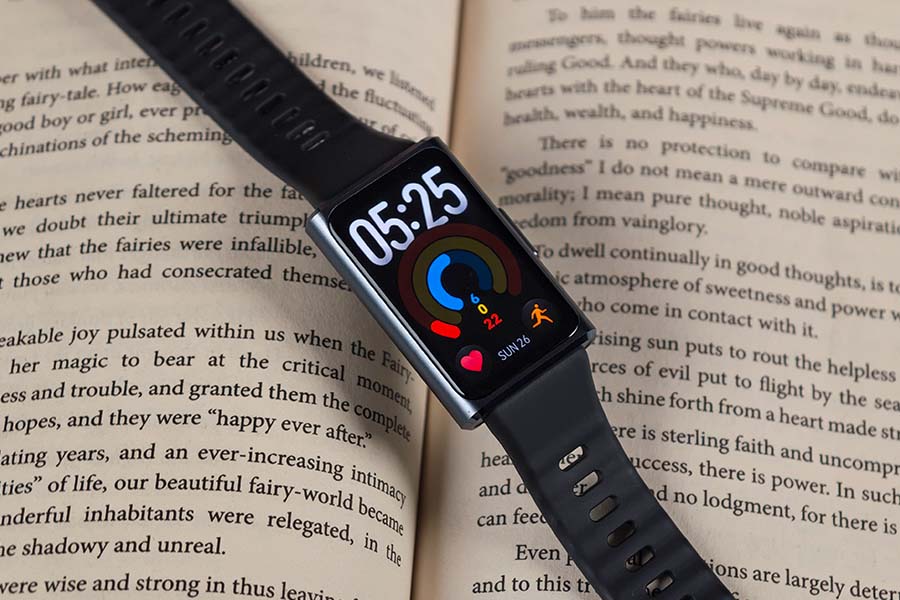
To avoid any possible confusion, I will be mostly referring to the Huawei Band 11 throughout this review. Because, except for its sharper design, brighter display, and built-in GPS, the Band 11 Pro is exactly the same as the Band 11.
So I wanna start with their design, and it goes without saying that the Huawei Band 11 and Galaxy Fit 3 look very much alike. From their rectangular body to a physical button for quick navigation and a bunch of colorful strap options for me to choose from, Huawei and Samsung clearly had a common vision for what their fitness bands should look like.
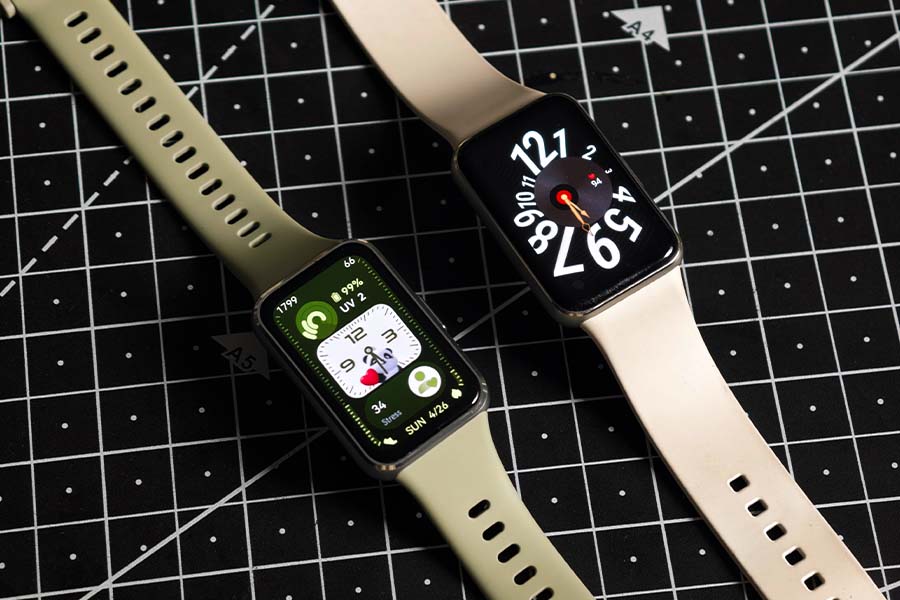
They’re both super lightweight, too, so I never felt the need to take ‘em off or anything either. Although I did get some weird glares from some strangers because I was wearing two fitness bands at once, like some Batman villain!
Now, the Galaxy Fit 3 does have a couple of “quality-of-life” wins over the Band 11’s design:
- like how I can customize its button to open an app shortcut,
- it also has a proper IP68 dust and water-resistant build compared to just 5 ATM water resistance on the Band 11,
- and I love that we get a premium metallic case on the Galaxy Fit 3—versus how I need to pay extra for that privilege on this guy. Since the Huawei Band 11 comes in both plastic and metal case options.
But I honestly don’t think these things matter all that much ‘cause, as I said before, they both look great to the eyes and feel great to wear. Which is why I’m calling this round a tie.
Display
- 1.62-inch AMOLED panel
- 1,500 / 2,000 nits brightness (Band 11 / Band 11 Pro)
- 286 x 482 pixels, 347 PPI pixel density
That brings me to their display, and if I remember correctly, this was the one thing I didn’t like about last year’s Huawei Band 10. It was quite narrow in size, it felt sluggish to use, and the Galaxy Fit 3 simply had the better screen out of the two.
This year, however, Huawei is back with a vengeance—and I absolutely love it!
The Band 11 now has a similar 1.6” AMOLED panel as the Fit 3. And it also refreshes at a smooth 60Hz! These two upgrades were more than enough to put a smile on my face, but there’s a lot more to this screen, actually.
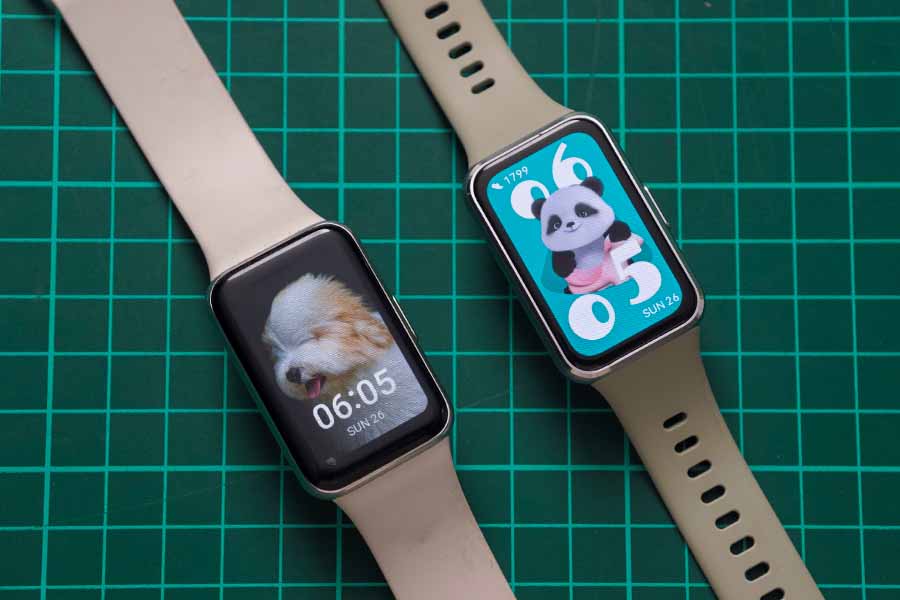
Look at their bezels. Did you notice something? Did you notice the thick, asymmetric bezels on Samsung instead of a nice, symmetrical look on Huawei? The Band 11’s screen gets considerably brighter outdoors as well, and I also feel like Huawei’s graphics team put some real thought and effort into designing the watch faces for this thing.
I mean… there’s even a little “power level” indicator to let me know if the watch face I’ve selected is power-efficient or battery-hungry. How thoughtful is that?
Whereas I’m just not a fan of all the options Samsung gives me. I know this is an entirely subjective opinion, and even so, I’m more than happy siding with the Huawei Band 11 as far as their display is concerned.
Software
- HarmonyOS 6.0
- Compatible with both Android and iOS
Next up is software.
And for the most part, I feel like these two represent the very best software experience you could find on a fitness band. Wait—not just fitness bands, but it’s much better than like… 99% of the budget smartwatches as well.
So the Huawei Band 11 runs on Huawei’s custom “HarmonyOS 6.0” platform, while the Galaxy Fit 3 is built on the open source “FreeRTOS” software instead. With some light paint job to make it look like Samsung’s more premium “Wear OS” smartwatches. I love it!
And getting around the UI on both of them feels perfectly intuitive. They both have a basic layout in terms of the widgets, app menu, notification page, and more—but the way Samsung’s user interface feels… multi-dimensional in some way is really impressive to me.
Here’s what I mean.
So, let's say I’ve started a simple workout on these two.
And in the middle of my workout, say I want to check the weather for things like humidity and UV index to plan my exercise. Or I wanna view my calendar events. What’s great about the Galaxy Fit 3 is that—unlike how the Huawei Band 11 doesn’t let me launch anything else without first ending my exercise—I can simply minimize the workout app here.
I know it sounds like such a small thing… but it really does make a difference.
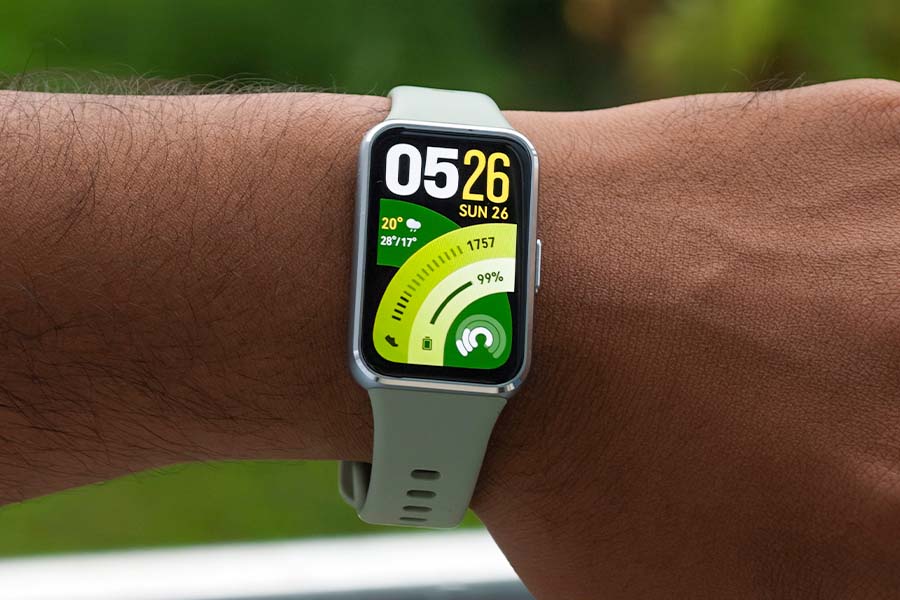
Then there are all the little things I’ve grown fond of about the Galaxy Fit 3’s software.
Like… I can add more widgets to the homescreen to access them more quickly. It also loads app icons on the notification page more accurately, versus how the Band 11 displays some generic icon for some apps, and it can even load the album art to the song I’m listening to as well! The Fit 3 even supports “Fall Detection” and “SOS messaging” in case I need to get in touch with my emergency contact, which can actually be a life-saving feature!
I still wish Samsung was a little inspired by Huawei with things like system animations, but the Galaxy Fit 3 definitely offers a richer software experience.
What about the app?
Even if you check out their companion app, I think Samsung has done a relatively better job at taking a…ll my health data → turning them into meaningful insights so I can take proper actions → and organizing everything in a way that is easy to understand. I’m certainly not saying that the “Huawei Health” app is “cluttered” or anything… it’s just that if you’re new to health tracking and stuff, this can feel a bit overwhelming to get used to.
Let’s look at their homescreen, for example.
Where we can see how Samsung eases us in with a nice, clean UI without overcomplicating anything. Compare that to Huawei, and I think you’ll understand exactly what I mean. The whole thing can feel overcrowded with all the data points—all the UI elements—Huawei throws at you!
Battery life
- Up to 14 days of maximum use
Now, before I get into their health and fitness tracking, I wanna quickly talk about the battery life on these two. I say “quickly” because the Huawei Band 11 is an easy winner here. Yep.
I had set both of ‘em to log my heart rate, my stress, my SpO2 level… as often as possible—and while the Band 11 lasted me 10 full days—I had to reach for the Galaxy Fit 3’s charger in less than a week.
And it’s just as impressive that the Huawei Band 11 can go from 0 – 100% in about 45 minutes, as compared to how I need to wait roughly half an hour more for the Fit 3 to fill up.
Health and fitness tracking
- 100+ workout modes
- Heart rate, stress, SpO2 monitoring
- Advanced sleep tracking, Emotional Wellbeing Assistant
- Built-in GNSS (only in Huawei Band 11 Pro)
Finally, it’s time to talk about the main event of this review.
And I hope you’re ready to hear what I’ve found about the health and fitness tracking abilities of these fitness bands, ‘cause it gets really, really interesting. Some of the things I discovered were honestly a little shocking to me as well!
So in terms of health monitoring, I found that both the Huawei Band 11 and the Galaxy Fit 3 do a similar-enough job. What I mean is I was getting almost identical readings from these two in all the foundational categories like heart rate, blood oxygen level, and sleep.
I clearly remember being disappointed with Fit 3’s sleep tracking the last time I tested it, so good job, Samsung, for fixing that issue!
Plus, unlike how most budget smartwatches leave you with just the raw data, Huawei and Samsung do such a good job at converting that data into actionable insights that I can adopt to actually improve my health.
The Huawei Band 11 is considerably more in-depth about these insights. And it also supports a few useful health features like keeping a log of my emotional states throughout the day and Heart Rate Variability—aka HRV. Which tells me how my body adapts and recovers to stress when I’m sleeping. It’s even supposed to detect if I show signs of breathing difficulty during my sleep, but Huawei says that’s coming later on with an OTA update.
I couldn’t test its “Pulse Wave Arrhythmia” analysis feature, which is supposed to spot irregular heartbeat rhythms, either, since this one straight up isn’t supported in South Asia.
Where things get truly fascinating is in the fitness tracking department.
So once again, the Huawei Band 11 stands out with a couple of stuff you’re not gonna find on the Samsung camp. Like how I can directly broadcast my heart rate to other devices like gym equipment or bike computers for real-time monitoring. Or if you like recording and sharing your workouts on Strava, this thing now lets you include your heart rate data as well!
I also love that Huawei didn’t forget about accessibility since the Band 11 has a dedicated “Wheelchair mode”. That’s really commendable.
And once again, it seems that Samsung has fixed the previous complaints I had with fitness tracking on the Galaxy Fit 3. Because it no longer over-records the amount of calories I burn during any workout, as you can see in this 30-minute workout I recorded. Where both of them logged the total calories pretty much the same. 156 vs 159 calories.
The Band 11 and the Galaxy Fit 3’s heart rate reading is the exact same, although since the Band 11 can’t automatically pause my workouts, its workout duration reading is slightly off. But one thing I wasn’t expecting at all was how differently these two recorded my walking pace.
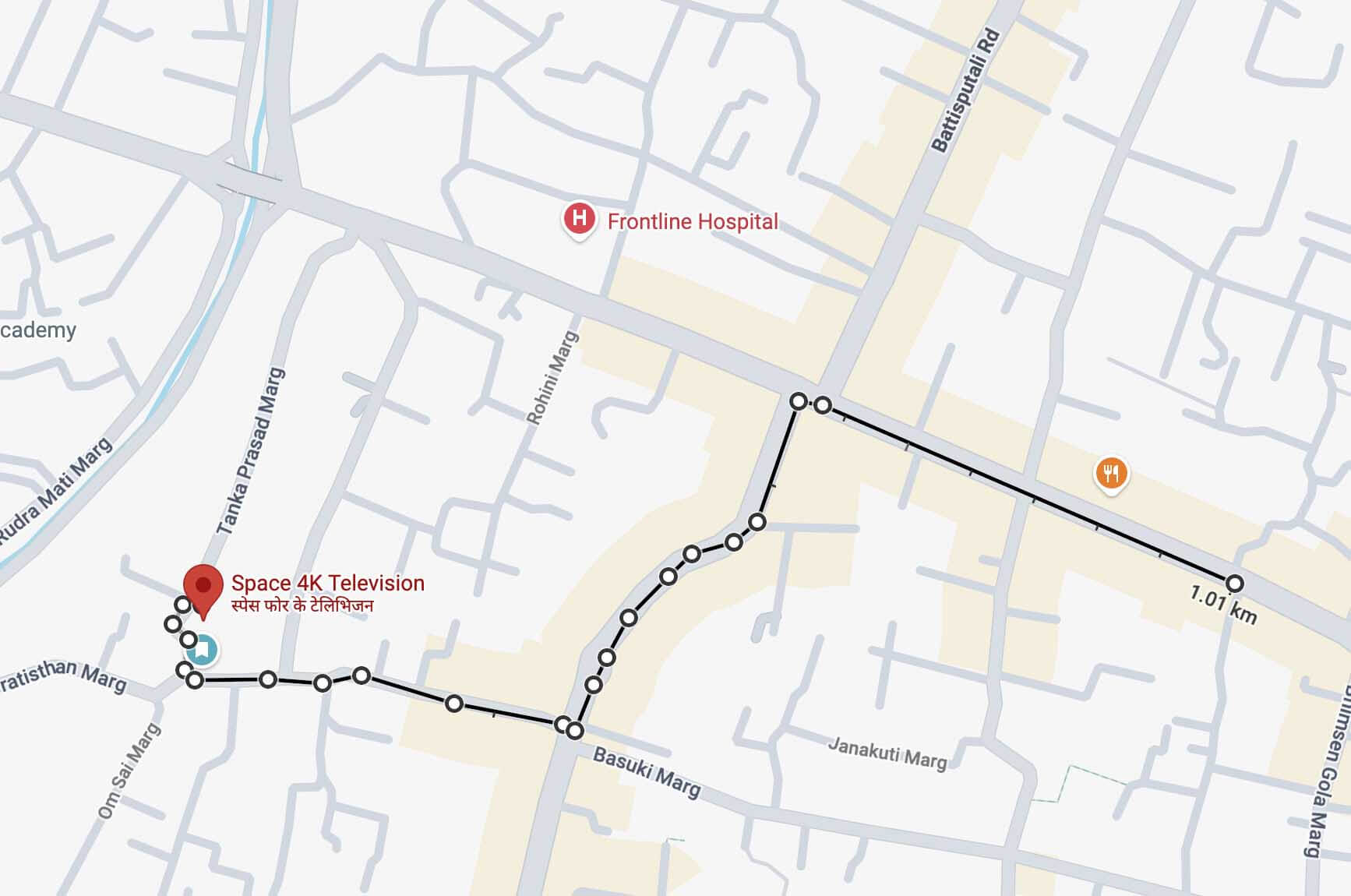
I know I walk one kilometer in around 10 minutes on average, which is what the Fit 3 recorded. While the Band 11 says I took 11 minutes and 45 seconds. So I mapped out the exact route I took using Google Maps to measure the distance I covered → in order to verify which one of them is correct. And guess what? Samsung was absolutely spot on here!
Remember how the Huawei Band 11 Pro has built-in GNSS for distance tracking?
I compared the same thing between them, and once again, I found Band 11’s distance estimation to be inaccurate. All this is to say that if you’re an aspiring athlete (especially a runner), then you’re gonna get more reliable data about how fast you run—aka pace—with the Galaxy Fit 3.
I’m sure Huawei can easily patch this little… hiccup with a couple of updates, so considering just how versatile the Band 11 is when it comes to monitoring your health and keeping track of your workouts, I have to say the final round goes to Huawei as well.
Huawei Band 11 and Band 11 Pro review: Conclusion
Alright.
With all that out of the way, let’s take one last look at our scoreboard. And yeah… besides the software experience that went Samsung’s way, the Huawei Band 11 won at everything else. While they were both tied in terms of design.
| Winner | |
| Design and build | Tie |
| Display | Huawei |
| Software | Samsung |
| Battery life | Huawei |
| Health and fitness tracking | Huawei |
So, like Huawei’s previous budget wearables, the Band 11 is yet another killer fitness band that I feel comfortable recommending to anyone. Yep. I want to clarify that Samsung’s Galaxy Fit 3 is still a perfectly good fitness tracker—and a much better product than basically every single budget smartwatch you’ll find at this price. But compared to what Huawei has to offer, the Fit 3 definitely looks a little… pale in comparison.
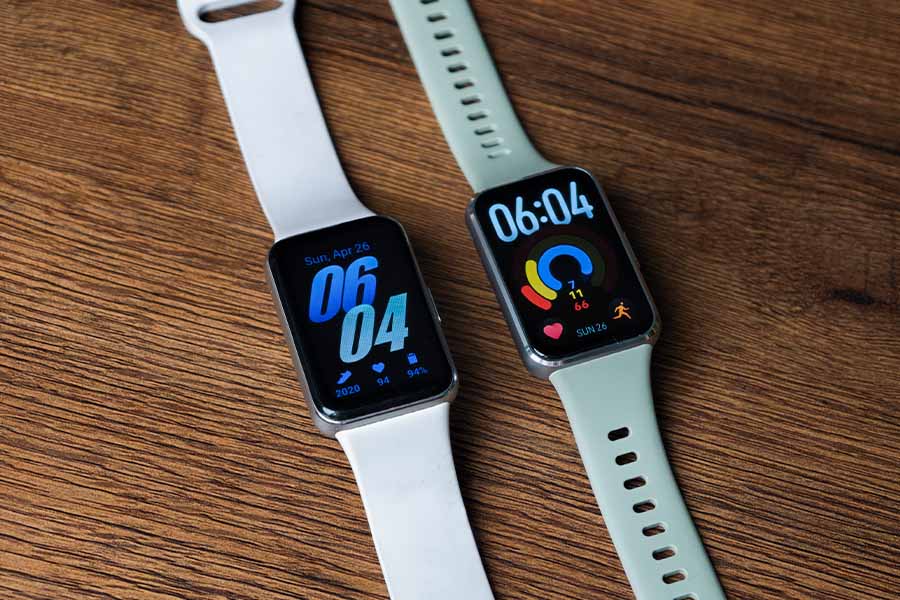
Then there's the Huawei Band 11 Pro.
This is Huawei's first-ever “Pro” fitness band, and it's also the one I'm struggling to recommend the most. Because the only meaningful upgrade you're getting here is its built-in location tracking—and since it's using a single frequency (L1) signal—its location tracking isn't that impressive to begin with. So, unless you really, really want semi-reliable GPS tracking in your fitness band, go with the standard Huawei Band 11. It's that easy.
- Our video review of the Huawei Band 11 and Band 11 Pro is coming soon
Huawei Band 11 and Band 11 Pro review: Pros and Cons
| Pros | Cons |
| • A big, bright, smooth display | • The Band 11 Pro feels a bit overpriced |
| • Excellent at health and fitness tracking | • Some of the health tracking features are region-locked |
| • Great battery life | |
| • Built-in GPS (only in Huawei Band 11 Pro) |
Article Last updated: April 27, 2026