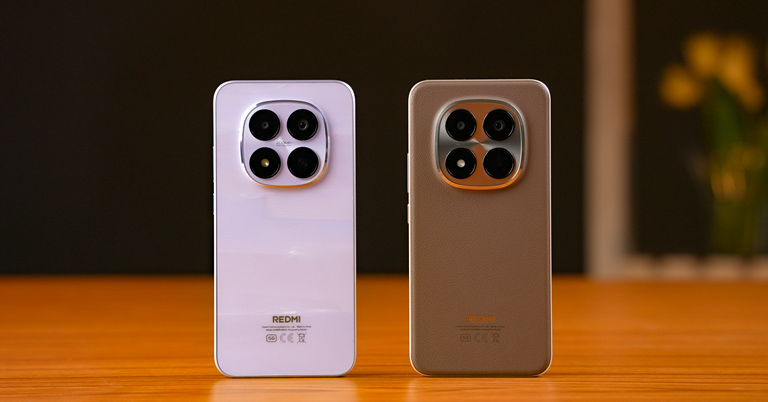
Is the Redmi Note 15 Pro a good value for the lower price against the Note 15 Pro+? Let's find that out.
Why Trust Gadgetbyte?
At Gadgetbyte, we invest substantial hours into rigorously testing each product or service we review, guaranteeing that you make informed purchases. Learn more about our testing process.
Review Overview
4.1
The Redmi Note 15 Pro doesn’t quite stand out in its segment. The Pro+ feels like a more sensible choice with better performance, display, cameras, and a more premium design, but it costs more. If you’re sticking with the standard model, there are other phones that offer a better overall experience, which makes the Note 15 Pro a harder recommendation.
Display
9.5/10
Design
9/10
Performance
8/10
Rear Camera
7.5/10
Front Camera
7.5/10
UI/Software
7.5/10
Battery and Charging
9/10
Value for Money
7.5/10
Redmi has been releasing a lot of new phones lately. I’ve already covered the more affordable Redmi Note 15 (review) and the top-end Redmi Note 15 Pro+ (review), but one model was still left, the one that sits right in the middle. So today, I’m reviewing the Redmi Note 15 Pro, which starts at Rs. 50,000.
When I look at the specs on paper, the Note 15 Pro and the more expensive Note 15 Pro+ seem very similar. That naturally raises a question: Is the cheaper Note 15 Pro a good value for money, or is it better to spend extra for the Pro+? I’ll try to answer that based on my real-world experience in my Redmi Note 15 Pro review.
Redmi Note 15 Pro and Note 15 Pro+ Specifications
| Category | Redmi Note 15 Pro | Redmi Note 15 Pro+ |
|---|---|---|
| Design & Build | 163.6 × 78.1 × 7.8 mm, IP68 rating | 163.3 x 78.3 x 8.2 mm or 8.5 mm, IP68 / IP69K rating |
| Display | 6.83-inch curved AMOLED, 2772 × 1280, 120Hz, 3200 nits peak | 6.83-inch quad-curved AMOLED, 2712 × 1280, 120Hz, 3200 nits peak |
| Chipset | MediaTek Dimensity 7400 Ultra | Snapdragon 7s Gen 4 (4nm) |
| RAM | 8/12GB LPDDR4X | 8GB / 12GB LPDDR4X |
| Storage | 256/512GB UFS 2.2 | 256/512GB UFS 2.2 |
| Software & UI | HyperOS 2 (Android 15) | HyperOS 2 (Android 15) |
| Rear Camera | 200MP main (OIS) + 8MP ultrawide | 200MP (OIS) + 8MP ultrawide |
| Front Camera | 20MP | 32MP |
| Security | Optical in-display fingerprint sensor, 2D Face Unlock | Optical in-display fingerprint, 2D Face Unlock |
| Connectivity | 5G, Dual-SIM, Wi-Fi 6, Bluetooth 5.4, GPS, NFC, USB-C | 5G, Dual SIM, Wi-Fi 6E, Bluetooth 5.4, GPS, NFC, USB-C |
| Sensors | Accelerometer, Ambient light, E-compass, Gyroscope, Proximity | Accelerometer, Ambient light, E-compass, Gyroscope, Proximity |
| Batttery and Charging | 6580mAh, 45W fast charging | 6500mAh, 100W fast charging |
| Price in Nepal | NPR 49,999 (8/256GB) | NPR 59,999 (8/256GB) |
Redmi Note 15 Pro Review:
Design & Build
Even though the Note 15 Pro and Pro+ look related, their design approach is different. The Pro+ comes with a slightly curved body, while the Note 15 Pro has a completely flat, boxy design. Both phones feel premium in hand, but personally, they feel a bit wide. That could just be because my hands are small, but it’s something I noticed right away.
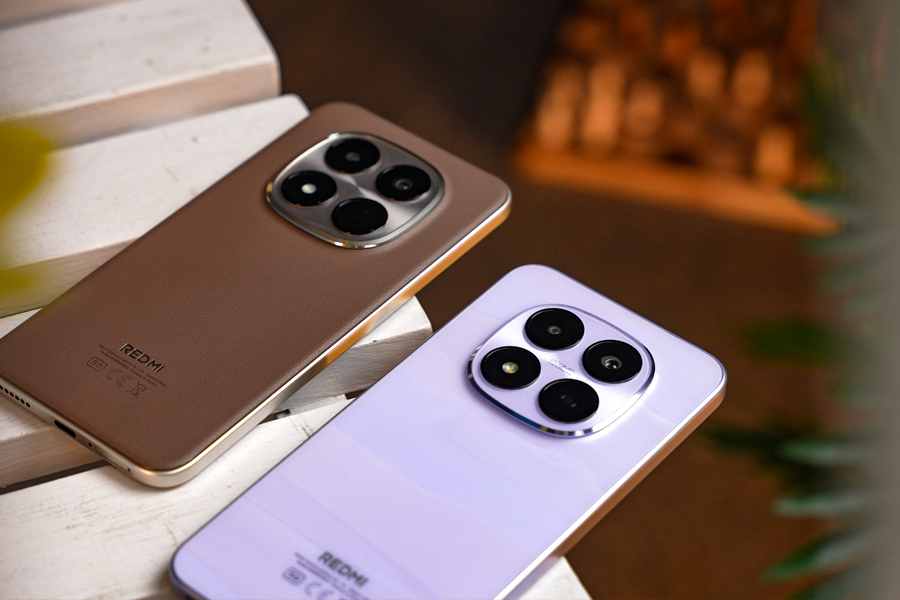
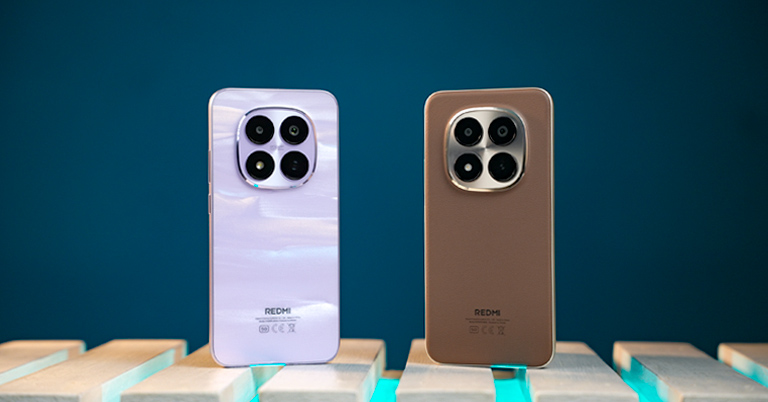
The Note 15 Pro comes in four color options, all with a plastic back. In comparison, the Pro+ brown variant has an eco-leather finish, which feels more premium. That’s one area where the Pro feels like a small step down.
On the durability side, both phones are solid. They come with an IP69K rating, Gorilla Glass Victus 2, and Xiaomi even claims 2.5m drop resistance. I wouldn’t recommend testing that at home, but on paper, protection is excellent.
Display
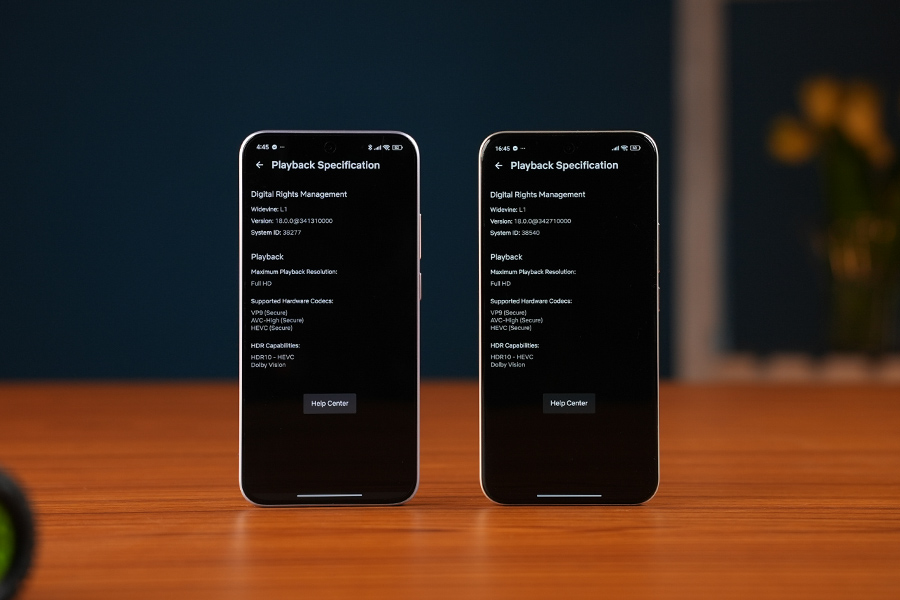
Display is the part, where I had mixed feelings. On paper, both phones have the same display specs, including brightness levels, and visibility under sunlight is not an issue at all.

However, in real-life use, there is a noticeable difference. The Pro+ display looks better, with deeper blacks and stronger contrast. When I place both phones side by side, the Note 15 Pro’s display looks slightly washed out or faded. The Pro+ also has a warmer tone by default, which I personally prefer.
Both phones support HDR, Dolby Vision, and eye-care certifications, but despite identical specs, the Pro's display quality is slightly inferior. Overall, I'd like to call it decent.
Speakers & Haptics
The speakers on the Note 15 Pro are loud and clear enough for everyday use. However, when compared directly, the Pro+ sounds fuller, louder, and has better depth. Vocals are clearer on the Pro+.
Haptics, on the other hand, are good on both phones. The vibration feedback feels subtle and satisfying while typing and navigating the UI. I also like that Xiaomi allows intensity adjustment in settings.
Software & Performance
Both phones run Android 15 with HyperOS 2, which honestly feels disappointing at this price point. I expected Android 16 at launch. Xiaomi promises four years of OS updates, so I hope updates arrive on time.
HyperOS is much better than older MIUI versions. There is still bloatware, but around 90% of it can be uninstalled, so it doesn’t bother me much.
Performance is where the Note 15 Pro struggles for its price. It uses the Dimensity 7400, while the Pro+ gets the Snapdragon 7s Gen 4. Benchmark scores clearly favor the Pro+.
For Rs. 50,000, the Dimensity 7400 feels underpowered. Phones like the OnePlus Nord CE 5 or Infinix GT 30 Pro offer much better performance at this price.
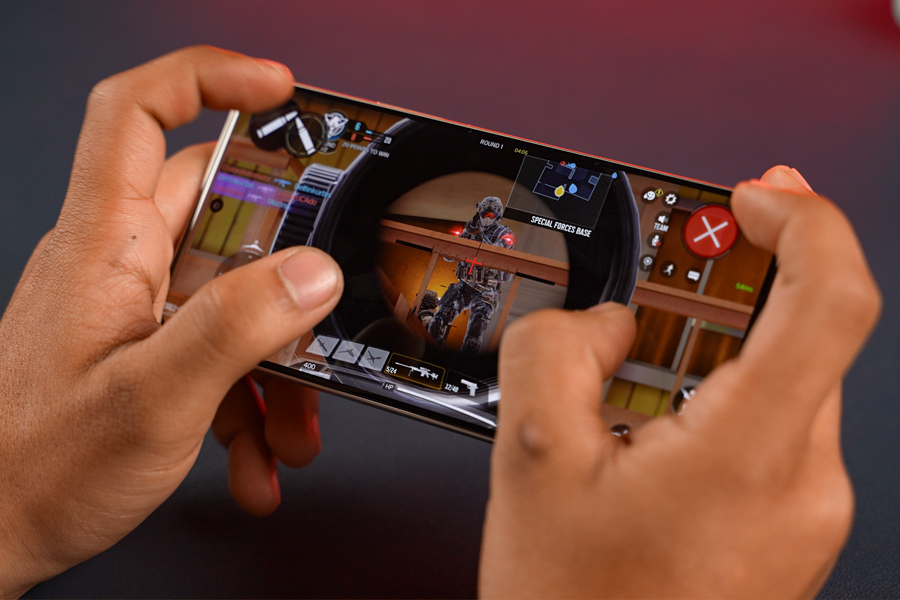
In daily use, social media, multitasking, and UI navigation, the Note 15 Pro performs fine. I didn’t face heating issues either. But gaming performance is not great. Games like PUBG, Mobile Legends, and Genshin Impact don’t run very smoothly. With UFS 2.2 storage and DDR4X RAM, overall performance feels average for the price.
Camera
Both the Note 15 Pro and Pro+ use the same rear camera setup: a 200MP main camera and an 8MP ultra-wide. There’s no telephoto lens on either phone, which feels like a missed opportunity, especially when competitors like the Nothing Phone 3a offer one at this price.
Daylight
Even though the camera hardware is the same, the output is not. The Pro+ consistently takes better photos. I found that the shadow processing, dynamic range, and fine details are slightly better on the Pro+. Colors are similar, but the Pro+ leans warmer, while the Pro is a bit cooler.
Lowlight
At night, both phones perform similarly, with small differences mainly in color tone. At 4× zoom, the Pro+ photos look sharper.
Portraits
Portraits also look better on the Pro+. Skin tones feel more natural, and details are slightly improved.
Selfies
For selfies, the difference is clear. The Pro+ has a 32MP front camera, while the Note 15 Pro uses an older 20MP sensor. Selfies from the Pro+ look sharper and more natural, while the Pro sometimes looks a bit muddy. Selfie video is also better on the Pro+.
Videos
One surprising thing I noticed is that the rear camera records video. In some situations, the Note 15 Pro actually has better video optimization than the Pro+, especially in highlights and color balance. At night, the Pro+ sometimes flickers, unlike the Pro. Overall, the entire Redmi Note 15 lineup needs camera optimization updates.
Battery & Charging
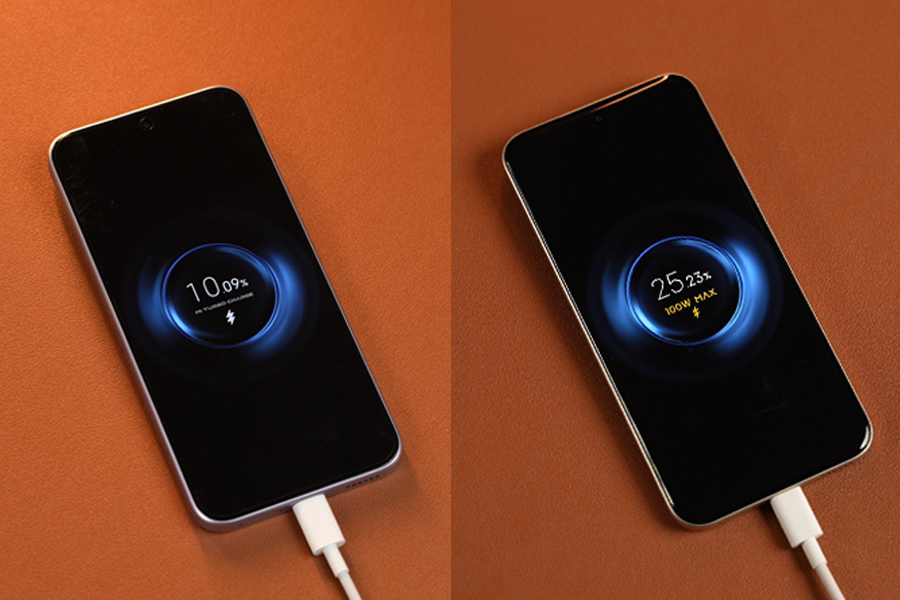
Battery life is excellent though. The Note 15 Pro has a 6580mAh battery, and I easily got up to two days of use. But, charging is where it falls behind. The Pro supports 45W charging, while the Pro+ supports 100W. The Pro+ charges in about 50 minutes, whereas the Pro takes around 1 hour and 20 minutes.
Redmi Note 15 Pro Review: Conclusion
So, should you buy the Redmi Note 15 Pro for Rs. 50,000, or spend Rs. 10,000 more for the Pro+?
For me, paying extra for the Note 15 Pro+ makes more sense. You get better performance, a better display, slightly better cameras, and a more premium design.
If your budget is strictly Rs. 50,000, I honestly don’t think the Note 15 Pro is the best choice this year. Phones like the OnePlus Nord CE 5 offer much better performance and a cleaner software experience. If cameras matter more to you, the Nothing Phone 3a is another strong option with better software, better camera performance, and a unique design. Overall, I feel the Redmi Note 15 Pro is slightly overpriced for what it offers at Rs. 50,000.
Poll Not Found
This poll is currently unavailable or has been removed.
Redmi Note 15 Pro Review: Pros and Cons
Pros:
- Premium and durable build
- Decent display
- Awesome battery life
Cons:
- Underwhelming cameras (Compared to the Pro+)
- Not the best value for money
Article Last updated: January 29, 2026