Is the compact Vivo X300 really solid for the price? Find out here.
Why Trust Gadgetbyte?
At Gadgetbyte, we invest substantial hours into rigorously testing each product or service we review, guaranteeing that you make informed purchases. Learn more about our testing process.
Review Overview
The Vivo X300 ticks all of the boxes for a solid compact phone. It has great cameras, superb performance, and solid battery life, leaving very little room to complain. Overall, the X300 is a worthy sibling of the X300 Pro.
Display
9.5/10
Design
9/10
Performance
9.5/10
Rear Camera
9.5/10
Front Camera
9/10
UI/Software
9/10
Audio and Haptics
8/10
Value for Money
9/10
Hi everyone, I am Pratima. So, I don’t know if you have noticed, but compact phones are kind of becoming the new trend in the smartphone market right now. And if reports are to be believed, in that category, the iPhone 17 is selling like hot cakes.

And it looks like Vivo is getting its strategy right. A few months ago, they launched the X200 FE—which has been quite a success—and now they’ve introduced their first compact flagship phone.
So, this is the Vivo X300, the smaller version of the X300 Pro, and I think this one might just destroy the iPhone 17 because this phone barely has any compromises and will likely be cheaper than the iPhone 17 as well. It’s got the perfect size, a flagship chipset, a big battery, and Vivo has somehow fitted in a 200MP camera here too, all while keeping the weight in check. Let's find out everything in my Vivo X300 review.
Vivo X300 Specifications:
- Design, build: 150.57 x 71.92 x 7.95mm, 190g; IP68/IP69 rating; Black, Blue, Red, Purple, Pink
- Display: 6.31-inch BOE Q10+ OLED, 1.5K resolution (2640 x 1216 pixels), 120Hz refresh rate
- Chipset: MediaTek Dimensity 9500 (3nm)
- Memory: 12GB+256GB / 12GB+512GB / 16GB+256GB / 16GB+512GB / 16GB+1TB
- Software & UI: Android 16 with OriginOS 6
- Rear Camera: 200MP Samsung HPB main camera with OIS, 50MP Samsung JN1 ultra-wide lens, 50MP Sony LYT-602 periscope telephoto with OIS
- Front Camera: 50MP Samsung JN1
- Security: Ultrasonic in-screen fingerprint scanner
- Connectivity: 5G, Bluetooth 5.4, NFC, USB 3.2 Gen 1, Wi-Fi with universal signal amplifier 3.0 and 4 wall-penetrating chips
- Sensors: Accelerometer, gyro, proximity, compass
- Battery: 6,040 mAh with 90W wired charging and 40W wireless charging
- Price in Nepal (Expected): NPR 119,999 (12/256GB)
A Compact Size
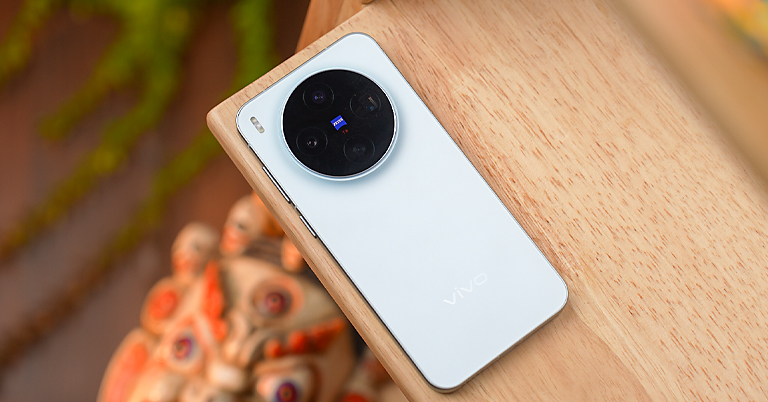
So, for anyone who has small hands like me, once you get used to holding this, there is no going back. It’s a really comfortable phone. The Vivo X300 also feels surprisingly premium to hold. We get a glass back with softy…matte finish and aluminum frames, just like the more expensive X300 Pro, and even with sweaty hands, the back here doesn’t get smudged easily, which is such a relief!
Vivo hasn’t compromised on the ingress protection either; it’s both IP68 and IP69 on this phone, although I am not sure how Vivo’s own glass protection holds up against scratches and drops. We’ll have to wait for Jerry Rig’s test to find that out!
Display
Anyway, the display side is equally impressive here. It’s a 6.3-inch 120 Hz LTPO AMOLED screen with all the features like HDR10+, 2160 Hz PWM Dimming, and an ultrasonic fingerprint sensor that’s super reliable. It’s fast, and it’s also placed at just the right position.

Now, if I really have to nitpick, this phone does not have Dolby Vision support like the X300 Pro and the iPhone 17, so some Dolby Vision Mastered content does not look as immersive in comparison, but regular HDR 10+ videos play exceptionally well. Actually, the default colour calibration is quite pleasing to the eyes. And the even bezels on all sides add to the already good experience.
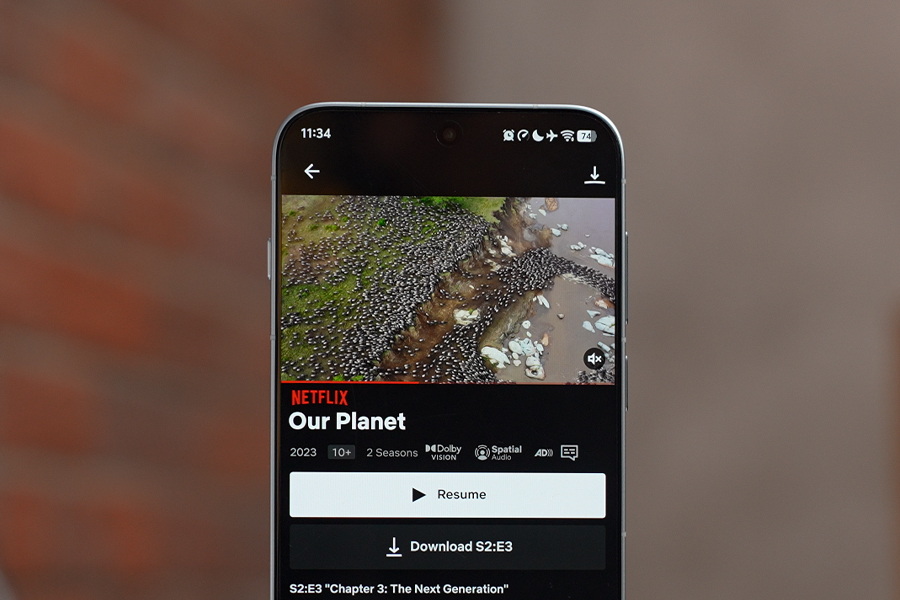
I love how bright this screen is in any given condition, going nearly 2000 nits in auto mode, and when playing HDR content, the phone can go up to 4500 nits. It can also dim down to as low as one nit, too, so while using this phone – daytime/nighttime, I have never had any issues with visibility!
Speakers and Haptics
But I will be honest with you, I think Vivo could have done a slightly better job with the speakers. They are loud, yes, but the audio is not the most balanced; the trebles are all over the place. The iPhone 17 definitely gives you a better listening experience.
Also, I felt like the haptics on the iPhone 17 are slightly better, like more precise than the Vivo X300 while typing. Not that the X300’s vibration is bad, Vivo has actually used a bigger vibration motor this time, so while ringing, you can feel the impact nicely, but it’s just that, in comparison, it isn’t as crisp.
Battery
I know I am getting a little nitpicky at this point, so coming to something positive, the one thing Vivo has nailed on this phone is the battery life! This tiny phone gave me more than 8 hours of screen time. The only other compact phone that gave me similar endurance is Vivo’s own X200 FE. Just for information, the iPhone 17 lasted about 7 hours under similar usage.
And with Chinese phones, what you also get is the perk of faster charging. With the 90-watt charger that comes inside the box, the X300 can go from 0-100% in about 38-40 minutes. Pretty darn fast!
Performance
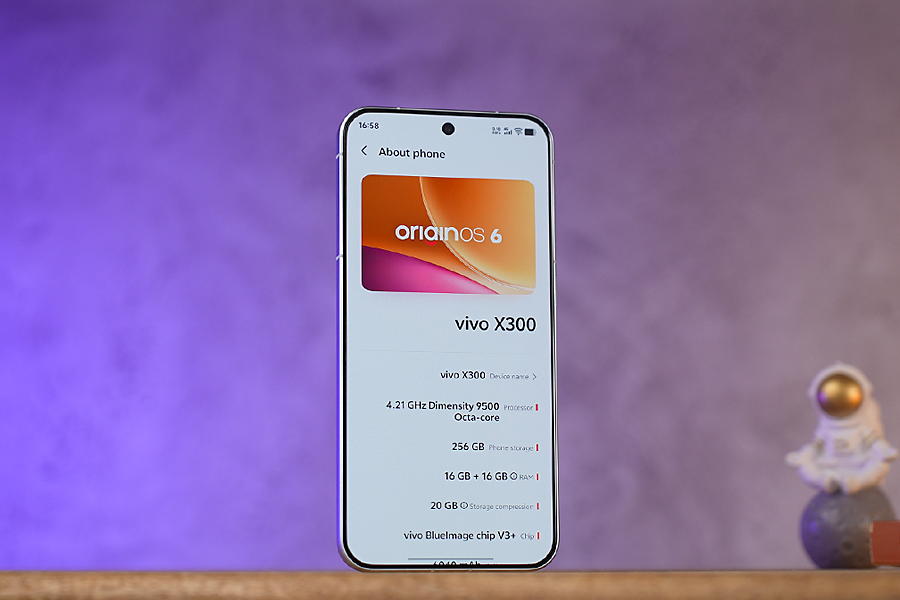
Next, I am very happy that Vivo hasn’t compromised on the performance side either. We get the same Dimensity 9500 chip here, which you find on the ‘Pro’ version of this phone as well. We get the same LPDDR5X RAM and the same UFS 4.1 storage, too.

And I said it in my Vivo X300 Pro review too, this MediaTek chipset is almost as good as the latest Snapdragon chip and Apple’s A19 in almost all areas, only falling a little short in GPU and single more benchmarks, but in real-life usage, the performance is fast. In fact, when it comes to storage benchmarks and data transfer speeds, this phone is way faster than the iPhone 17.
Moving on, gaming on this phone is a good experience too in terms of smoothness, but the smaller chassis definitely bottlenecks the performance. After like 20-30 minutes into any demanding game, the phone starts getting warm. In fact, if you look at the 3DMark test I ran, you can see that performance has throttled a bit. But if you are only a casual gamer, that should not be a problem, though!
Origin OS
The good news, however, is that Vivo has worked really hard on the software this time. The new Origin OS is quite refined, not as good as something like OneUI or Oxygen OS, but the animations have become smoother, and the overall responsiveness is so much better this time.
Camera
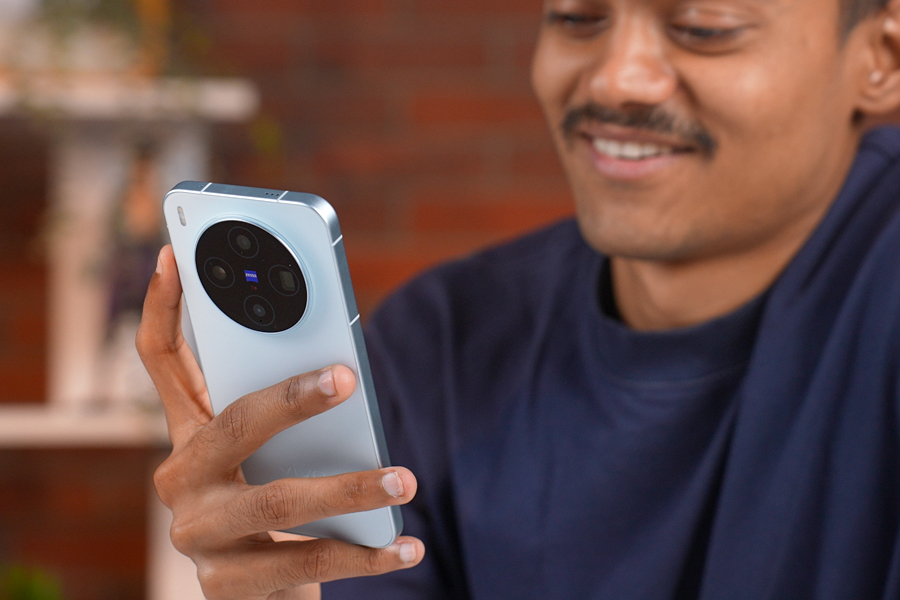
Moving on, I think the one thing that gives the Vivo X300 a good edge over all the other compact phones is its camera. Mostly when it comes to compact flagships, brands tend to make little compromises here and there, but here, we are getting a 200MP primary wide lens – it’s the same Samsung HPB sensor which Vivo as used for Telephoto on the X300 Pro, then we have a 50MP Sony LYT 602 3x telephoto lens and finally another 50 MP Samsung JN1 Ultra wide lens.
First, I am happy that Vivo has not missed out on their partnership with Zeiss on the X300, so, like the X300 Pro, you get different modes, Vivid, Natural, texture, and so on. For this review, I mostly shot in the natural Zeiss mode, and I really like the colors that I was able to get in the images, not too flashy yet eye-catching. Unfortunately, Vivo has not included the separate VS1 and V3+ chip here, as we get on the Pro model, so the image processing and shutter speed are not as fast, but it's nothing to complain about either.
Daylight
In fact, I love how sharp and crisp the photos come out, especially if you compare them side by side with the iPhone 17; you can see the 200MP sensor pulling out better details.
You do get a cooler tone in photos from the X300 vs the warm yellowish tone on the iPhone 17, but the quality of pictures with respect to dynamic range, contrast, and shadow processing is good on both.
Ultrawide
The ultra-wide photos, both during the day and the night, are better from the iPhone — it’s wider, pulls in more details, and has less noise in general. I guess you could say that the only Achilles heel of the X300’s camera is its ultra-wide lens; the color reproduction and all are nice, but it could have definitely been better.
Telephoto
Nonetheless, its Telephoto camera is the one that deserves a lot of credit. First, the macros from it are amazing, the focus lock is instantaneous, the details are good, and I love the natural bokeh it brings out. Again, since this is not a 200MP sensor like the X300 Pro, zooming in to 6 or 10x for macros will not result in the sharpest pictures. I found the 3x ones looking the best.
Portraits
Next, the portraits are also quite nice. We know that the iPhone 17 crops into the main camera for 2x portraits, but here with the dedicated 3X Telephoto lens, no 1, you get a better perspective, no 2, there’s a lot of flexibility to change focal lengths, and no 3, on the X300, the colors are optimized better in like 90% of scenarios.
Again, it’s Vivo, so you will see brightening and smoothening on the skin, but for me, not having to edit my photos before posting on social media is a blessing. To be fair, the beautification sometimes can look too much on male skin, like in this picture, my colleague looks like he has make-up on.
Selfies
The selfies are nice and sharp, though, thanks to the new 50MP sensor with autofocus. The colors and details, like the portraits, are good but slightly beautified. Even in selfie videos, you can notice a little smoothening, but it looks good, so I won’t complain. You can go up to 4k 60 fps in resolution, but I generally shoot at 30 fps, and the videos have good stabilization.
Videos
From the back camera, this time Vivo has added a 4K 120 fps option along with the usual 30 and 60 fps modes. In the 120 fps mode, the stabilization is not that great, but in the 30 and 60 fps options, it's quite good, almost on iPhone 17’s level. The iPhone 17 has slightly better smoothness, though.
Vivo X300 Review: Conclusion
So, overall, as someone who personally loves compact devices, I have had a great experience using the Vivo X300. As I said earlier, there is very little to no compromise here — the design feels premium, the display is solid, the battery life is probably one of the best on a compact phone, performance is flagship level, and the cameras more than justify the price.
Of course, if it had a slightly more aggressive cooling system, this phone would have nailed the gaming aspect too, but for someone like me who isn’t a lot into gaming and just wants a good flagship Android experience in a compact size, this is a great phone. And honestly, after switching from the iPhone 17 to this phone, I haven’t missed anything about it! It's that good!
Vivo X300 Review: Pros and Cons
Pros
- Compact design and solid display
- Superb battery life for a compact phone
- Great cameras and performance

Cons
- Cooling could have been better
Article Last updated: December 1, 2025