Discover the first computer in Nepal the "IBM 1401" and explore the full history of computer in Nepal, from the 1971 census to today's growing tech industry.
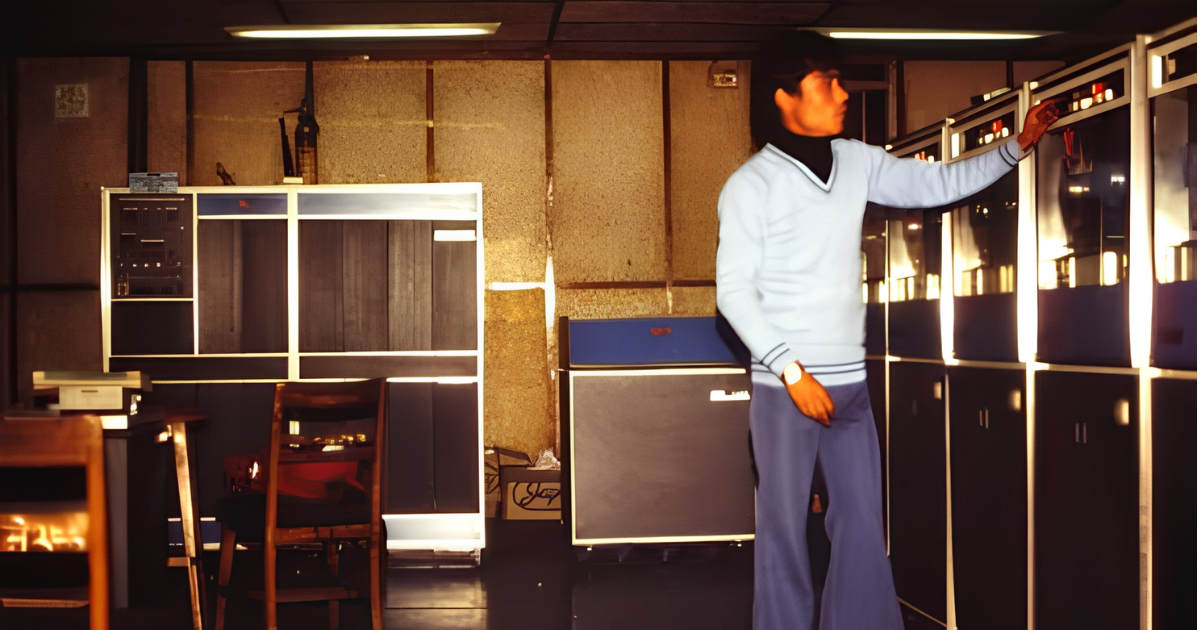
In the early 1970s, long before computers became a part of everyday life in Nepal, the country took its first step into the digital age. Instead of purchasing an expensive machine, the government rented one to solve a pressing challenge: processing the National Population Census. Although it was brought in for a single project, that one computer became the starting point of Nepal's computing journey.
Key Highlights
- Nepal's first computer, the IBM 1401, arrived in 1971 AD (2028 BS) to process the national census.
- The government rented the machine for NPR 125,000 per month instead of buying it outright.
- Its success led to the creation of Nepal's first dedicated IT institution, the Electronic Data Processing Centre, in 1974.
- That single machine set off decades of growth, from the ICL 2950/10 mainframe to microcomputers to today's booming IT sector.
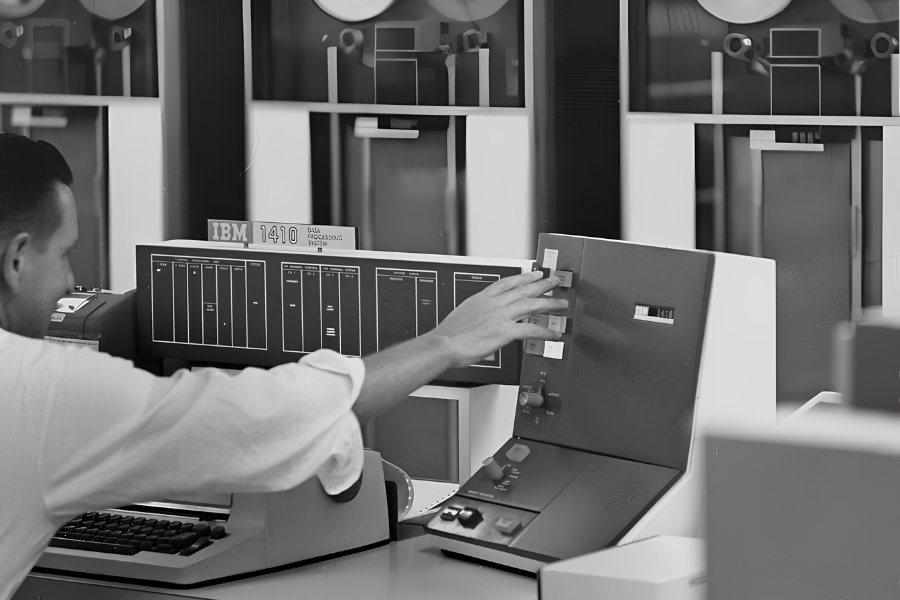
The quick answer: The first computer brought to Nepal was the IBM 1401, a second-generation mainframe computer. It arrived in 1971 AD (2028 BS) and was introduced by the Government of Nepal to process data from the National Population Census. Before its arrival, Nepal had relied on an electronic calculator called the Facit during the 1961 census, and compiling the final report took more than six years. The IBM 1401 significantly improved the process and marked the country's first experience with modern computing.
Why the IBM 1401 Counts as Nepal's "First" Computer?
It's worth clarifying this, since the IBM 1401 wasn't the first piece of calculating technology Nepal ever used - that distinction belongs to the "Facit" electronic calculator, deployed for the 1961 census. But the Facit was a calculator, not a computer, and it wasn't nearly enough: the 1961 census took over six years to fully process. The IBM 1401 was Nepal's genuine entry point into computing, capable of true data processing at a scale no calculator could match, which is why it's the machine historians and government records point to when answering this question.
The Arrival of the IBM 1401 in 1971 AD (2028 BS)
Why Nepal Needed a Computer?
By the late 1960s, Nepal's growing population had made manual census processing increasingly difficult. The 1961 census, which counted around 9.6 million people, took nearly six and a half years to complete. The lengthy process even delayed the government's five-year development planning, highlighting the need for a faster and more efficient way to handle such a massive amount of data.
To avoid facing the same challenge during the 1971 census, the government decided to introduce a computer capable of processing large volumes of information in a much shorter time.
The Logistics and Cost
Buying a mainframe computer was beyond the government's financial capacity at the time, so renting the IBM 1401 was the most practical option. The monthly rental cost was around NPR 125,000, and some historical accounts suggest the system was brought from India.
The computer was installed at the Central Bureau of Statistics, where it became the country's first computerized data-processing system. Renting the machine allowed the government to access advanced computing technology without making the significant investment required to purchase it outright.
Tech Specifications in Simple Terms
The IBM 1401 looked very different from the computers we use today. It had no monitor, keyboard, or mouse. Instead, it relied on hardware and storage systems that were considered advanced for its time.
- It was a second-generation computer, built using transistors and magnetic core memory instead of vacuum tubes.
- Data was entered through punched cards, while information was stored and processed using magnetic tape before being printed as reports.
- Its storage capacity was extremely small by today's standards, with some sources estimating it at only 16KB.
- Operating the machine required trained personnel who manually prepared and fed punched cards into the system. Although the process was slow compared to modern computers, it was a major improvement over manual data processing.
Impact on the Census and Government Data
An Efficiency Milestone
The introduction of the IBM 1401 brought a significant improvement to Nepal's census processing. While the 1961 census had taken more than six years to compile, the 1971 census was completed in a much shorter period. Some historical sources estimate the entire process took around 18 months, which was a remarkable achievement given the technology available at the time.
Even with frequent power cuts, limited technical knowledge, and the high cost of operating the system, the IBM 1401 proved that computers could process large amounts of government data far more efficiently than traditional manual methods.
Challenges of Running an Early Mainframe
Operating the IBM 1401 was far from simple. Unlike today's computers, it had no graphical interface or user-friendly controls. Every task involved preparing punched cards, loading them into the machine, and carefully checking the printed output, making the process both time-consuming and labour-intensive.
Running such a system in Nepal during the early 1970s presented several challenges. Reliable electricity was not always available, and power interruptions often disrupted operations. The monthly rental fee of NPR 125,000 was also a considerable expense for the government.
Another major obstacle was the lack of trained computer professionals. Since computer technology was still new to Nepal, operators had to learn how to use the system with very limited local expertise. Despite these difficulties, the IBM 1401 successfully demonstrated the value of computerized data processing and became an important milestone in Nepal's technological development.
Founding Institutional IT in Nepal
The success of the 1971 census project showed that computers could play a much larger role in government administration. It encouraged the government to establish permanent institutions dedicated to computerized data processing.
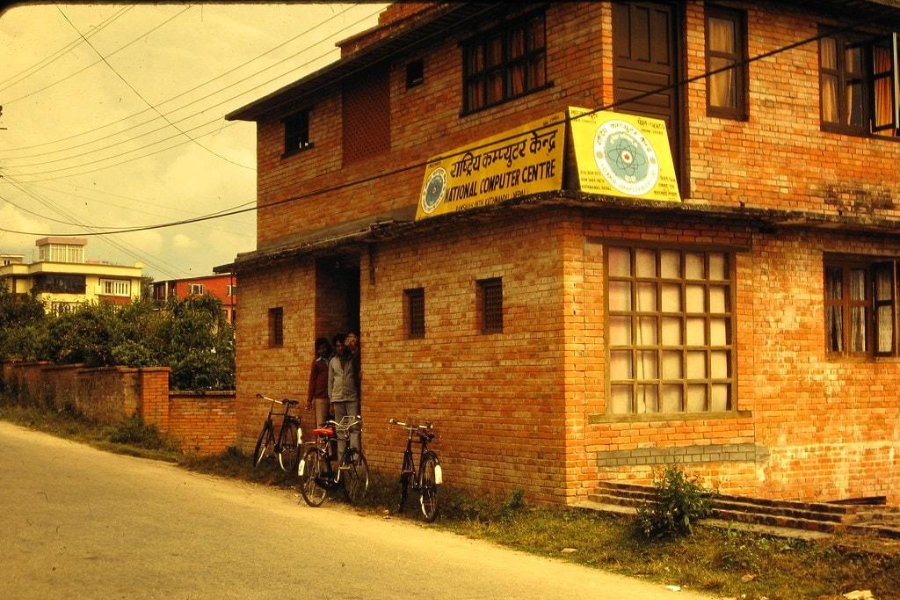
In 1974 (2031 BS), Nepal established the Electronic Data Processing Centre (Yantrik Sarinikaran Kendra). The organization was later reorganized into the National Computer Center (NCC) and eventually evolved into today's National Information Technology Center (NITC).
The IBM 1401 itself was later purchased by the government after initially being rented. It was moved to Singha Durbar, where it continued supporting government operations and became an important part of Nepal's early computing history.
A Brief History of Computer in Nepal After 1971
Upgrading Mainframes
As Nepal's computing needs continued to grow, the government introduced a more advanced system for the 1981 National Population Census. The ICL 2950/10, a fourth-generation mainframe computer, was imported from England with financial support from UNDP and UNFPA at an estimated cost of USD 2 million.
Compared to the IBM 1401, the ICL 2950/10 offered a major improvement in processing power and supported 64 terminals, allowing multiple users to work on the system simultaneously. It handled much larger volumes of data more efficiently and played a key role in processing the 1981 census. After completing its service, the machine was preserved as a museum exhibit because of its historical significance.
The Microcomputer Revolution
By the early and mid-1980s, computers gradually became available beyond government offices. Personal microcomputers from brands such as Apple, Vector, and Sirius started entering Nepal through private importers and businesses.
This marked an important shift in the country's computing landscape. Computers were no longer limited to government departments and large organizations. Businesses, educational institutions, and eventually individuals also began adopting computer technology. As access improved, computers became increasingly useful for education, accounting, business operations, and other professional work.
.png)
The Commercial Boom
The widespread adoption of personal computers laid the foundation for Nepal's growing IT industry during the 1990s. Private computer training institutes and IT consultancy firms began opening across the country, while colleges and universities introduced dedicated programmes in computer science and information technology to meet the increasing demand for skilled professionals.
The decade also witnessed the arrival of Nepal's first internet service providers. In 1995, Mercantile Communications launched commercial internet services, giving businesses and individuals access to the internet for the first time. This development opened new opportunities for communication, education, and business, accelerating the country's digital transformation.
What began with a single rented IBM 1401 for census processing gradually evolved into a growing technology ecosystem. Within a few decades, Nepal had built the foundation of an IT industry that continues to expand through software development, digital services, startups, and innovation.
Conclusion
The arrival of the IBM 1401 in 1971 marked the beginning of Nepal's journey into the world of computing. Although it was introduced to solve a specific challenge of processing census data, its impact extended far beyond that single project. It demonstrated how computers could improve the speed, accuracy, and efficiency of large-scale government operations.
The success of the IBM 1401 encouraged the government to invest further in computerization, leading to the establishment of institutions such as the National Computer Center and creating the foundation for Nepal's growing IT sector. Over the years, advances in technology, education, and internet connectivity have transformed the country's digital landscape.
From a single rented mainframe processing punched cards to a nation with a rapidly expanding software industry and digital economy, Nepal's computing journey reflects decades of steady progress. The story of the IBM 1401 remains an important chapter in the country's technological history and a reminder of how one practical decision helped shape Nepal's future.
What's Next for Nepal's Tech Scene?
More than five decades after the IBM 1401 arrived in Nepal, technology has become an essential part of everyday life. The country is now home to a growing software industry, an expanding startup ecosystem, and a young workforce contributing to both local and international technology companies.
While today's computers are vastly different from the mainframes of the 1970s, Nepal's progress has been driven by the same willingness to embrace new technology and innovation. The IBM 1401 may have been introduced for a single government project, but it laid the groundwork for the digital transformation that continues across the country today.
Do you remember Nepal's early days of computing, or did someone in your family work with systems like the IBM 1401 or ICL 2950/10?
Share your memories or thoughts in the comments below. We'd love to hear your story.
Frequently Asked Questions
Article Last updated: July 26, 2026