Why Trust Gadgetbyte?
At Gadgetbyte, we invest substantial hours into rigorously testing each product or service we review, guaranteeing that you make informed purchases. Learn more about our testing process.
Review Overview
4.3
Display
9.5/10
Design
9.5/10
Performance
8/10
Rear Camera
8/10
Front Camera
8.5/10
UI/Software
9/10
Battery and Charging
9/10
Value for money
7.5/10
The OPPO Reno 15 Pro Mini is a charming compact phone that gets a lot right. It looks premium, feels great in the hand, delivers excellent battery life, a smooth ColorOS experience, and dependable cameras for everyday use. However, its mid-tier performance, thermal issues under load, and average ultra-wide and zoom cameras limit an open-heart recommendation.
Last year was truly the year of compact smartphones. We saw so many small-sized phones being launched. There was the Vivo X200 FE – what a nice, cute, balanced phone it was, and I really, really liked the OnePlus 13s.
A few months ago, we got the iPhone 17, the world's best-selling. Vivo then introduced the X300, my favorite compact phone. In 2026, the OPPO Reno 15 Pro Mini is the first compact phone launched, starting at INR 60,000 (NPR 97,000) for the 12/256GB variant, with impressive specs.
But the big question is: Is the Reno 15 Pro Mini justified for the price tag? Or should you wait for something like the Vivo X300 FE, which is launching pretty soon? Or should you spend a bit more and get my favorite compact phone: the Vivo X300?
Let me explain everything in this Oppo Reno 15 Pro Mini review.
Oppo Reno 15 Pro Mini Specifications:
- Design, build: 7.99mm thickness, ~187g, aerospace-grade aluminum frame, IP66/IP68/IP69 rating, HoloFusion Technology glass back, platinum-coated USB port
- Display: 6.32-inch AMOLED (LTPS), 1.5K (1216 × 2640 px), 120Hz adaptive, 3,600 nits peak brightness, 10-bit color, Corning Gorilla Glass 7i + AGC DT-STAR D+
- Chipset: MediaTek Dimensity 8450 (4nm)
- Memory: RAM and storage configurations not specified
- Software & UI: ColorOS 16 with 6-Year Fluency Protection
- Rear Camera: 200MP main (OIS, 4K HDR 60fps) + 50MP 3.5× telephoto portrait (OIS) + 50MP ultra-wide
- Front Camera: 10MP with 0.6× ultra-wide mode
- Connectivity: Wi-Fi 6, Bluetooth 5.4, Dual Nano-SIM + eSIM, AI LinkBoost 3.0, Custom X1 network chip
- Battery: 6,200mAh, 80W SUPERVOOC wired charging, 50W AIRVOOC wireless charging
- Price in Nepal (Expected): NPR 99,999 (12/256GB)
Oppo Reno 15 Pro Mini Review:
Design
Ok, as always, let me start with the good things, and of course, the first thing has to be the design.
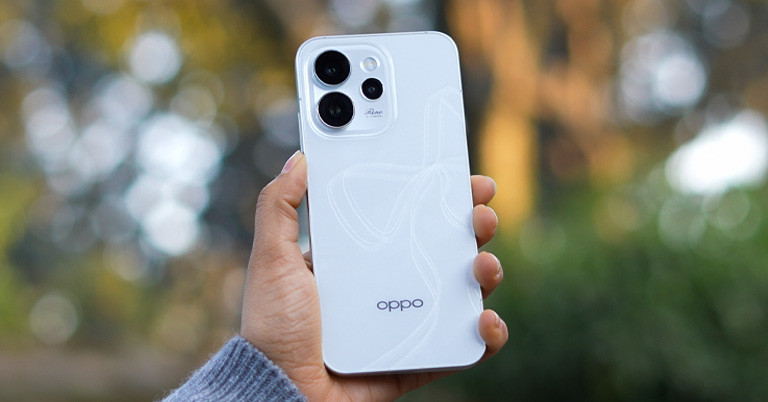
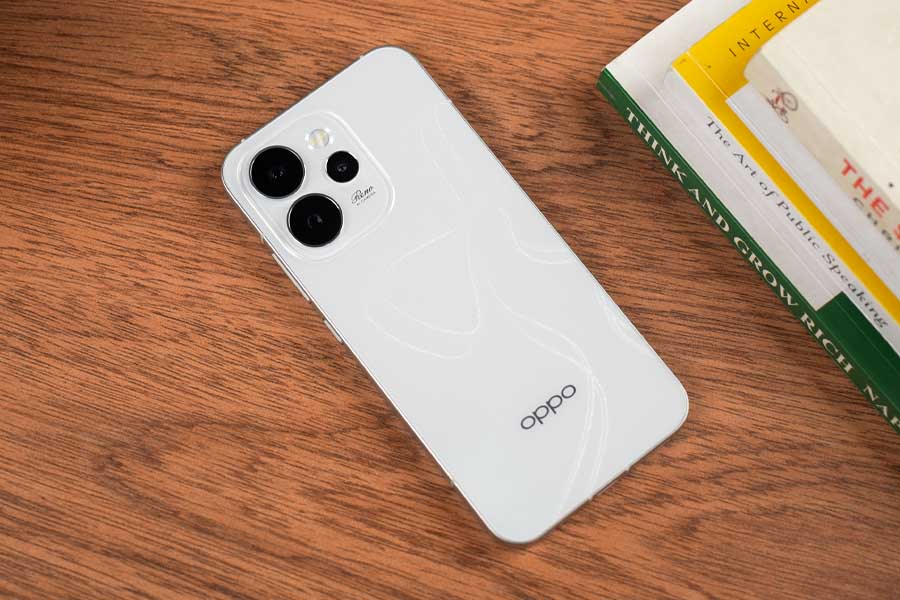
Here, the design is clearly inspired by the iPhone, with a flat, boxy shape. But what I really got to admire here is, despite having such a large battery, the Reno 15 Pro is not very thick and not that heavy either.
It also has one of the most comfortable in-hand feels and fits in my hand quite well for one-handed usage! This white color variant that I have with me also looks classy. There’s a slight engraving on the back that makes it unique. Even the build quality is quite solid – we get aluminum frames and a proper IP rating.
Display
In terms of the display, too, we get a pretty nice OLED panel. The colors are absolutely amazing, touch is very responsive, and the brightness is pretty good outdoors as well as indoors. Even at low brightness, it goes down to around 2 nits, which is pretty great. Likewise, the HDR10+ videos play well, and the overall display experience is very fluid. There’s no stutter, and the 120Hz refresh rate is quite optimised too.

There are, however, two not-so-good things about this display.
No 1. This is not an LTPO display; it’s just a regular LTPS panel.
And No 2. We don't get an ultrasonic fingerprint sensor. It's an optical fingerprint sensor, and the placement is also quite low for my liking.
Superb Speakers
By the way, the speakers are really, really good. They’re loud and have very good depth, so there’s nothing to complain about. The haptics are also pretty good. OPPO uses its O-Haptics system here, and it’s integrated well across the UI. So whether I’m changing the brightness, adjusting the volume, unlocking the phone, or just typing, the feedback feels very satisfying.

Strong Battery life
Another strong point of this phone is also the battery life. We get a pretty big 6,200mAh silicon–carbon battery here. And honestly, the battery life has been excellent. Despite not having an LTPO display, I’m still easily getting around 8 to 9 hours of screen-on time with heavy usage. So for most people, this is very comfortably a full one-day phone, even if you’re a power user.
On top of that, OPPO has also included an 80-watt fast charger inside the box, which takes the phone about 55 minutes to get fully charged from 0%.
Optimized ColorOS
Another thing I liked here is the overall experience you get with this phone. I love ColorOS. It is well optimized, and for the most part, you’ll feel quite satisfied with the performance. There are no lags, no stutters in the system UI, RAM management is excellent, and the overall experience feels quite smooth.
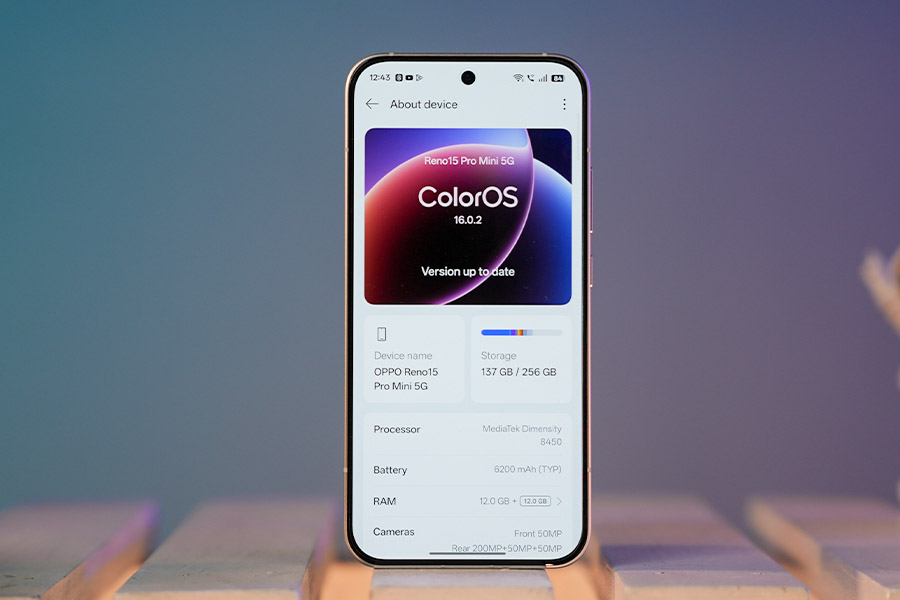
I can also uninstall most of the bloatware apps, and even if I can’t uninstall them, I can disable them. So overall, the day-to-day experience you get with this phone is quite good.
Performance
But yes, the Dimensity 8450 chipset on this phone is not the most powerful system-on-a-chip, but for everyday tasks, it’s pretty decent, more than good enough for normal usage.
That said, considering the price of this phone, I do think OPPO should have given a better chipset here.
They could have gone with something like the Dimensity 9400 from last year, or even the newer Dimensity 8500 or Snapdragon 8 Gen 5. Either of those would have made more sense at this price point. You also get just UFS 3.1 storage, which is on the slower side compared to what competitors are offering.
Bad Thermals
But the biggest issue I have with this phone is its thermal performance.

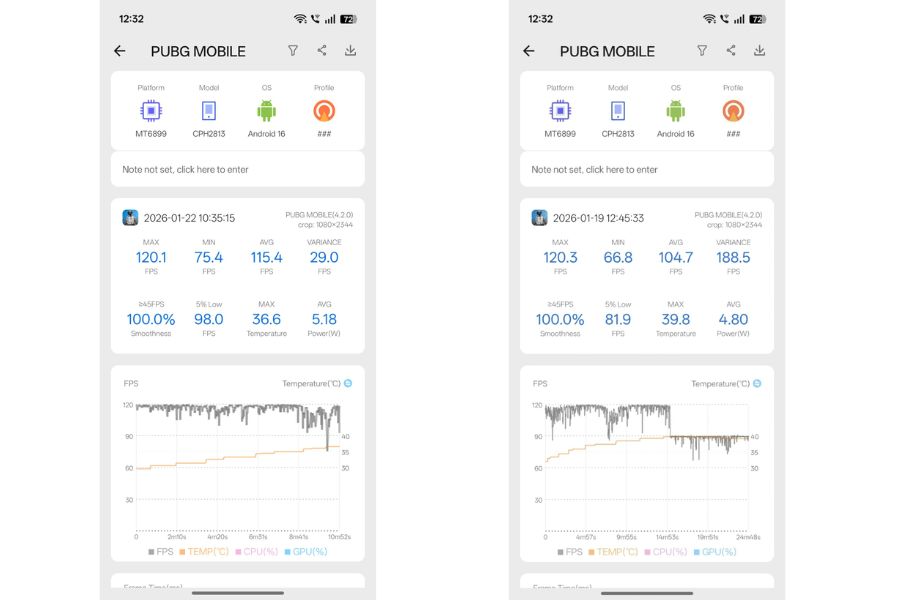
For short gaming sessions, it’s completely fine. As you can see from this screenshot Playing PUBG for around 10 minutes, I got around 115 FPS on average, but playing again for 25 minutes, the average fps was just 104. So, maybe it's because of the compact size or maybe because of the lack of a proper vapor chamber cooling solution, it heats up quite badly during prolonged gaming sessions or even when using it outdoors on a sunny day.
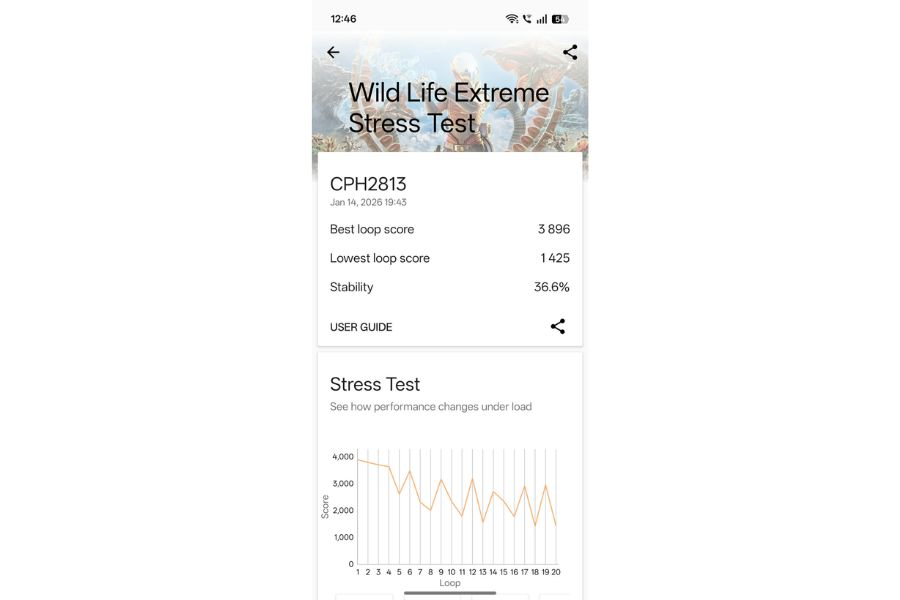
Also, look at this result of the Wild Life stress test; the stability is just 36%, which is quite low. In comparison, the Vivo X300 or even the iPhone 17 perform significantly better in sustained performance. And once the phone starts heating up, you will actually notice stutters while opening apps or multitasking.
Camera
Ok, let's talk about cameras, and for the most part, if I am not directly comparing it to something else, the photos from the main camera, ultra-wide camera, and the 3.5x telephoto camera of the Reno 15 Pro Mini are pretty decent.
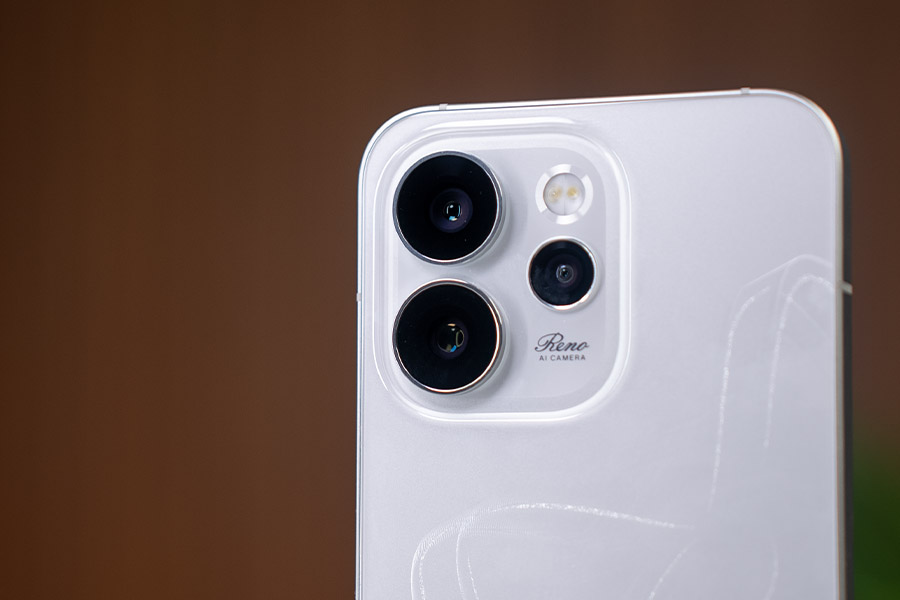
Images do come out slightly on the brighter side, and the white balance can be a bit off at times, which is something we’ve occasionally seen on OPPO phones. But overall, you still get very good photos from all three rear cameras. I think for most users, you’ll be happy with the camera output.
The selfie camera is, however, something I liked so much. It’s extremely wide, probably one of the widest selfie cameras I’ve seen on a smartphone. So if you take a lot of group selfies with friends or teammates, you’re definitely going to enjoy this. Even for video, if you do a lot of vlogging, the wide field of view from the front camera is excellent.
Comparison with Vivo X300
However, I did test this camera side by side with the more expensive Vivo X300, just for reference, it uses a better camera sensor, and because of that, the overall results are simply on another level.
One thing I didn’t like about the Reno 15 Pro is that OPPO doesn't include a periscope zoom lens. Instead, we get a telephoto lens. Because of that, I’m not a big fan of macro photos; they just turn out average.
The ultra-wide camera is another weak point. The sensor used here feels a bit weak, and because of that, ultra-wide photos are not that impressive. The video quality from the ultra-wide camera is especially poor in low light; you’ll notice a lot of jerkiness and noise, which clearly shows that this is not a very strong sensor.
As for portraits, they’re actually quite nice. I really liked some of the shots I got from the 3.5x telephoto lens. In good lighting, it can capture some nice 85mm portraits, and they’re not bad at all.
But again, when you compare them side by side with the Vivo X300, you can clearly see the difference in class. The background separation, the sharpness, and overall details aren’t as good compared to the Vivo X300.
Even during low light, I noticed that the Vivo X300 has much better glare control, whereas on the OPPO, glare handling is not very good. Even the ultra-wide photos show an unsettling red tint, whether it’s daytime or low light.
So yeah, if I had to rate the camera on the OPPO Reno 15 Pro Mini, I’d give it a solid B+, where the Vivo X300 would get a solid A.
Oppo Reno 15 Pro Mini Review: Conclusion
Ok, so would I recommend the OPPO Reno 15 Pro Mini for INR 60,000 (NPR 97,000)? I think, for the most part, this is a very good compact phone. I genuinely enjoyed my time using it. It’s cute, it has decent cameras, the battery life is great, the display is nice, and the overall software experience is very good.
However, I can’t 100% recommend this phone from my heart, because of 2 reasons:
A - The performance of this phone, especially for gaming, is not the best, and overtime this phone will slow down.. and that’s something you just can’t ignore if are spending 60,000 rupees.
And B - while the cameras are decent, they could have been better, especially the sensors OPPO chose for the ultra-wide and telephoto cameras.
So, if you are not specifically looking for a compact phone, I think there are just better alternatives out there. For example, last year’s OnePlus 13, which is available for the same INR 60,000 price, is a better phone overall, in my opinion. The Vivo X200t, which just got launched, is also a better product. I have been using it for a few days now, and it clearly offers more.
And if you can stretch your budget a bit, the Vivo X300 (review) gives you a much more complete compact flagship experience. Also, if you can wait a little longer, the Vivo X300 FE looks very promising too. It offers a better chipset and a better zoom camera for the price. So yeah, the Reno 15 Pro Mini would have made a lot more sense if it were priced closer to INR 50,000 (NPR 80,000).
Oppo Reno 15 Pro Mini Review: Pros & Cons
Pros:
- Beautiful compact design
- Superb display and speakers
- Awesome battery life
Cons:
- Not so competitive
- Poor thermals
- A bit overpriced
Article Last updated: February 3, 2026