Researchers at CSIRO have built the world's first working quantum battery prototype, one that actually charges faster as it gets bigger. Here's what that means, and what it doesn't.
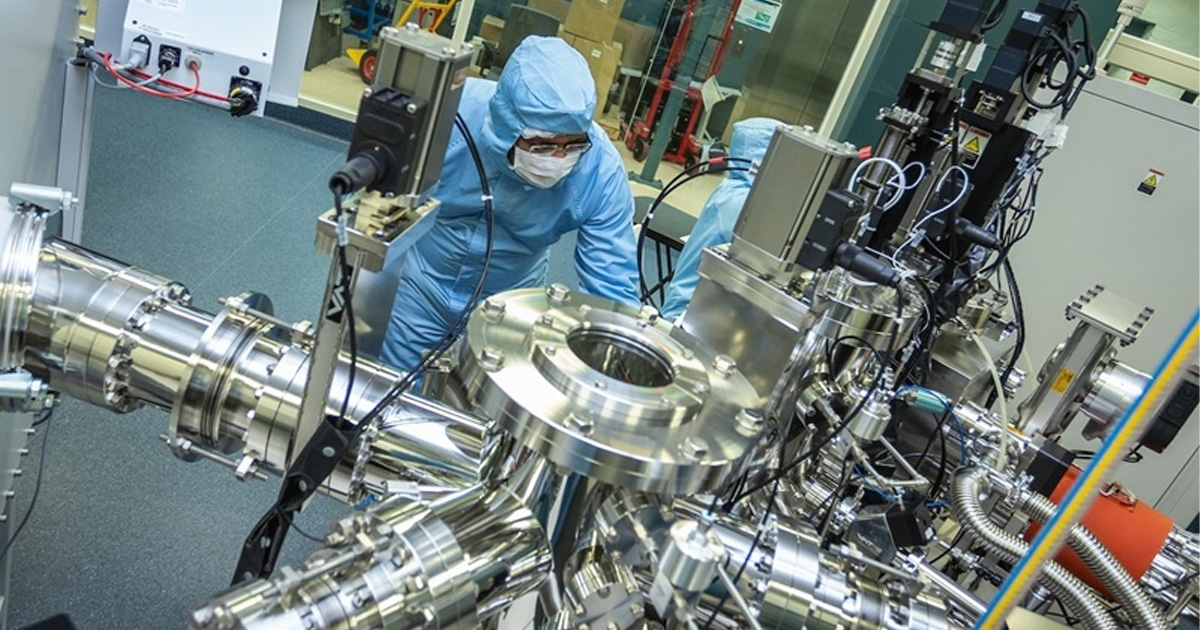
The word "quantum" has been used as a prefix in much of futurism discussion, which has been nothing but a pseudo-scientific buzzword for the most part. But researchers seem to have found something that actually works and is rather based on actual mechanisms of quantum mechanics. That is the quantum battery. Bear with me, in this article we will get to that in more detail.
Quantum Battery Overview
The breakthrough
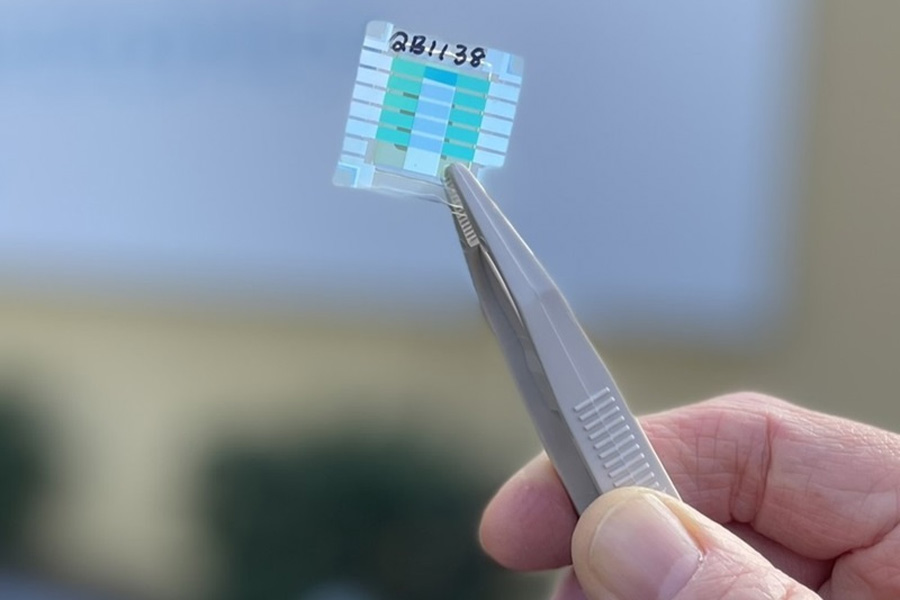
Researchers at CSIRO, Australia's national science agency, have apparently built the world's first working quantum battery prototypes, and the published results in the journal Light: Science & Applications. The main idea may sound very counterintuitive if you are unfamiliar with QM. Which is, the bigger a quantum battery gets, the faster it charges. It’s the opposite of how every battery we've ever used works. In our everyday use, something like charging a phone takes more than an hour on average. Let’s not even get started with more complicated things like an electric car, which often takes all night. The overall point is that size and charge time always move together, at least in conventional batteries. But in quantum batteries, they don’t work like that; they move in the opposite direction, and this comes down to something called collective quantum effects.
The working
In a normal battery, each storage unit charges independently. The more units you have, will takemore total time. In a quantum battery, under the right conditions, the storage units don't behave individually. They behave collectively, as if they're aware of each other.
Even if the physics behind it is very strange, the math behind it is kind of simple. If a single unit takes one second to charge, and you have N units all charging together through collective quantum effects, each unit takes 1/√N seconds instead of one full second. Double the size of the battery, and the charge time drops to just over half. Keep scaling it up, and the charge time keeps falling.
Also, read
- OPPO Find N6 launched with 200MP Hasselblad Camera, 6000mAh Battery, and Zero-Feel Crease
- Samsung Galaxy M17e 5G Launched in India with 6 years of software updates!
The prototype
The 2022 prototype used an organic microcavity, which is essentially a precisely engineered multi-layer sandwich of materials that traps light in a controlled way. That prototype demonstrated the core behaviour: larger quantum batteries do charge faster, matching what theory had predicted.
The limitation was that you couldn't get the energy back out. But this latest work solves that. The Aussie team added extra layers to the device that convert the stored energy into an electrical current.
Quantum Battery Limitations and Conclusion
But none of this is going on our phone anytime soon. Because the capacity of the current prototypes is very tiny, which is in the range of a few billion electron-volts. And the time they hold their charge is measured in nanoseconds. For context, a nanosecond is one billionth of a second. So while the charging mechanism works, the battery forgets it was charged almost immediately.
Hence, for powering a phone or a laptop, this is nowhere near useful yet. But for quantum computers, which operate at the same scale and have their own energy management challenges, quantum batteries could actually be well matched to the problem. However, the CSIRO team is still working on scaling up the prototype and extending the duration of the charge. The longer-term goal seems to be a hybrid design that combines quantum charging speed with the storage duration of a classical battery.
- Meanwhile, check out our review of the Poco X8 Pro and X8 Pro Max
Article Last updated: March 19, 2026

![Nothing Phones Price in Nepal [Updated 2026]](https://media.gadgetbytenepal.com/2025/11/Nothing-Mobile-Price-in-Nepal.jpg)
![Induction and Infrared Cooktops Price in Nepal [Updated 2026]](https://media.gadgetbytenepal.com/2026/03/Induction-and-Infrared-Cooktops-Price-in-Nepal.jpg)