The Redmi Note 9 Pro offers gorgeous design and excellent battery endurance, but can it still hold its crown as the mid-range king? Let's find out in this review!
Why Trust Gadgetbyte?
At Gadgetbyte, we invest substantial hours into rigorously testing each product or service we review, guaranteeing that you make informed purchases. Learn more about our testing process.
Review Overview
4.1
The Redmi Note 9 Pro is a gorgeous looking smartphone with excellent battery endurance and good performance. However, if you want consistently better camera performance, I think you should be leaning more towards the Galaxy M31.
Design and Build
9/10
Display
8/10
Performance
8/10
Software
7/10
Camera
8/10
Security
8/10
Battery
9/10
Value for Money
8/10
Design
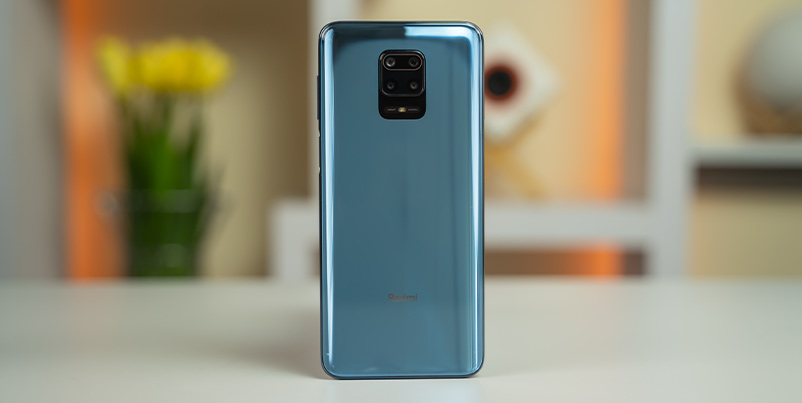
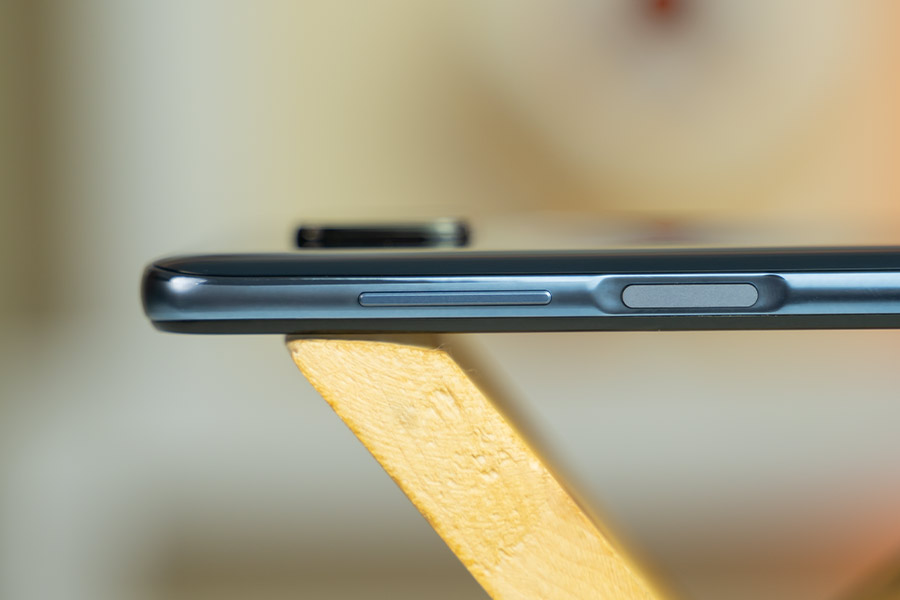
During my time with the Note 9 Pro, I have been comparing it with the Samsung Galaxy M31 and the Realme 6. And the first thing that stands out with the Note 9 Pro is its design. It feels way more premium than the other two, thanks to its glass back. The frames are also well-built, although it’s plastic.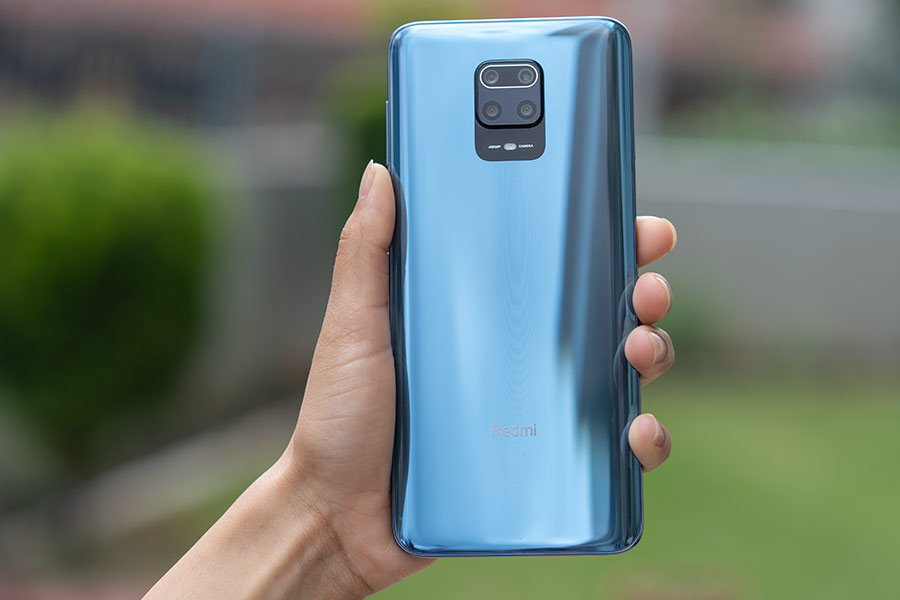
Display
The display here is a Full-HD IPS panel, and since the Realme 6 was launched like 2 months before this, I was most definitely expecting a 90Hz panel. Sadly, that’s not the case here. But in Xiaomi’s defense, they have included a quality IPS panel with a near AMOLED-level contrast and color reproduction. The touch response is quite fast with very little latency too.
Performance
Moving on to the performance side of things, the Snapdragon 720G on the Note 9 Pro has served me well. I got the 6GB RAM and 128GB storage variant because 64GB is kind of low for me and most people these days. So, though you can still upgrade the storage using a microSD card, my suggestion is you get the 128GB variant instead. And I could see a lot of comments from smartphone enthusiasts that the SD 720G is not a proper upgrade from the Helio G90T found in its predecessor, the Redmi Note 8 Pro. Yes, the Helio G90T chipset has a slightly better benchmark score, but the SD720G is a much more balanced chipset. It is based on the 8nm architecture and thus offers much better thermal and battery efficiency compared to the G90T. For example, playing games for 30 minutes on the Note 8 Pro heats the phone too fast, whereas the Note 9 Pro can maintain a moderate temperature throughout the gaming session. That being said, the better GPU on the Note 8 Pro means you can easily get about 60fps in PUBG at smooth graphics and extreme frame rates, whereas the max graphic setting you can achieve on the Note 9 Pro is “ultra” frame rates. Besides, normal usage like multitasking, web browsing, and using social media apps have been decent so far, despite having installed over 30 apps. Obviously, if you are used to flagship devices, this one does feel a little slow when you are multitasking or browsing and scrolling heavy pages. But, since it is intended for budget-conscious buyers, they should feel this phone pretty fast.Software
The Redmi Note 9 Pro runs on Android 10 with MIUI 11.0.7 on top, and I have recently received the May security update. And Well, the new MIUI 12 is also on the way, and that’s great too.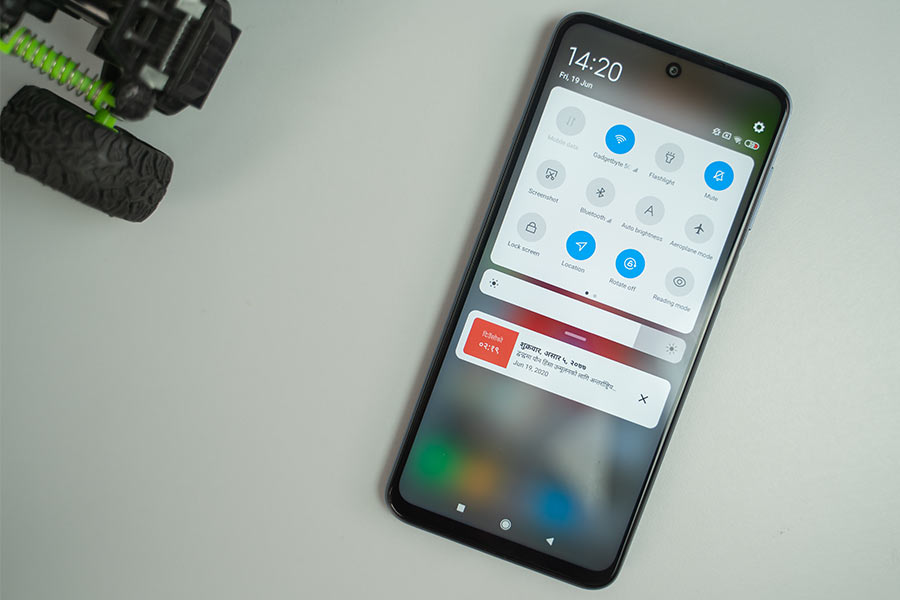
Cameras
Back Camera
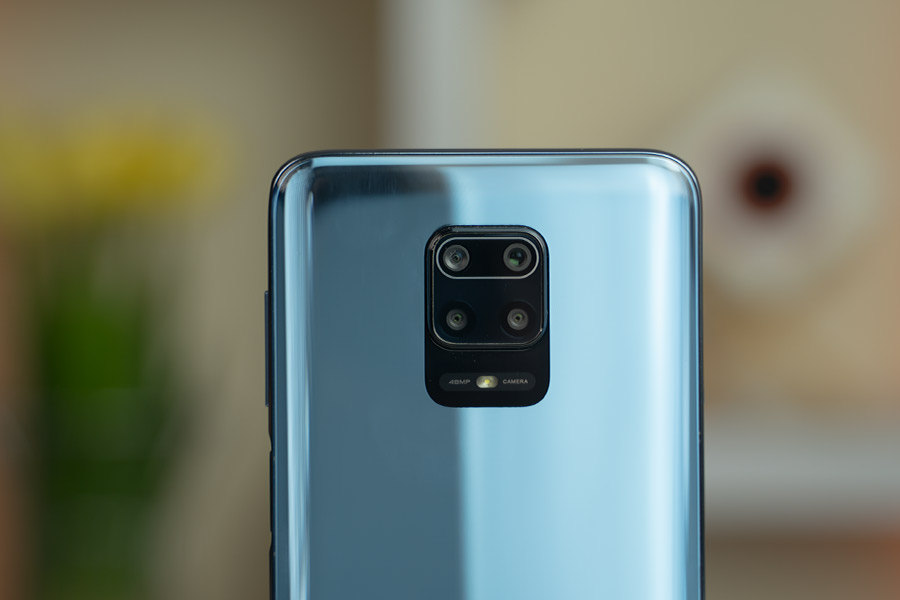
Like its predecessor, the Note 9 Pro has a gimmicky quad-camera setup. Gimmicky as in there is this macro lens and the depth sensor. Strangely, the primary camera here is an inferior 48MP Samsung GM2 sensor found on the much cheaper Redmi Note 8 from last year. Another weird thing is that the two-generation old Redmi Note 7 Pro had the-then flagship Sony IMX586 sensor. Similarly, the Note 8 Pro had the 64MP Samsung GW1 sensor, and now we’re getting a comparatively inferior GM2 sensor.So, does it mean that earlier generation of Redmi Note devices had a better camera setup than the latest Note 9 Pro?The thing is, with every iteration, Xiaomi is improving its camera optimization because computational photography is equally important like the core camera sensor itself. And that’s exactly where the Note 9 Pro excels at. Comparing the images from Note 8 Pro and the Note 9 Pro, I found that the latter has a much better dynamic range. Similarly, portraits and selfies look more pleasing on the Note 9 Pro as well. Another improvement Xiaomi has made with Note 9 Pro’s camera optimization is saturation. Here, you get punchy and slightly oversaturated images, which is pretty ideal in terms of landscape photography. However, in other scenarios, the optimization feels overdone with unnatural colors. Comparing against the Galaxy M31, I found the primary lens’s performance to be pretty competitive. While the M31 has better colors and dynamic range, the Note 9 Pro excels in terms of details.
Selfies
Selfies share the same story. I found the Note 9 Pro’s selfies to be pale with average background colors, whereas the skin tone on the M31 is natural with an excellent background color. The portrait selfies are also better on the M31.Video Quality
Video is also another area where Note 9 Pro outperforms the competition. You can record videos at 4K/30fps, 1080P/60fps, 1080P/120fps, and even 720P at up to 960fps. It offers great stabilization in 1080P 30fps videos. Although the colors are a little inaccurate, I guess the stabilization makes up for it. Similarly, there is stabilization in ultra-wide-angle videos too at 1080P @30fps. But despite having better video output, overall, in terms of camera, I think Xiaomi still needs to work on its optimization even though it’s gotten better over the years. And maybe they could have included the better Sony IMX686 sensor that’s present on the Poco X2. Because of these, I think the camera on the Note 9 Pro is acceptably moderate with a lot of room for improvements.Audio Quality
The audio output here is pretty average too and it’s not as good as the Galaxy M31, but it should be sufficient for watching movies and stuff. Sadly, the quality from the 3.5mm headphone jack is also pretty mediocre. Here too, the M31 outperforms it with a loud and pleasing sound.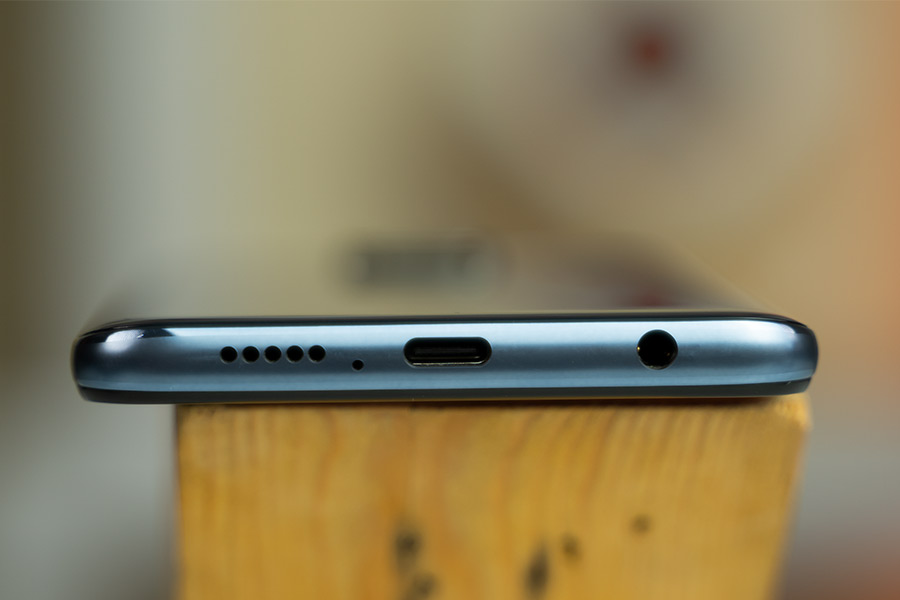
Battery
The big 5020mAh battery on the Redmi Note 9 Pro provides excellent endurance. That’s mainly thanks to the aforementioned energy-efficient chipset. As a result, the battery life on the Note 9 Pro is much better compared to the Helio G90T-powered Redmi Note 8 Pro. Regrettably, you only get an 18W fast charging in here; which takes around 2 hours and 15 minutes to fully charge the phone from 0 to 100%. So, I think Xiaomi should have given a 30 or 33W charging like the Note 9 Pro Max because waiting for over 2 hours surely isn’t that easy.Conclusion
To wrap things up, I’d say the Redmi Note 9 Pro is a pretty decent budget phone. It offers good overall performance in all departments, unlike its closest competitors like Realme 6 (Read review) or Samsung Galaxy M31 (Read review). To recall, the Realme 6 had a smoother 90Hz display but its camera was fairly average only. Similarly, you probably know what I’m gonna say about the M31 – yup, its performance is quite incomparable. So, in my opinion, the Redmi Note 9 Pro gives you much better performance in practically every aspect of a smartphone. However, if you want consistently better camera performance, I think you should be leaning more towards the Galaxy M31, or if you have a little bit of spare cash, getting the Poco X2 or the Realme 6 Pro is no brainer.
Redmi Note 9 Pro Review: Pros & Cons
Pros:- Good IPS display
- Good battery endurance
- Premium design for its price
- Cameras could have been better
- The output from 3.5mm jack is average
Article Last updated: July 5, 2020

![Dell Laptops Price In Nepal 2026 [Updated]](https://media.gadgetbytenepal.com/2022/12/Dell-Laptops-Price-in-Nepal-2023-Updated.jpg)
![Dell Wyse 5470 (2022) Price in Nepal [Updated]](https://media.gadgetbytenepal.com/2025/07/Dell-Wyse-5470-Price-in-Nepal.jpg)
![Lenovo Laptops Price in Nepal 2026 [Updated]](https://media.gadgetbytenepal.com/2023/04/Lenovo-Laptops-Price-in-Nepal-2023-July-Update.jpg)