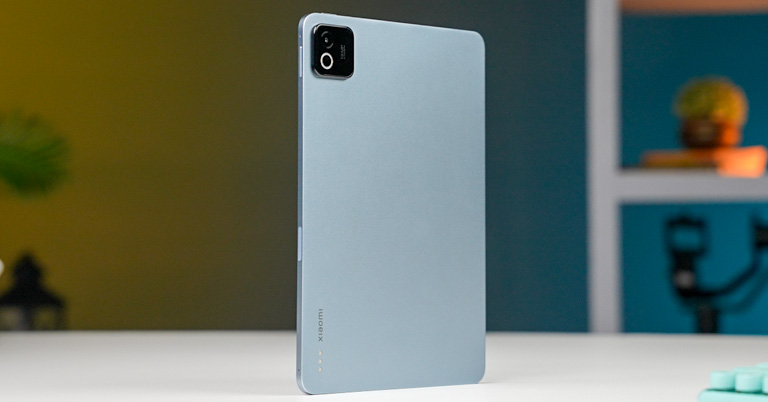
The Xiaomi Pad 8 is a reliable midrange tablet with a vibrant 3.2K display, Snapdragon 8s Gen 4, and long battery life—ideal for work & entertainment.
Why Trust Gadgetbyte?
At Gadgetbyte, we invest substantial hours into rigorously testing each product or service we review, guaranteeing that you make informed purchases. Learn more about our testing process.
Review Overview
4.2
Design and build
8.5/10
Display
9/10
Performance
9/10
Cameras
7/10
Software and UI
9.5/10
Battery
9/10
Audio
7/10
Value for money
8.5/10
When I reviewed the Xiaomi Pad 7 last year, I was honestly struggling to find anything wrong with it. It easily felt like one of the best value-for-money tablets I had ever tested. Now, Xiaomi is back with the Xiaomi Pad 8. And in this Xiaomi Pad 8 review article, I’ll dive into everything you need to know about it—design, display, performance, software, battery life, and whether it truly improves on its predecessor.

Xiaomi Pad 8 Specifications:
- Design, Build: 251.22 × 173.42 × 5.75mm, ~485g, aluminum construction, Colors: Black, Ice Crystal Blue, Turquoise Green
- Display: 11.2-inch LCD, 3200 × 2136 px (3.2K), 3:2 aspect ratio, 144Hz refresh rate, 800 nits peak brightness, Dolby Vision, HDR10, HDR Vivid, full DC dimming, optional AG matte coating
- Chipset: Qualcomm Snapdragon 8s Gen 4, integrated graphics
- Memory: 8GB/12GB LPDDR5x RAM, 128GB/256GB UFS 3.1 storage, no microSD slot
- Software & UI: Android 16 with HyperOS 3, WPS Office, CAD support, PC-grade productivity tools
- Rear Camera: 13MP sensor
- Front Camera: 8MP sensor
- Security: Side-mounted fingerprint scanner (power button)
- Connectivity: Wi-Fi 7, Bluetooth 5.4, USB-C 3.2 Gen 1, IR blaster
- Sensors: Flicker sensor, color-temperature sensor, accelerometer, gyroscope
- Battery: 9,200mAh, 45W fast charging
- Price in Nepal (Expected): NPR 54,999 (8/128GB), NPR 59,999 (8/256GB)
Xiaomi Pad 8 Review:
Design and Build
You know, when I reviewed the Xiaomi Pad 7 last year, I was really—and I mean really—struggling to find anything wrong with it. In fact, if someone asked me, “What’s the best value-for-money tech product you’ve ever reviewed?” I’d probably point my finger towards the Xiaomi Pad 7.
And now, we have the Xiaomi Pad 8. I don’t know exactly how much it will cost in Nepal as I’m writing this review, but I can almost guarantee you that we’ll be seeing some price hike this year.
Not because it has a ton of insane upgrades, but thanks to all the AI companies eating up the entire world's memory chip supply. The RAM shortage has gotten so severe that some analysts are predicting the worst decline in smartphone sales ever! And if I had to guess, I think the Xiaomi Pad 8 will end up selling for some 54,000 rupees in Nepal. For the base 8/128GB model.
Anyway, if you look at the specs, the Xiaomi Pad 8 doesn’t bring too many upgrades. I mean, for one thing, its design is practically the same as last year. It’s got the same full-metal build as the Xiaomi Pad 7, and even their color options are twinning!
So it feels just as great to hold, and transferring files to and from an external drive on this thing is also quite fast, using the same USB 3.2 connection as before. Instead of the slow USB 2.0 port that’s more common in other midrange tablets.
The only way you’d be able to tell these two apart visually is by looking at the flash module, since Xiaomi has gone with a circular flash this time.
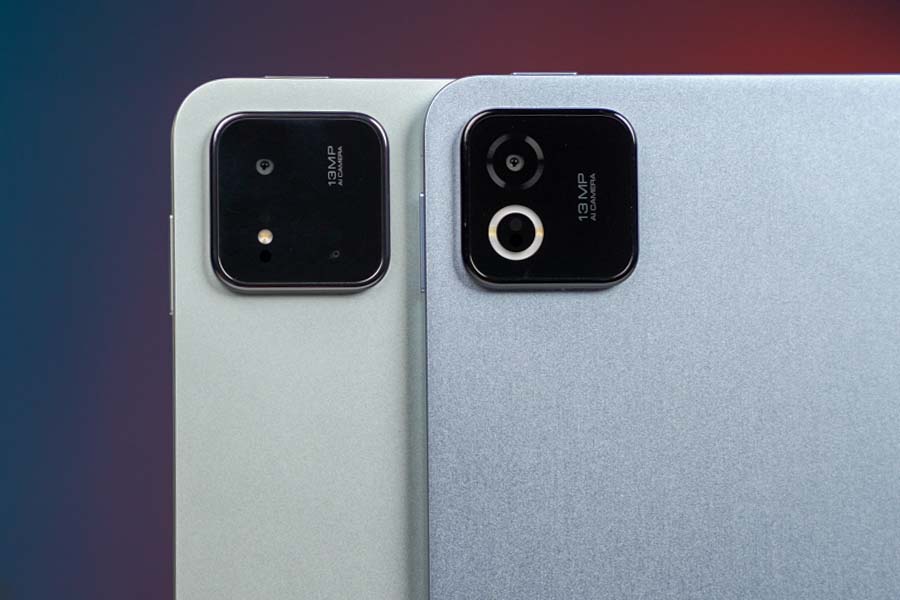
The Xiaomi Pad 8 is slightly slimmer and lighter—which is always welcome—since I prefer tablets that are comfortable to hold for extended periods. Apple’s iPad Pro exemplifies a well-executed "slim-and-light" tablet, but I think Xiaomi missed the mark. Its “slim” design has introduced a significant issue for the tablet, which I will explain shortly.
Display
But first, let me talk about what Xiaomi didn’t change – the display! The Xiaomi Pad 8’s display is essentially a “copy-paste job”. Not that there’s anything wrong with that, since the Xiaomi Pad 7 already had the best display for the price. Wait—let me read some of its specs and you’ll know exactly what I mean. So the Xiaomi Pad 8 brings an 11.2” IPS panel with up to 144Hz refresh rate, 800 nits of peak brightness, a tack sharp 3.2K resolution, and 12-bit colors with perfect calibration right out of the box.

That means everything looks sharp and feels smooth when I’m browsing the web, it's more than bright enough when I’m indoors, and binging my favorite shows is an absolute treat, too. Especially since the Xiaomi Pad 8 also has every HDR certification I could want! I can even go with a more expensive “nano-texture display” variant to reduce light reflections and glare, which should be particularly useful for field workers and the like who are constantly on the move. And as far as I’m concerned, an OLED panel is the only thing that’s missing here!

But I bet night owls aren’t gonna have any problem looking at this screen either. It can reduce blue light emissions at the hardware level, and it also offers DC dimming to prevent screen flickering. So all in all, while the Xiaomi Pad 8 has a fantastic display, its mediocre speakers unfortunately leave a bad taste.
Audio
But remember that “massive problem” I mentioned before? Well, what’s happened is that while pushing for a slimmer design, the speakers on this guy have taken a stupid hit. ‘Cause the drivers on the Xiaomi Pad 8 now don’t have enough physical space inside the chassis to move air for a wider, spacious sound.
It still has a four-speaker system with Dolby Atmos support, but I found the audio quality on the Xiaomi Pad 7 far superior. This thing gets considerably louder; it sounds much more open and detailed, and it even reproduces bass notes quite well. So, yeah, the Xiaomi Pad 8 has downgraded speakers.
Performance
Alright. Do you want to know why the “Xiaomi Pad” lineup continues to be an insane value year after year? That’s because Xiaomi never messes up when choosing the processor. Never.

The Snapdragon 8s Gen 4 upgrade continues the tradition of high performance. The Xiaomi Pad 8 is easily the most powerful tablet in this segment. It has a faster CPU and GPU than the previous 7+ Gen 3, and, surprisingly, better heat dissipation. In my gaming tests, the Pad 8 had noticeably cooler temperatures despite its slimmer chassis.
I still think Xiaomi needs to make a few updates to improve gaming performance, since it can’t play titles like “Mobile Legends” at 120 fps, which runs perfectly fine on the older Pad 7.

Besides a powerful processor, I love how Xiaomi has continuously improved its HyperOS software for big-screen devices. HyperOS 3 focuses on productivity, with features such as AI Dynamic Wallpaper, split-screen improvements, and Workstation Mode, which functions like Samsung DeX. Xiaomi also mentions PC-level browser support and a PC version of WPS Office, though both are “coming soon”.
Battery
The Xiaomi Pad 8’s battery life is impressive. Its 9,200 mAh battery is just 4% larger than the Pad 7's, but in real-world usage, the Pad 8 lasted an hour longer, finishing with 9.5 hours of screen time. Charging remains at 45W, with 22.5W reverse charging support.
Camera
The cameras are nothing outstanding, as always. Xiaomi’s “FocusFrame” feature, which is supposed to follow me during video calls, still doesn’t work properly. Even so, the cameras don’t ruin the tablet’s value proposition.

Xiaomi Pad 8 Review: Verdict
So, that is my full review of the Xiaomi Pad 8. Xiaomi has once again bagged a winner with this device. Its speakers suck, and there are some gaming-related hiccups, but otherwise the Pad 8 is a fantastic midrange tablet. The only true competition is the Xiaomi Pad 7 itself. The 7 still makes sense starting at 45,000 rupees. Otherwise, spending a couple thousand more on the Pad 8 is the way to go, which is bound to happen once it launches here.
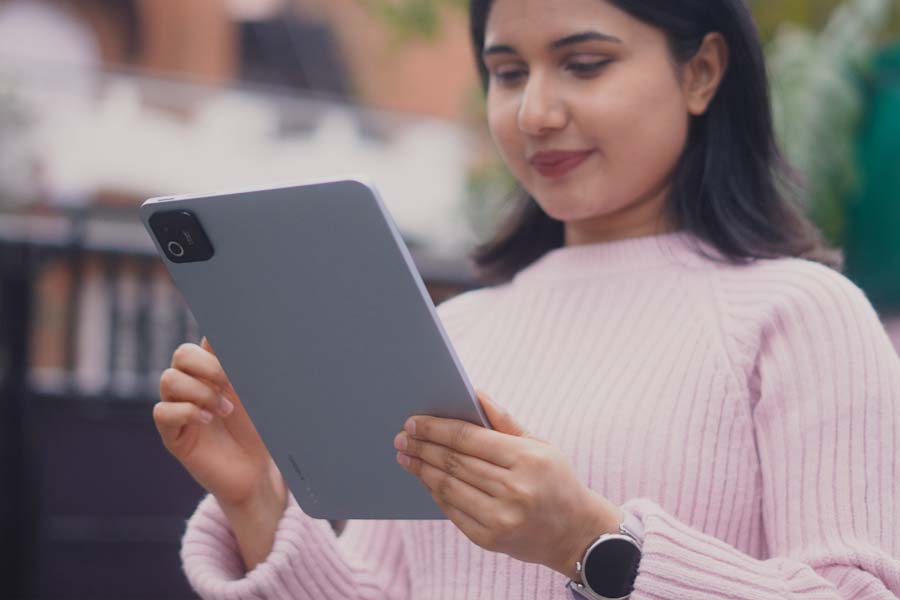
Xiaomi Pad 8 Review: Pros & Cons
Pros:
- Superb 3.2K res display with 144Hz refresh rate
- Powerful performance
- Long battery life
- Productivity features on HyperOS

Cons:
- Worse speakers than Xiaomi Pad 7
- Average cameras
Article Last updated: March 11, 2026

![Samsung Mobile Price in Nepal 2026 [Updated]](https://media.gadgetbytenepal.com/2025/11/Samsung-Mobile-Price-in-Nepal.jpg)
![DJI Gimbals Price in Nepal 2026 [Updated]](https://media.gadgetbytenepal.com/2022/06/DJI-Gimbals-Price-in-Nepal-2022-min.jpg)