Xiaomi has officially unveiled its latest flagship mobile processor, the XRing O3. The company claims it has surpassed 5.2 million on AnTuTu, along with major improvements in CPU, GPU, and AI performance compared with its predecessor. So yeah, in this article, I will discuss everything you need to know about the XRing O3, including its AnTuTu performance, CPU and GPU improvements, AI capabilities, and more.
Key Highlights
- Built using TSMC's advanced 3nm-class N3P process
- Uses 10 big CPU cores instead of having separate efficiency cores
- Xiaomi claims its multi-core performance can even beat Apple's M4
- New 16-core GPU brings major performance and efficiency improvements
- Dedicated AI processor rated at 200 TOPS
- First smartphone chip to support LPDDR6 memory
- Set to debut in the Xiaomi 18 Fold and Xiaomi Pad 9 Pro Max this September
XRing O3 Overview
No small cores here
Okay, starting with one of the biggest changes with the XRing O3: Xiaomi has dropped the usual efficiency cores. Instead, it comes with 10 big CPU cores split into three groups. There are two high-performance C1-Ultra cores clocked at up to 4.35GHz, four mid-range C1-Premium cores at up to 3.68GHz, and four C1-Pro cores reaching 3.15GHz.
Xiaomi groups the two Ultra and four Premium cores as six super-large cores and the four Pro cores as four large cores. The chip also gets 44MB of combined on-chip cache, including 12MB of private L2, 16MB of shared L3, and 16MB of SLC. This should help the chip handle heavier workloads more smoothly.
According to Xiaomi, the XRing O3 scores 3,945 in Geekbench 6.5 single-core and 15,221 in multi-core testing, which is 31% and 61% higher than the previous XRing O1, respectively. Xiaomi claims the multi-core score beats every other mobile SoC currently available, even edging out Apple's M4 in raw performance.
The chip also scored 5,228,014 in AnTuTu V11. Despite the performance boost, Xiaomi says the XRing O3 can use up to 25% less power under low-to-medium workloads compared to the previous generation.
GPU gets a serious upgrade
Now, talking about the GPU, the XRing O3 comes with a new 16-core Mali-based GPU. Eight of the cores have dedicated AI hardware, while the other eight skip this. Xiaomi says it can match the peak performance of the previous O1 while using 64% less power. In tests, it scored 4,567 in Steel Nomad Lite, which is 85% faster than the O1. It also scored 3,628 in 3DMark Solar Bay Extreme, 182% higher than the O1 and 63% higher than Apple's A19 Pro.
The GPU can also handle AI upscaling and frame generation on its own, without sending data to a separate AI processor. This helps reduce data movement, latency, and power use. Xiaomi says rendering at 540p and upscaling to 1080p can use 20% less power than rendering directly at 1080p. The GPU also supports upscaling from 1080p to 3.4K and can increase frame rates from 60fps to 120fps.
200 TOPS AI engine
AI performance is another major focus of the XRing O3. The chip has a dedicated quad-core AI processor that can deliver up to 200 trillion operations per second (200 TOPS). It also offers around 3.13 TFLOPS of vector processing performance, helping it handle AI tasks directly on the device.
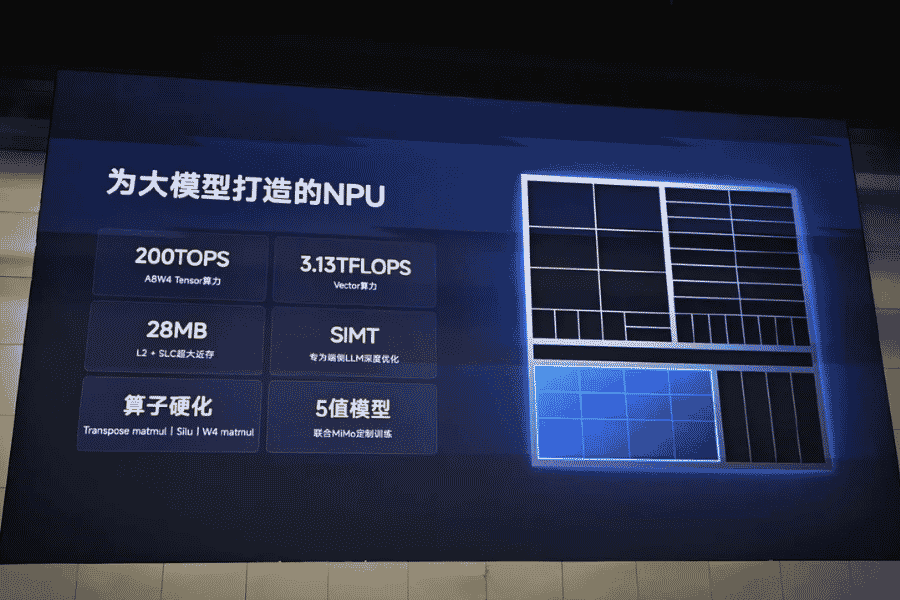
Xiaomi has also worked with its in-house AI model team to optimize the NPU for its own AI models. This could improve on-device AI performance and efficiency for tasks such as image processing, translation, and AI assistant features. However, how much of this performance users actually see will depend on how Xiaomi uses the hardware in its software.
A more powerful camera engine
Xiaomi has also upgraded the image signal processor (ISP) to its fifth generation. It can handle a single camera sensor with a resolution of up to 432MP, or a triple-camera setup with 64MP + 64MP + 50MP sensors. It also supports image processing at up to 24-bit depth and can record 4K video at 60fps with AI-powered noise reduction for night scenes.
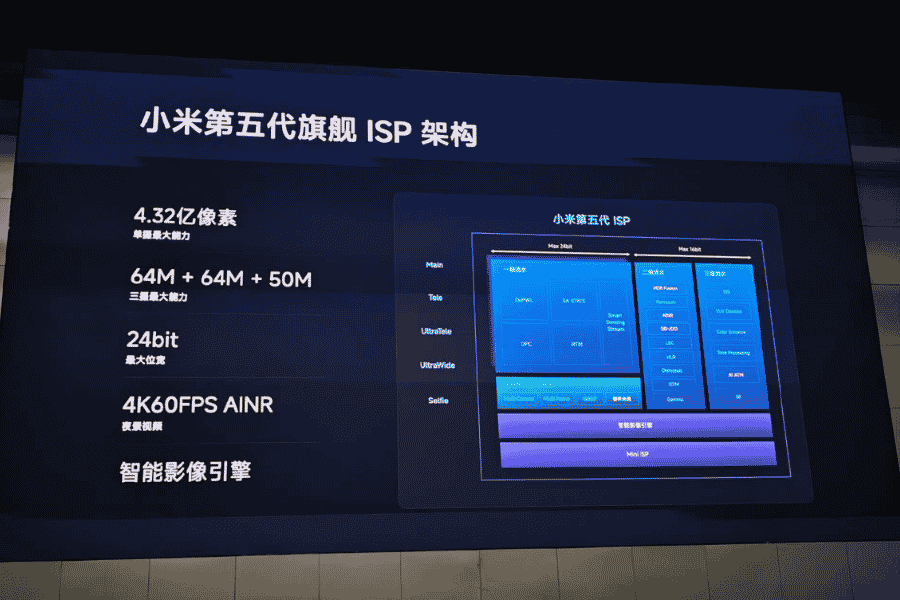
The ISP also comes with a dedicated computer-vision engine for handling camera-related tasks. There is also a smaller “mini” ISP that can handle simple, always-on camera tasks without constantly using the main image processor. This should help improve camera performance while keeping power use under control.
First smartphone chip with LPDDR6 support
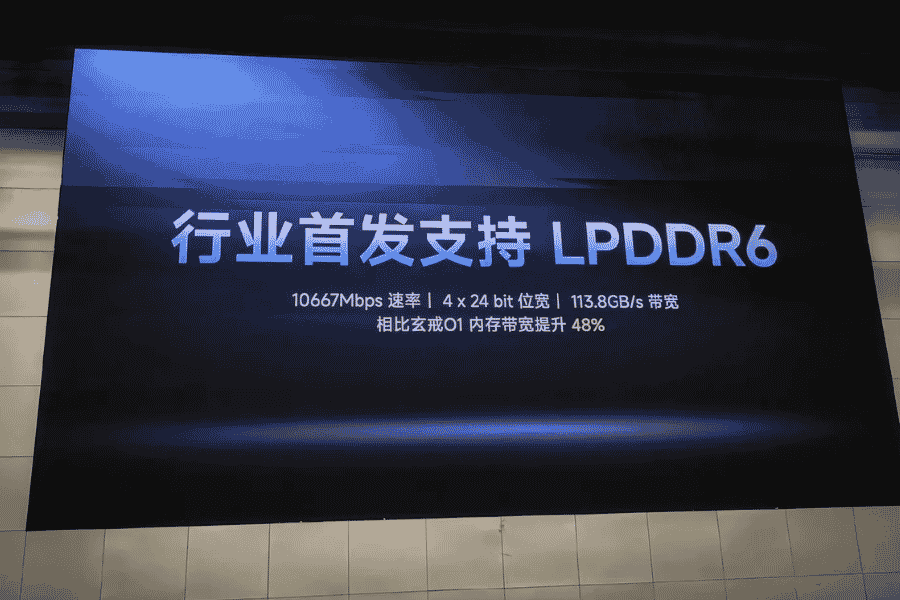
Xiaomi says the XRing O3 is the first smartphone chip to support LPDDR6 memory. The memory can run at up to 10,667 MT/s across four channels, providing a maximum theoretical bandwidth of around 113.8GB/s. Xiaomi's custom data-routing technology also helps keep memory latency around 82 nanoseconds. This should help the CPU, GPU, and AI engine access data more efficiently, especially during demanding tasks.
The processor also supports H.266 hardware video decoding, bringing support for a newer and more efficient video codec. For security, Xiaomi has added a dedicated RISC-V-based security core for trusted operations. Xiaomi says it has certifications for China's SM-series cryptography standards as well as CCRC EAL5+. The chip also supports hardware and software-based workload scheduling, which can adjust tasks as quickly as every 1 millisecond.
Which devices will get the XRing O3?
Xiaomi has confirmed that the XRing O3 will debut in two upcoming devices in September: the Xiaomi 18 Fold and Xiaomi Pad 9 Pro Max.
My verdict
On paper, the XRing O3 looks seriously impressive. Xiaomi has taken a different approach by dropping efficiency cores and using only big cores. With the claimed improvements in CPU, GPU, AI, and memory performance, Xiaomi is clearly aiming to compete with top chips from Apple and Qualcomm.
However, these are still Xiaomi’s own figures. The real test will come when the Xiaomi 18 Fold and Xiaomi Pad 9 Pro Max reach reviewers, and we get independent benchmark results.
Article Last updated: August 25, 2026

![Best Flagship Smartphones To Buy In Nepal [Updated 2026]](https://media.gadgetbytenepal.com/2026/04/Best-flagship-smartphones-to-buy-in-Nepal-2026.jpg)