Dell has finally upgraded its popular XPS 13 with Intel’s new Panther Lake processor, and the laptop has now officially launched in Nepal. The laptop remains one of the thinnest and lightest in its class while offering a 2.5K 120Hz display and the latest Intel Series 3 processors. So yeah, in this article, I will discuss everything you need to know about the all-new Dell XPS 13, including its features, specifications, price, and availability in Nepal.
Key Highlights
- The Dell XPS 13 features Intel’s latest Series 3 processors for improved performance and AI capabilities.
- It comes with a 13.4-inch 2.5K 120Hz touchscreen display with 100% DCI-P3 coverage.
- The laptop weighs just 1kg and measures 12.7mm thick making it one of the lightest and thinnest XPS laptops yet.
Dell XPS 13 Overview:
Design and Built
Starting with the design, Dell says the new XPS 13 is built for users who want a premium laptop experience without spending a lot. Despite being one of the most affordable models in the XPS lineup, the laptop hasn’t made any compromises on durability and portability. In fact, at just 12.7mm thick and weighing only 1kg, this is the thinnest and lightest XPS laptop Dell has ever made. Other than this, the company also claims it is smaller and lighter than Apple’s MacBook Neo while offering a larger display.
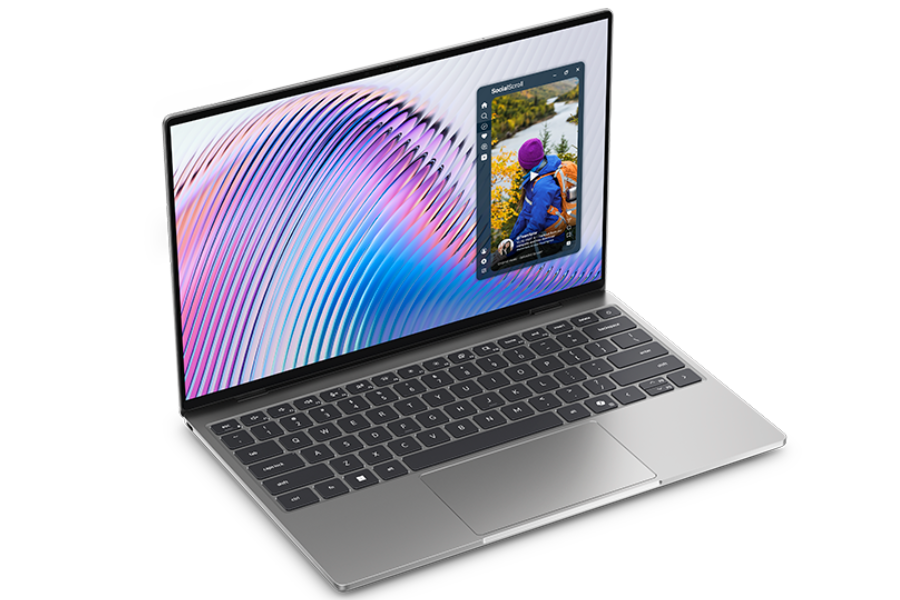
Moving on to the display, the Dell XPS 13 features a 13-inch 2.5K LCD touchscreen panel with 100% DCI-P3 color coverage. This combination results in vibrant colors and accurate visuals, perfect for both content consumption and creative tasks such as video/photo editing. Other than this, the display supports a variable refresh rate of up to 120Hz, automatically switching between 30Hz and 120Hz depending on the usage to balance smoothness and battery efficiency, and comes with a peak brightness of 500 nits.
You may also like:
- Nvidia Unveiled DLSS 5 at GTC 2026, and almost everyone has been calling it "AI Slop."
- NVIDIA's new “RTX Spark” laptop chip has up to 1 petaflop of AI performance and 128GB Unified Memory
Performance and Memory
Powering the new XPS 13 are Intel's latest Series 3 processors, with options ranging from the Core 5 320 to the more capable Core Ultra 7 355. Both chips come with an integrated NPU rated at up to 49 TOPS, allowing the laptop to handle AI-powered features more efficiently while maintaining low power consumption. For the GPU, here we have to rely on Intel Graphics, which is enough for daily tasks, but do not expect it to handle gaming, as the laptop is not designed for that.
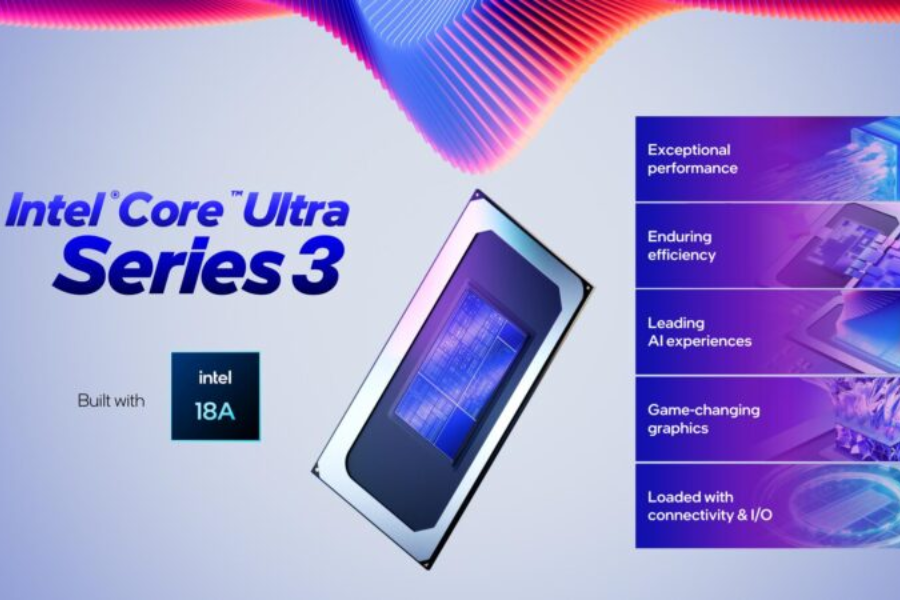
Talking about memory, the Dell XPS 13 tops out at 32 GB of LPDDR5x RAM clocked at 7467 MT/s, and for storage, we get a 1 TB PCIe Gen4 SSD.
Battery and the rest
In the tank, the Dell XPS 13 comes with an integrated 52Wh battery with support for 65W charging via USB-C. Dell claims the XPS 13 can last up to 17 hours on a single charge. Other than this, we get a backlit keyboard, Wi-Fi 7, Bluetooth 6.0, and two USB-C ports. On the higher-end Core Ultra 7 variant, the USB-C ports are rated as Thunderbolt 4 speeds compared to 3.2 Gen 2 on the lower-end models.
Dell XPS 13 (2026) Specifications:
- Weight: 1 kg
- Display: 13.4-inch, 2.5k (2560×1600) resolution, 120Hz refresh rate,100% DCI-P3 color coverage, 500 nits
- CPU:
- Intel Core 5 320 (6C/6T), 4.6 GHz max boost clock
- Intel Core Ultra 7 355 (8C/8T), 4.7 GHz max boost clock
- Intel Core 5 320 (6C/6T), 4.6 GHz max boost clock
- GPU: Intel Graphics (Integrated)
- Memory: up to 32GB LPDDR5x (7467 MT/s) RAM, 1TB Gen 4 NVMe SSD storage
- Ports: 2x USB-C (Thunderbolt bolt on Ultra 7 355)
- Battery: 52Wh battery (charges via 65W AC adapter)
- Touchpad: Windows Precision Glass touchpad
- Security: TPM 2.0


Dell XPS 13 Price in Nepal and Availability
The Dell XPS 13 with the Intel Core Series 3 processor is now available in Nepal at NPR 134,999. You can purchase it from our affiliate partner, GBN Store.
| Dell XPS 13 (2026) | Price in Nepal | Market Status |
| DX13260 - Dell XPS 13 2026 (Intel Core Ultra 5 320, 8GB, 512GB, 13.4" 2.5K IPS Touch) | NPR 134,999 | Unauthorized, 1-year warranty |
- Meanwhile, check out our review of the Lenovo Legion 5 (2025)
Article Last updated: September 7, 2026