Why Trust Gadgetbyte?
At Gadgetbyte, we invest substantial hours into rigorously testing each product or service we review, guaranteeing that you make informed purchases. Learn more about our testing process.
Review Overview
4.6
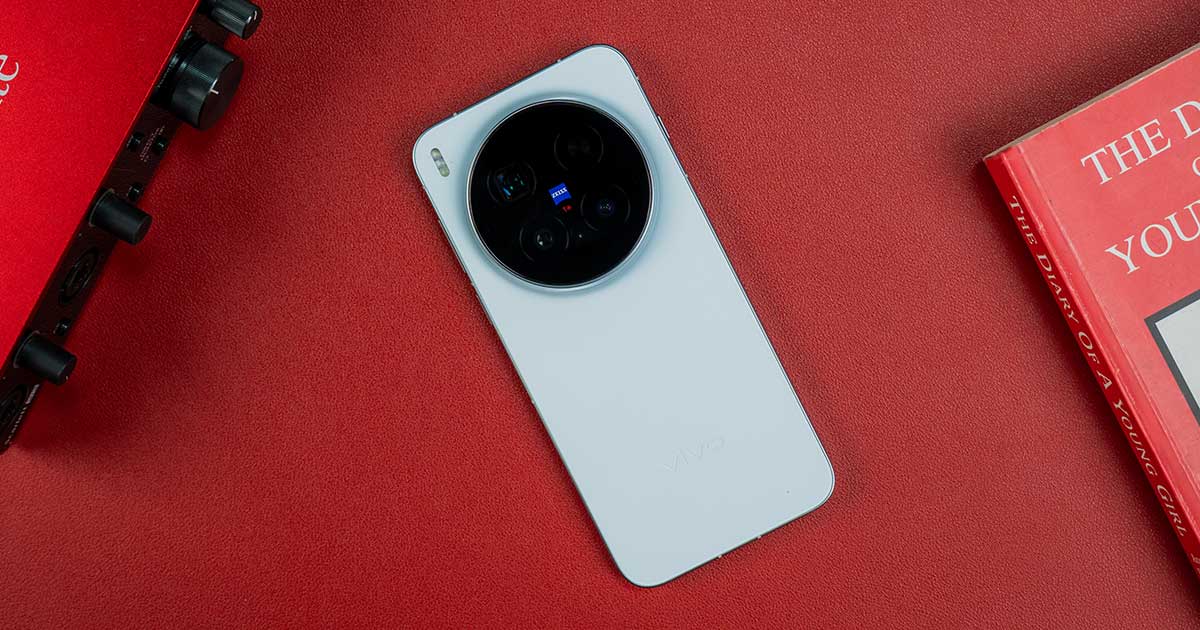
After six months with the vivo X300 Pro, I’m still impressed by its cameras, performance, battery life, and premium design. It’s not perfect, though, with some heating issues, a weaker ultra-wide camera, and occasional software and brightness issues. Overall, it’s still a great flagship and an easy recommendation for anyone who prioritizes cameras.
Design & Build
8.5/10
Display
8.5/10
Performance
8.5/10
Software & UI
9/10
Audio and Haptics
9/10
Back Camera
9.5/10
Front Camera
9.5/10
Battery And Charging
9.5/10
When we talk about flagship phones in Nepal, Samsung and iPhone are probably the first names that come to mind. They’re everywhere, and there’s no denying that they dominate the flagship market here. But the global smartphone scene is a little different. Over the past few years, Vivo’s X series has quietly built a strong reputation of its own, particularly for pushing smartphone photography forward with each new generation.
And that’s what made the X300 Pro so interesting to me. I’ve been using it as my primary phone for more than six months now, so I’ve had plenty of time to really live with it—not just take a few photos or run some benchmarks, but actually use it day in and day out.
So, I think it’s finally time to talk about how it has actually held up, what I’ve loved about it, and the things that still bother me.
Quick Price Comparison
| Device Name | Price in Nepal | Price in India |
| Vivo X300 Pro (16/512GB) | NPR 199,999 | INR 119,999 |


Vivo X300 Pro Specifications
- Design, build: 161.98 x 75.48 x 7.99 mm, 226 gm, IP68 + IP69 rated
- Display: 6.78-inch LTPO AMOLED screen, 1.5K, 120Hz refresh rate, Armor Glass
- Chipset: MediaTek Dimensity 9500 (3nm mobile platform)
- Memory: 16GB LPDDR5X RAM, 512GB UFS 4.1 storage (non-expandable)
- Software & UI: OriginOS 6 on top of Android 16
- Rear Camera: Triple (50MP primary, 200MP 3.5x periscope, 50MP ultrawide)
- Front Camera: 50MP sensor (hole-punch)
- Security: Fingerprint sensor (ultrasonic in-display)
- Connectivity: Dual-SIM (Nano), WiFi 7 (Dual-band), Bluetooth 6.0, USB-C, 4G LTE, 5G
- Battery: 6510mAh with 90W charging (90W power adapter provided)
Vivo X300 Pro Long-Term Review:
Cameras
Okayy, let's talk about the cameras first, because this is probably the part of the X300 Pro I've enjoyed the most. Chinese phones have been getting seriously good at photography lately, and Vivo has definitely been one of the brands pushing things forward. The X200 Pro was already really good, and I feel like Vivo has taken that same formula with the X300 Pro and refined it even further. And after using this phone as my primary device for around six to seven months, I can still say that I really enjoy taking photos with it.
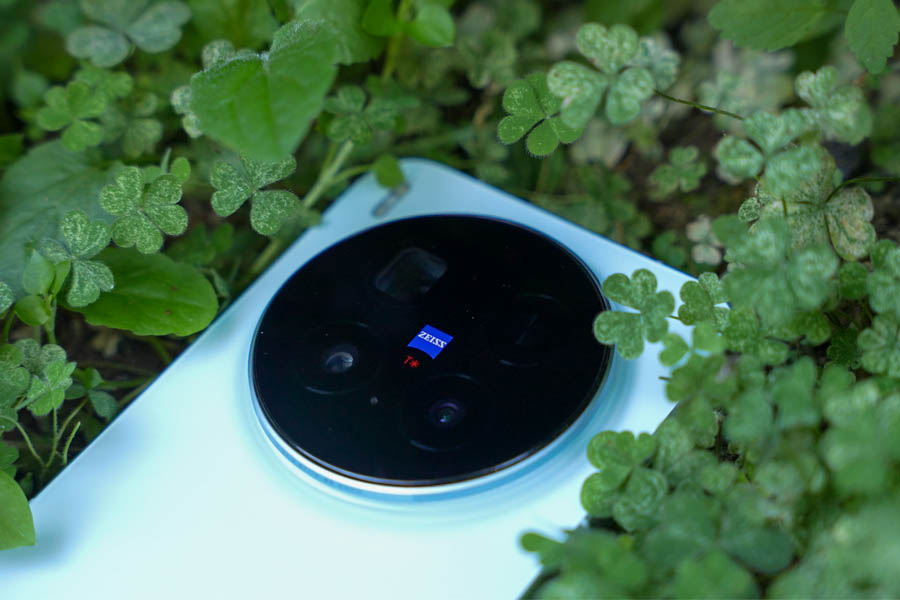
The camera setup itself is pretty impressive. You get:
- Main: 50 MP, f/1.6, 24mm (wide), 1/1.28", 1.22µm, PDAF, OIS
- Telephoto: 200 MP, f/2.7, 85mm (periscope telephoto), 1/1.4", 0.56µm, multi-directional PDAF, OIS, 3.7x optical zoom
- Ultrawide: 50 MP, f/2.0, 15mm, 119˚ (ultrawide), 1/2.76", 0.64µm, AF
Portraits
Okayy, let's start with portraits, because this is something Vivo has been really good at since the X100 Pro. The X200 Pro was already really good, and I think the X300 Pro takes it a step further. I mostly shoot in Zeiss Natural because I really like the skin tones from it. They look natural, and the phone doesn't go crazy with the colors or make the skin look too smooth. The highlights and shadows are handled really well too. But honestly, what I like most is the edge detection. Even with hair, it rarely gets confused, which is pretty impressive. The skin does get a little smoother, but thankfully, it doesn't go overboard with the beauty effect.
I mostly shoot portraits at 85mm, although you can go from 24mm all the way to 135mm. And even when I crop in towards 135mm, there's still plenty of detail left.
Night portraits are also quite good, although you do lose a bit of detail. Sometimes, when I zoom into the photo, I can notice that slightly oil-painting-like processing, but it's not something I see all the time.
Another thing I really like is how quick the camera is. I can open it, frame the person, press the shutter, and that's it. I don't have to wait around for the phone to finish processing the photo. Vivo uses the VS1 and V3+ for processing, and whatever they're doing, the camera just feels really quick when I'm actually using it.
Vivo X300 Pro vs iPhone 17 Pro Max Portraits
If I compare the portraits with the iPhone 17 Pro Max, I personally prefer the Vivo. Don’t get me wrong, the iPhone takes really good portraits too, but I just like how the Vivo handles skin tones, highlights, and shadows. I also think the edge detection is a bit better, and having different focal lengths gives me more flexibility. So yeah, for the kind of portraits I take, I’d probably go with the Vivo.
Main Camera
Moving on to the main camera, I really like the way the photos look. They have a pretty natural look, and Vivo doesn’t go overboard with the colors, which I personally prefer. The highlights and shadows are handled really well too, and there’s plenty of detail in the shots. I also like using it for close-up shots because I get a really nice natural depth of field.
Ultrawide
As for the ultrawide, it’s pretty wide, although it’s not quite as wide as the iPhone’s 12mm lens or the Samsung S26 Ultra’s 13mm lens. But honestly, what I like most is how consistent the colors are with the main camera. So when I switch between the two, the photos don’t suddenly look completely different.
The dynamic range is really good too. Even with a bright sky and darker areas in the same shot, I feel like it does a really good job of keeping everything balanced.
Macro
Now, macro is probably one of the most fun things about this camera setup. Instead of using the ultrawide like Samsung or the iPhone, Vivo uses the 200MP telephoto for macro, and I honestly really like the results.
The focus is really good, and the amount of detail you can get is kind of crazy. You can get pretty close to your subject at around 14cm, and if you want to get even closer, you can use the in-sensor crop. I’ve taken some insect shots with it, and some of them honestly look like they were taken with a proper camera.
The shutter is pretty quick too, which makes it a lot easier to shoot moving subjects. So even if an insect is moving around, I can quickly take a shot and still get those tiny details.
Telephoto Zoom
And then there’s the zoom, and I think this is where the 200MP telephoto really shows what it can do. Up to around 10x, the detail is really good, and even at 30x, I can still get some pretty decent shots. You can go all the way up to 100x, but at that point, I feel like the processing gets a bit too heavy and the details don’t look as natural.
I’ve actually had a lot of fun using the zoom on this phone. I’ve used it for birds, traffic, and even moving subjects that were just too far away to get close to. And the fact that the colors stay pretty consistent between the cameras is something I really like. It makes the whole camera setup feel really versatile.
Color Consistency
As I have already mentioned, I really like how the colors are handled. The main, ultrawide, and telephoto cameras all have a pretty similar look, so when I switch between them, the photos don’t suddenly look completely different.
There are some small differences in tricky lighting, but overall, I find the cameras pretty consistent. And for me, that’s really useful because I can just switch to whichever camera I need without having to think too much about whether the colors are going to look different.
Night Photography
At night, I mostly stick with the main camera, and I’m pretty happy with the results. The photos look really nice and eye-catching, and I get a good amount of detail in them. I also like how it handles the contrast, exposure, and dynamic range.
The ultrawide is where I notice the biggest difference, though. At night, the details get noticeably softer, and even with Vivo’s T* coating, I still get some glare in certain situations. To be fair, I can get some glare with all three cameras, but I feel like the ultrawide struggles with it more in low light.
The X300 Ultra has a much better ultrawide, so hopefully we see something similar on the X500 Pro. But overall, I’m really happy with the night-time results from the main and telephoto cameras.
Selfies
For selfies, we get a 20mm field of view, so it’s pretty wide and works nicely for group shots too. I like the skin tones here as well. They look pretty natural, and Vivo doesn’t go too crazy with the colors.
There is a little bit of skin smoothing, but we still get plenty of detail, and the photos don’t look overly processed. Overall, I think the selfies look pretty good straight out of the camera and are easily good enough to throw on social media.
Video
Now, if we talk about video, I’m pretty happy with what it can do. In daylight, the footage from all three cameras looks really good, with plenty of detail, nice stabilization, and colors that I personally like. I also really like using the telephoto for video because we get that natural depth of field and some really nice background separation.
That said, things like exposure locking and the overall video quality are still not quite at the iPhone level. The iPhone is still the undisputed king when it comes to videography, but Vivo is slowly catching up. The X300 Ultra, which is the elder brother, already gave the iPhone some serious competition in videography, so I’m really hoping we see another big upgrade with the upcoming X500 Pro.
And in terms of video features, there’s actually a lot to play around with. You can shoot:
- 8K at 30fps
- 4K at 30/60/120fps
- 1080p at 30/60/120/240fps
- Gyro-EIS
- 4K at 120fps 10-bit Log
- Dolby Vision HDR
Overall, I’ve really enjoyed using the cameras. Whether I’m taking portraits, shooting macro, using the zoom, or just taking a quick photo during the day, I know I’m going to get a good result. I do wish the ultrawide was better, especially at night, and video still isn’t quite at the iPhone level.
But I can definitely say Vivo is seriously leading the smartphone photography game right now. I’m really excited to get my hands on the Vivo X500 Pro when it comes out, and hopefully, Vivo can fix some of these things, especially the ultrawide performance and video quality, and take the camera experience to an even higher level.
Design
- Circular camera design
- Glass front (Armor Glass), aluminum frame, glass back
- 226 g and 8mm thin
- IP68/IP69 dust and water-resistant
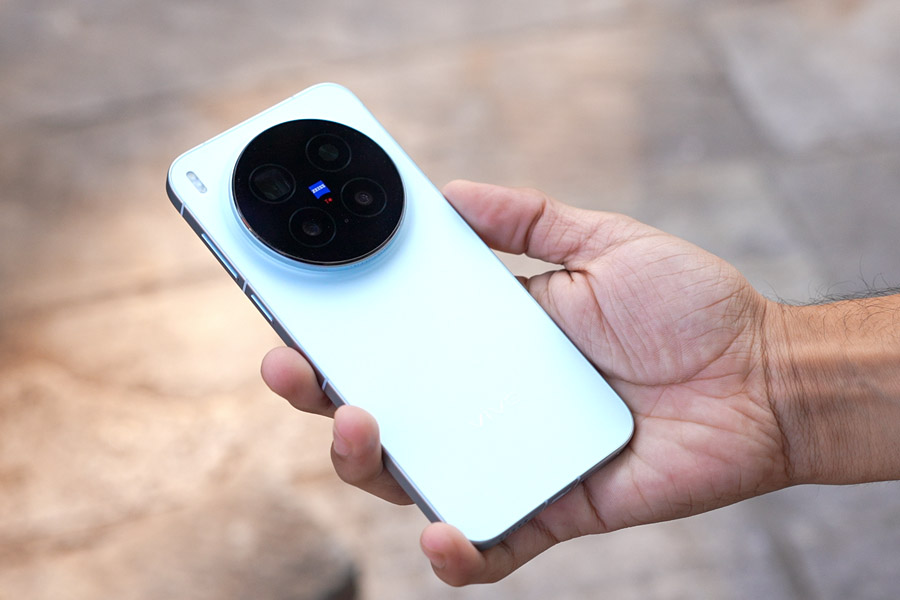
Now that I’ve covered the major camera highlights, let’s talk about the design. Honestly, this is still one of my favorite things about the phone. Even after using it for more than six months, I still really like the way it looks and feels. The aluminum frame, fiberglass back, rounded edges, and 8mm-thin body give it a really premium feel. And for me, the size is just right. It feels comfortable in my hand without being too big or too small. The IP69 rating is also a nice bonus.
But That Camera Bump...
Now, that huge camera bump is something I have a bit of a love-hate relationship with. I actually find it pretty useful when I’m holding the phone because I can rest my index finger on it, and it also keeps the phone nice and stable when I put it on a table. But yeah, it does make the phone feel a little top-heavy, and taking it out of my pocket isn’t always smooth, especially when I’m wearing tight jeans.
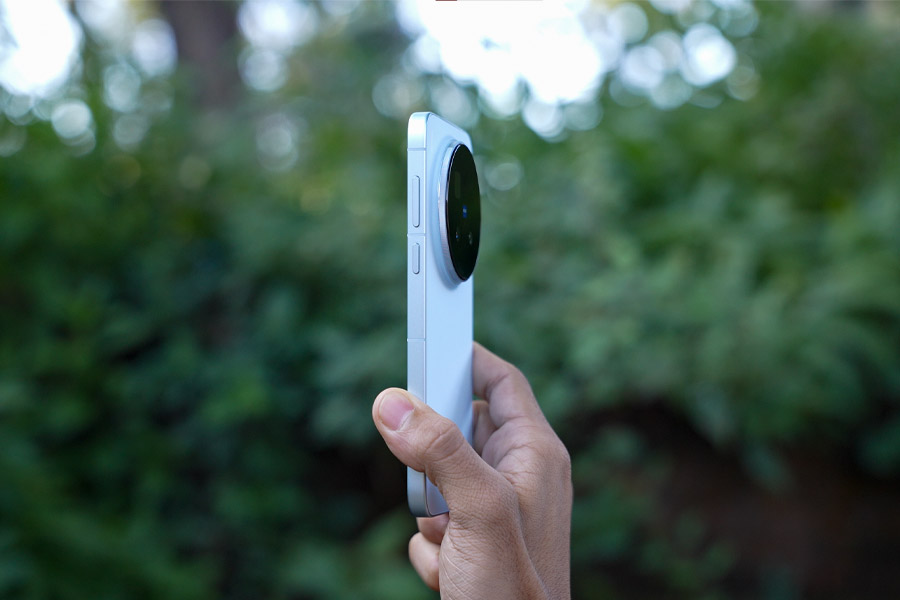
I’d also recommend using a case because the camera bump scratches pretty easily. I’ve been quite careful with mine, but I still have a few scratches on the camera housing. I also noticed some fogging around the camera on cold winter mornings, but it goes away once the phone warms up.
Display
- 6.78 inches LTPO 120Hz AMOLED display
- 2160Hz PWM, HDR10+, HDR Vivid, Dolby Vision, 4500 nits (peak)
Now, let's talk about the display. I've really enjoyed using this display, and honestly, I don't have much to complain about. It's a 6.78-inch LTPO AMOLED panel with a 120Hz refresh rate, HDR10+, HDR Vivid, Dolby Vision, and 2160Hz PWM dimming. It feels really smooth in everyday use; the bezels are nice and thin, and the small punch-hole doesn't really bother me either.
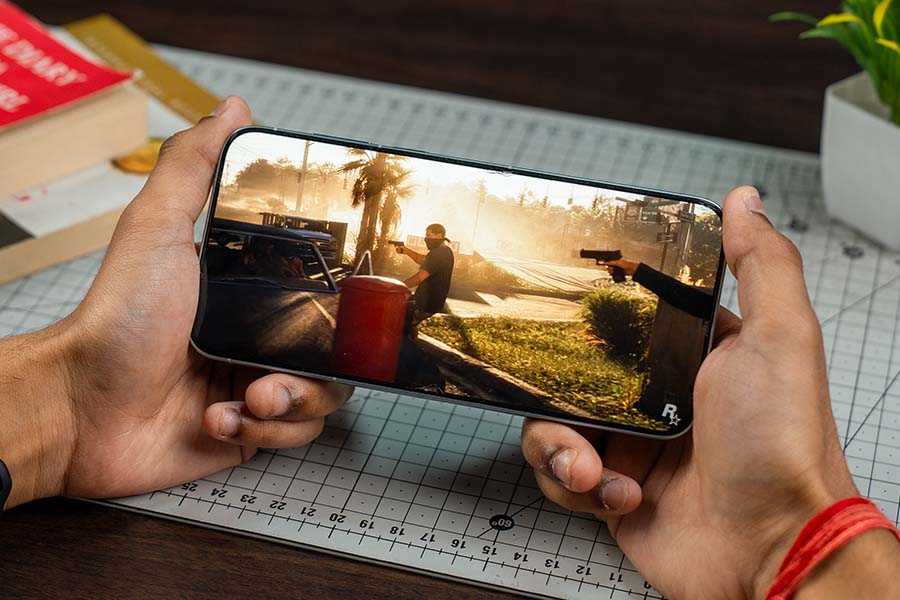
There are a couple of things I’d like Vivo to improve, though. The auto-brightness can be a little annoying at night, as it sometimes keeps the screen brighter than I’d like. Outdoors, I also feel the display could be a bit brighter under strong sunlight, despite its rated 4,500-nit peak brightness. On the flip side, when adjusted manually, the screen can get really dim at night, which I actually like.
Apart from that, I really like the ultrasonic fingerprint scanner. It’s quick, accurate, and easy to reach with one hand. Overall, I’m really happy with the display. For the X500 Pro, I’d mainly like to see better auto-brightness and improved outdoor visibility.
Performance and OS
- MediaTek Dimensity 9500 (3 nm)
- 16GB LPDDR5X Ultra RAM and 512GB Dual UFS 4.1 Storage
Okay, performance-wise, I’ve honestly been really happy with it. It comes with the flagship Dimensity 9500, 16GB of RAM, and 512GB of storage, and yeah, this thing is superrrrr fast.
Everything I normally do feels smooth, whether I’m jumping between apps, scrolling through social media, or just multitasking throughout the day. But…. I do notice a random stutter once in a while, but it’s rare enough that I barely think about it. And with 16GB of RAM, I also don’t really have to worry about apps getting kicked out of memory.
Gaming
And when it comes to gaming, I’m not really a heavy gamer. I mostly play PUBG Mobile and Call of Duty Mobile for around 30 minutes to an hour a day, and honestly, both games have been running really well. I can play at up to 120fps, and I haven’t really noticed any major frame drops or stability issues.
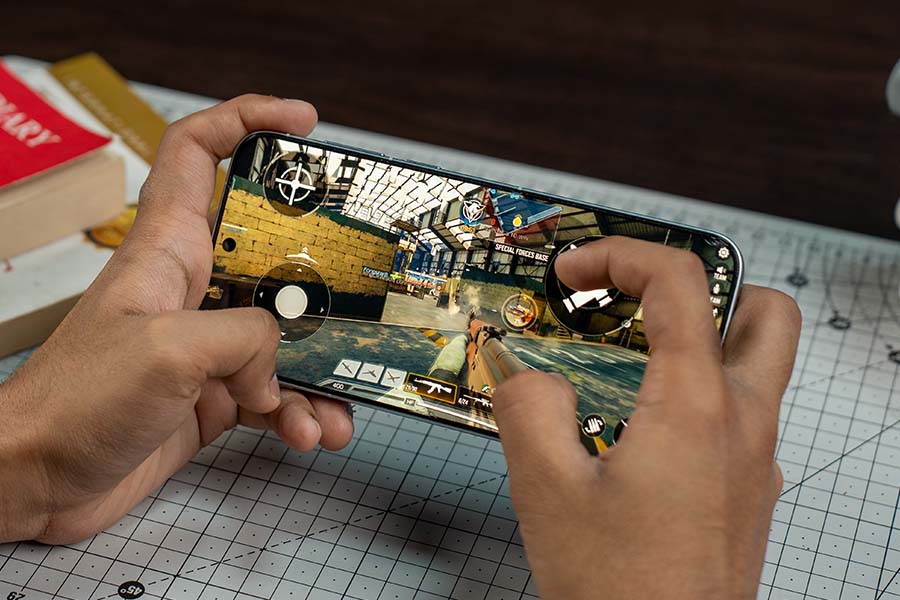
My only issue is the grip. Once I hold the phone sideways, that huge camera bump gets in the way, so playing for a longer time isn’t as comfortable as I’d like.
Heating
The heating is a bit of a different story, though. While gaming, I can start feeling the phone getting warm after around 15 minutes, and if I keep playing for close to an hour, it gets quite hot. It’s still manageable, so I don’t really mind it that much.
What bothers me more is when I’m on long WhatsApp calls. I usually talk to my parents for an hour or more, and the phone gets surprisingly hot during those calls. Sometimes it gets so hot that holding it becomes uncomfortable, and I’ve had to tell them I’ll call back after the phone cools down.
Most of this happened during summer, and I wasn’t using a case, but since I experience it quite regularly, I’d really like Vivo to work on the thermal management with future updates.
OriginOS
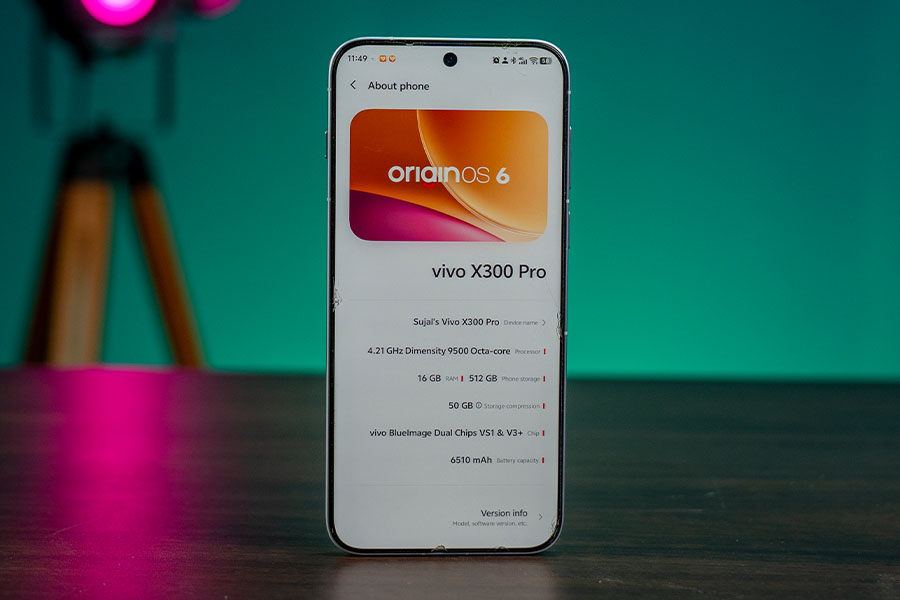
I also like Origin Island and some of the small touches Vivo has added. For example, being able to drag highlighted text to the top and directly share it to another app is genuinely useful. Vivo has also been pretty consistent with updates, and with five years of OS updates promised, I don’t have much to worry about there.
But said that.. It’s still not as polished as Samsung or OPPO’s software, in my opinion, but overall, I’m satisfied with it.
Speakers and Haptics
- stereo speakers
The speakers are loud enough for everyday use, but they don’t have the same depth or bass as something like the S26 Ultra. For social media, videos, and casual listening, though, they’re perfectly fine.
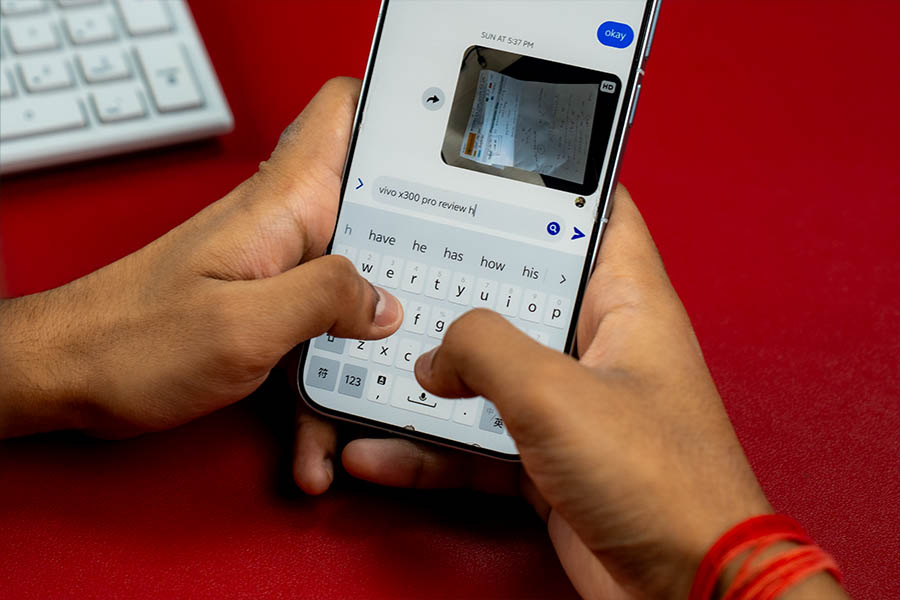
For haptics, I really loved them. They’re strong, precise, and feel very premium throughout the UI. You can especially feel it while typing and even when opening recent apps. In fact, I had to turn the intensity down a bit because they were almost too strong for me.
Battery and Connectivity
- Si/C Li-Ion 6510 mAh
- 90W charger (included in box)
Battery life is a big deal for me, and honestly, this phone is a champ. That 6,510mAh battery easily gets me through a day and a half with my usual use—social media, Reels, browsing, and some gaming. And even after using it for a year, the battery health has only dropped by around 2%, which is pretty damn impressive.
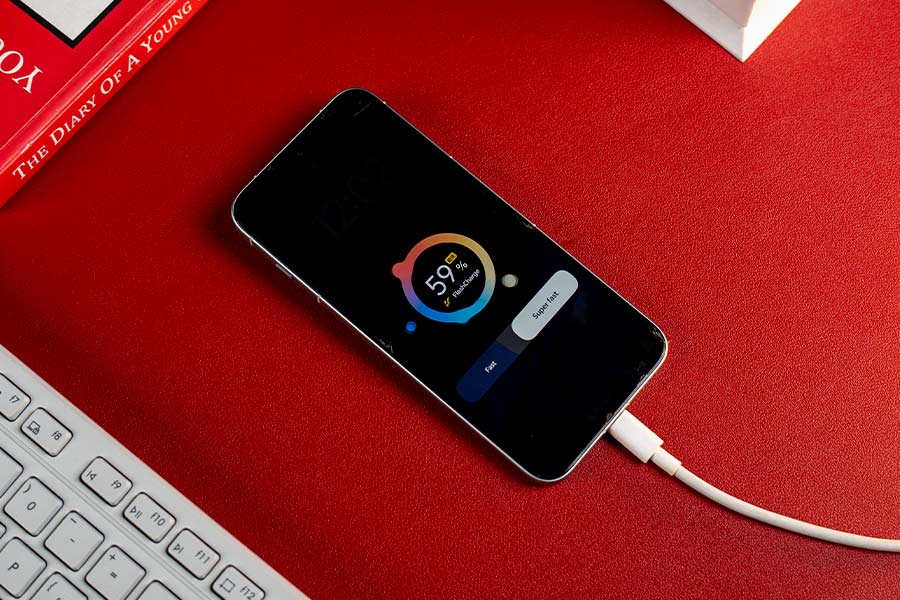
The 90W charger is also seriously fast. I can get past 50% in around 15 minutes, and a full charge takes roughly 30 to 45 minutes. It also supports 40W fast wireless charging, along with wireless reverse charging, which is really handy.
As for connectivity, it pretty much has everything you’d expect from a flagship - Wi-Fi 7, Bluetooth 5.4, NFC, an infrared port, and all the usual navigation systems. So yeah, there’s really not much missing here.
Conclusion
So yeah, after using this phone for this long, I’m honestly still really happy with how it’s held up. The cameras are still the highlight for me, and honestly, they’re probably the biggest reason I’ve enjoyed using it for so long. Performance is still really fast, and the battery life has been great.
That said, it’s definitely not perfect. I’d still like to see a better ultrawide, especially at night, and the heating during long calls can get a bit annoying. Outdoor brightness could also be better, and I think the software still has some room for improvement.
But honestly, those are things I can live with. Overall, I’ve really enjoyed using this phone, and even after all this time, I’d happily recommend it. If you care about cameras, battery life, and performance, I think this phone is still a really solid choice.
vivo X300 Pro Long-Term Review: Pros and Cons
| Pros | Cons |
|---|---|
|
|
|
|
|
|
|
|
|
|
Article Last updated: September 3, 2026

![Best Flagship Smartphones To Buy In Nepal [Updated 2026]](https://media.gadgetbytenepal.com/2026/04/Best-flagship-smartphones-to-buy-in-Nepal-2026.jpg)