Searching for the best phones under NPR 20000 in Nepal? Check out our updated 2026 list of top budget phones with reliable performance, long‑lasting batteries, and solid everyday cameras

If you're looking for the best smartphone under NPR 20,000 in Nepal, you've come to the right place. In this buying guide, we've picked the best budget phones under 20,000 you can buy in 2026. Now, compared to a couple of years ago, the budget smartphone segment isn't as exciting. Due to the rising prices of RAM and storage components, it's becoming increasingly difficult for brands to offer feature-packed phones below the NPR 20,000 mark. But despite that, there are still a few really solid options that are worth considering.
How to find the best phones under NPR 20000 in Nepal?
Before we jump into the list, let's quickly talk about what you should expect from a phone in this price range. First, don't get carried away by flashy specs from unfamiliar brands. At this budget, brand reliability, software experience, and after-sales service matter much more than a spec sheet filled with big numbers.
For the display, try to get at least a 90Hz refresh rate, although 120Hz is obviously a nice bonus. In terms of performance, I recommend looking for at least a MediaTek Helio G81 or an equivalent Snapdragon processor. I'd also suggest avoiding Unisoc chipsets unless you have no other choice.
Memory-wise, 4GB RAM should be your minimum requirement. 128GB storage is definitely preferable, but if you're a light user, 64GB is still perfectly usable. On the software side, prioritize phones that run Android 16 out of the box, and if possible, choose a phone with the full version of Android instead of the lighter Android Go edition.
Battery life is another key factor. I'd recommend looking for at least a 5,000mAh battery, and it's always a bonus if the phone supports fast charging and includes the charger in the box. Finally, at this price, most of them are good enough for casual daylight photos.
| Note: In this list, we have also included a few smartphones that cost more than NPR 20000 — but not by a lot. We’ve done this so that you can further curate your choices, and also because we don’t want you to miss any good deal by spending NPR 500 – 1000 more. The prices of such products are marked with an asterisk (*) at the end. |
Best mobile phones under NPR 20000 in Nepal:
4. Infinix Smart 20
At number four, we have the Infinix Smart 20. The biggest highlight here is definitely the design. It takes clear inspiration from the iPhone 17 Pro Max with a similar-looking camera module, and the orange color variant also gives off that premium iPhone vibe.
Another thing I really liked is the smooth 120Hz refresh rate display. At this price, most phones still offer a 90Hz panel, so getting 120Hz is a nice bonus. Do keep in mind that it's mainly for smoother UI animations rather than gaming, but the overall experience still feels fluid. The phone features a 6.7-inch IPS display, and the panel is decent enough for everyday use.
The phone is also surprisingly slim, comes with an IP64 rating, and boots Android 16 out of the box, which is always good to see in the budget segment. Performance is decent for day-to-day tasks. The MediaTek Helio G81 isn't a powerhouse, but it's perfectly capable of handling regular apps, social media, messaging, and light multitasking without any major issues.
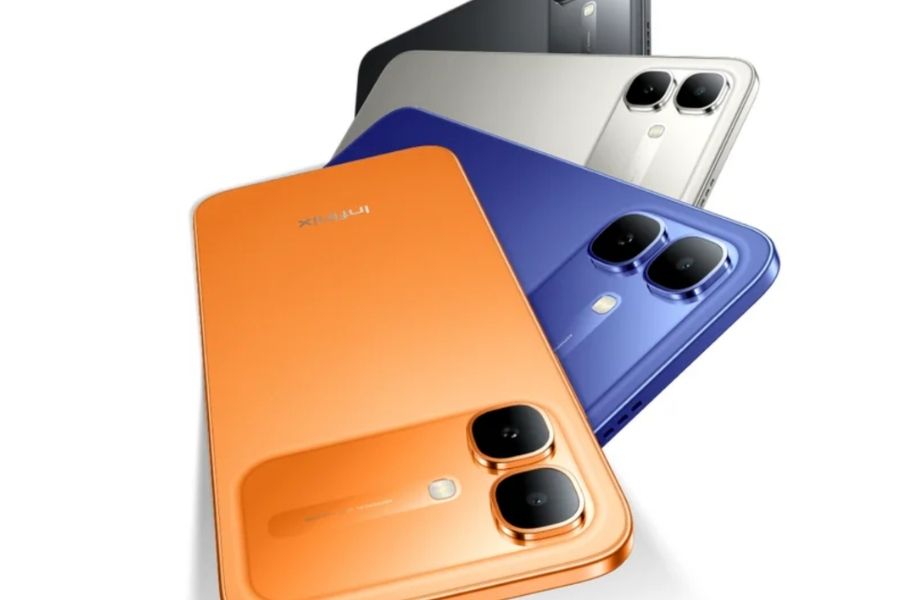
Battery life is another positive. You get a 5,200mAh battery with 15W fast charging, and thankfully, the charger is included in the box. As for the cameras, they're fairly basic. There's an 8MP rear camera and an 8MP selfie camera, so don't expect anything extraordinary. They'll get the job done for casual photos in good lighting.
Overall, if you're looking for a stylish budget smartphone under Rs. 20,000 in Nepal that looks premium, offers a smooth 120Hz display, and delivers a solid everyday experience, the Infinix Smart 20 is definitely worth considering.
Infinix Smart 20 Specifications
- Design: 167.7 x 78.8 x 7.7mm, IP64, 1.5m Drop Resistance
- Display: 6.78-inch IPS LCD, HD+, 120Hz, 700 nits
- Chipset: MediaTek Helio G81 Ultimate (12nm)
- Software: Android 16, XOS 16
- RAM / Storage: 4GB/64GB, 4GB/128GB (microSD)
- Rear Camera: 8MP
- Front Camera: 8MP
- Battery: 5,200mAh
- Charging: 15W
- Colors: Shadow Black, Cloudline Blue, Polaris Titanium, Sunlike Orange
- Infinix Smart 20 Price in Nepal: NPR 19,999 (4/64GB) | NPR 21,999 (4/128GB)


3. Motorola Moto G06 Power
At number three on our list of the best phones under Rs. 20,000 in Nepal, we have the Motorola Moto G06 Power. The biggest USP of this phone is undoubtedly its massive 7,000mAh battery. In our testing, it delivered over 10 hours of screen-on time, which means it can easily last up to two days with moderate usage. Even if you're a heavy user, you should comfortably make it through an entire day without worrying about charging.
The rest of the package is quite similar to what you get with the Infinix Smart 20. There's a 6.88-inch IPS LCD display with a smooth 120Hz refresh rate, and Motorola has also included Gorilla Glass 3 protection, which is a nice addition at this price. You also get an IP64 rating for basic dust and water resistance.
Performance is handled by the same MediaTek Helio G81 chipset. It's not built for heavy gaming, but for everyday tasks like social media, messaging, browsing, and streaming, it gets the job done without any major complaints. One downside, however, is the software. The phone still ships with Android 15 instead of the latest Android 16, which is a bit disappointing.
Where the Moto G06 Power pulls ahead of the Infinix Smart 20 is in the camera department. It features a 50MP primary rear camera that captures noticeably better photos, while the front houses a standard 8MP selfie camera for video calls and casual selfies.
Overall, if battery life is your top priority and you want a phone that can easily last a day or even two on a single charge, the Motorola Moto G06 Power is one of the best options you can buy in this price range.
Moto G06 Power Specifications
- Design: 171.4 x 77.5 x 8.8mm, 220g, Eco Leather Back, IP64
- Display: 6.88-inch IPS LCD, HD+, 120Hz, Gorilla Glass 3
- Chipset: MediaTek Helio G81 Ultra (12nm)
- Software: Android 15
- RAM / Storage: 4GB/64GB, 4GB/128GB
- Rear Camera: 50MP
- Front Camera: 8MP
- Battery: 7,000mAh
- Charging: 18W
- Colors: Laurel Oak, Tapestry, Tendril
- Moto G06 Power Price in Nepal: NPR 18,999 (4/64GB)
2. Samsung Galaxy A07
Taking the second spot on our list of the best phones under Rs. 20,000 in Nepal is the Samsung Galaxy A07. The phone comes with a good-quality PLS LCD display, and Samsung has also included an official IP54 rating, offering basic protection against dust and water splashes. The design, too, takes inspiration from Samsung's flagship Galaxy phones, giving it a clean and premium look.
Battery life is solid, and the phone supports 25W fast charging. Even better, Samsung Nepal bundles the 25W fast charger in the box, so you don't have to spend extra on an adapter.
But the biggest reason to buy the Galaxy A07 is undoubtedly the software experience. One UI remains one of the cleanest and most polished Android skins, and that's exactly what you get here. On top of that, Samsung is promising six years of Android OS and security updates, which is simply unmatched in this price segment.
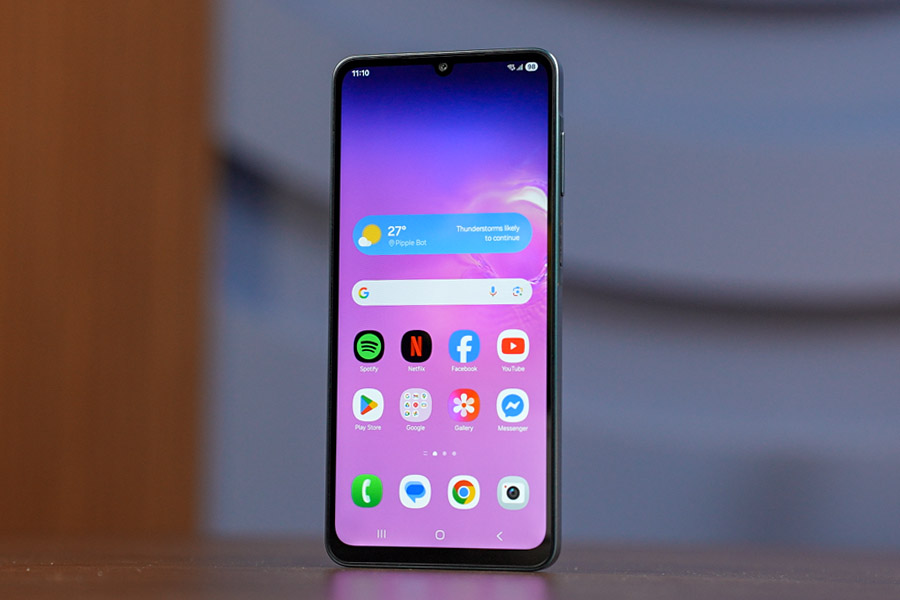
Performance is another area where the A07 stands out. Instead of the Helio G81 found on most competitors, Samsung has equipped it with the more powerful MediaTek Helio G99. In real-world use, the G99 is roughly 30–40% faster, so you'll notice smoother app launches, better multitasking, and a more responsive overall experience.
The camera performance is also quite good for the price. The 50MP primary camera captures better photos than most of the competing Chinese phones in this segment, while the 8MP front camera is perfectly fine for selfies and video calls.
Overall, if you want the best Samsung phone under Rs. 20,000 with excellent software, long-term updates, strong everyday performance, and dependable cameras, the Samsung Galaxy A07 is an easy recommendation.
Samsung Galaxy A07 Specifications
- Design: 167.4 x 77.4 x 7.6mm, 184g, IP54
- Display: 6.7-inch PLS LCD, HD+, 90Hz
- Chipset: MediaTek Helio G99 (6nm)
- Software: Android 15, One UI 8 (6 OS Updates)
- RAM / Storage: 4GB/64GB, 4GB/128GB, 6GB/128GB, 8GB/256GB (UFS 2.2, microSD)
- Rear Camera: 50MP + Auxiliary Lens
- Front Camera: 8MP
- Battery: 5,000mAh
- Charging: 25W
- Colors: Gray, Light Violet, Dark Green
- Samsung Galaxy A07 Price in Nepal: NPR 18,999 (4/64GB)
- Read our Galaxy A07 review
1. Redmi 15C
Leading the pack in our list of the best phones under NPR 20,000 in Nepal is the Redmi 15C. The first thing that grabs your attention is its bold and standout design. It comes in three attractive colors: Midnight Black, Mint Green, and Twilight Orange, giving it a look that feels far from a budget device. Besides its design, the Redmi 15C also includes useful features such as TÜV Low Blue Light and Flicker Free certifications for a more comfortable viewing experience.
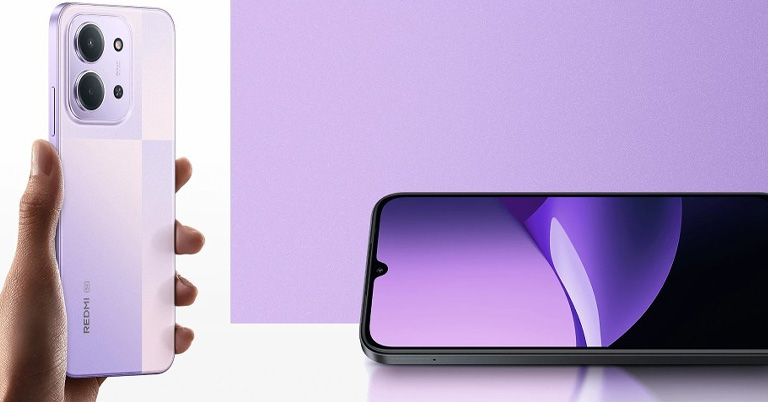
One of the key highlights of this is its massive 6000mAh battery with 33W fast charging support. This should easily last you for two days in normal usage. Other than this, the camera island at the back houses two sensors: a 50MP primary and a secondary sensor. And Redmi 15C supports portrait, night mode, and HDR shots too.
The phone features a standard 8MP selfie camera housed in the teardrop notch at the front. Embedded in the power button is a fingerprint reader for biometrics. The display is a typical 6.9-inch IPS screen with a 120Hz refresh rate. Powering this budget-friendly phone is MediaTek's Helio G81 Ultra chip, paired with up to 8GB of RAM.
Redmi 15C Specifications:
- Design: 171.6 x 79.5 x 8mm, 205g, Gorilla Glass 3, Glass/Eco Leather Back, IP64
- Display: 6.9-inch IPS LCD, HD+, 120Hz, Gorilla Glass 3
- Chipset: MediaTek Helio G81 Ultra (12nm)
- Software: Android 15, HyperOS 2
- RAM / Storage: 4GB/128GB, 6GB/128GB
- Rear Camera: 50MP + Auxiliary Lens
- Front Camera: 8MP
- Battery: 6,000mAh
- Charging: 33W
- Colors: Moonlight Blue, Mint Green, Midnight Gray, Twilight Orange
- Redmi 15C Price in Nepal: NPR 19,999 (4/128GB)
Summary list of the best mobile phones under NPR 20000 in Nepal
| Rank | Phone | Price in Nepal (Official) | Best For |
|---|---|---|---|
| 1 | Redmi 15C (4/128GB) | NPR 19,999 | Best overall value |
| 2 | Samsung Galaxy A07 (4/64GB) | NPR 18,999 | Best software & performance |
| 3 | Motorola Moto G06 Power (4/64GB) | NPR 18,999 | Best battery life |
| 4 | Infinix Smart 20 (4/64GB) | NPR 19,999 | Best design & 120Hz display |
You might also like:
Frequently Asked Questions
Article Last updated: July 27, 2026