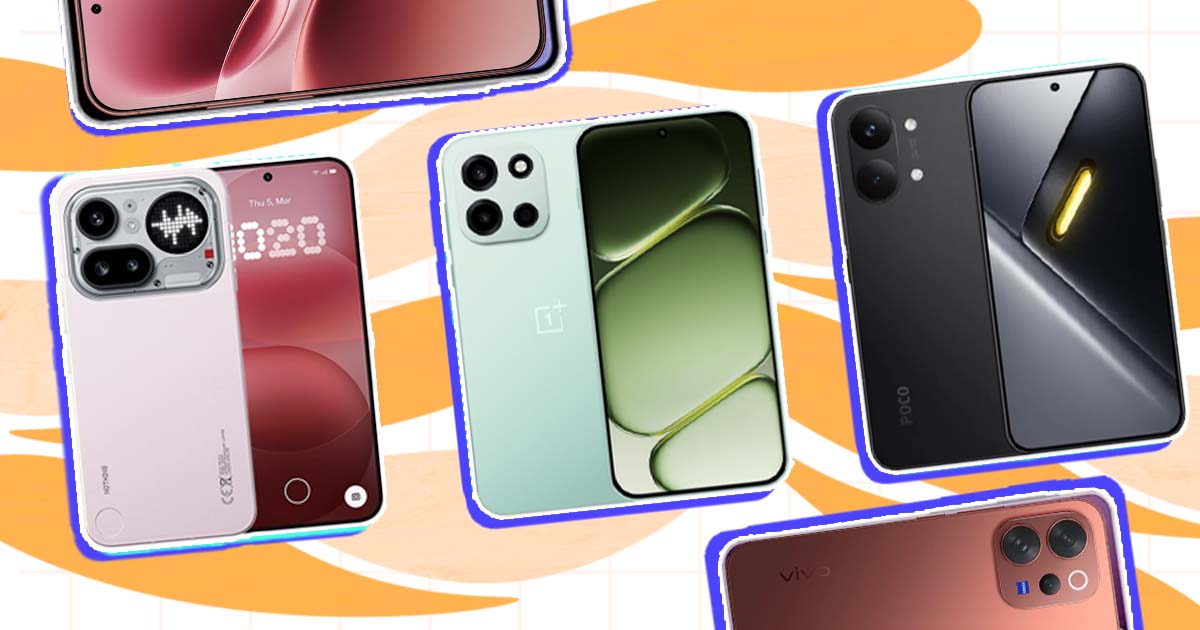
Searching for the best phone under NPR 30000 in Nepal? Check our updated 2026 list of top budget & midrange phones with nice performance, great battery backup, and good cameras.

If you are looking for the best phones under 30000 in Nepal, this buying guide covers the top options currently available. In 2026, there are many options in the midrange price category. And under 30,000, new phones from different mobile brands offer excellent value for money, with good performance, a high refresh-rate display, and a long-lasting battery.
How to find the best phones under NPR 30000 in Nepal?
Finding a good phone under Rs. 30,000 in Nepal has become quite difficult in 2026, mainly because of the ongoing RAM and storage shortage. Budget smartphones have been hit the hardest because memory and storage make up a significant portion of their total bill of materials (BOM).
That's basically why a phone that would have cost around Rs. 20,000 before can now easily creep towards Rs. 30,000. And because of that, expectations also need to change. At this price, you generally won't find AMOLED displays or versatile dual-camera setups anymore. Instead, most phones offer an HD+ LCD panel with a higher refresh rate.
The good thing is that battery life has become excellent in this segment. Large 7,000–7,500mAh batteries are becoming increasingly common, and you can also expect reasonably fast charging on some models.
So, in 2026, buying a phone under Rs. 30,000 in Nepal is mostly about finding the right balance between display, performance, storage, battery life, charging, cameras, and software experience rather than expecting premium features.
| Note: In this list, we have also included a few smartphones that cost more than NPR 30,000 — but not by a lot. We’ve done this so that you can further curate your choices and also because we don’t want you to miss any good deal by spending NPR 2000 – 3000 more. The prices of such products are marked with an asterisk (*) at the end. |
Best mobile phones under NPR 30000 in Nepal:
5. Honor X6d
Starting our list at number five is the Honor X6d, one of Honor's newer budget smartphones for 2026. For me, the biggest reason to consider this phone is straightforward: 5G connectivity. Among phones in this price segment, that's still quite rare. Of course, Nepal doesn't have a commercial 5G network yet, so you won't benefit from it locally right now. But if you frequently travel abroad, having 5G support definitely adds some future-proofing.
Performance is handled by the MediaTek Dimensity 6300. For regular everyday tasks such as social media, video streaming, and light gaming, I think the performance is perfectly adequate.
You also get Android 16 with MagicOS 10 out of the box. Personally, I think MagicOS has improved quite a lot over the last couple of generations. MagicOS 10 feels more polished visually, and the overall software experience is cleaner than before.
The display, however, is pretty basic. It's a 6.75-inch TFT LCD with HD+ resolution and a 90Hz refresh rate. So it's decent, but nothing spectacular. Cameras are also simple. You get a 50MP main camera and a 5MP selfie camera, with no proper ultrawide camera.
Likewise, battery capacity is decent at 5,260mAh, but the 15W charging is easily one of the weakest aspects of this phone. That's painfully slow by 2026 standards. So overall, if 5G connectivity is specifically what you're looking for under Rs. 30,000, then this is still a decent option.
| Pros | Cons |
|---|---|
| 5G support, which is rare at this price | Basic HD+ 90Hz LCD display |
| Dimensity 6300 offers decent everyday performance | Very slow 15W charging |
| Android 16 with improved MagicOS 10 |
Honor X6d Specifications
- Display: 6.75-inch TFT LCD, HD+ (1600 × 720), 90Hz, 450 nits
- Chipset: MediaTek Dimensity 6300 (6nm)
- Memory: 4/128GB, 4/256GB, 6/256GB; microSD support
- Software: Android 16, MagicOS 10
- Rear Camera: 50MP main + auxiliary lens
- Front Camera: 5MP
- Battery: 5,260mAh
- Charging: 15W wired
- Security: Side-mounted fingerprint scanner


4. Infinix Hot 70
At number four, I have the Infinix Hot 70, and compared to the Honor X6d, I think this is a more complete phone in quite a few areas. The first thing I like about the Hot 70 is its design. It's surprisingly sleek for a phone with such a large battery, measuring around 7.5mm thick. You also get an IP65 dust and water-resistance rating, along with claimed drop resistance of up to 1.5 metres.
The display is also better than Honor's. You get a 6.78-inch 120Hz IPS LCD with up to 700 nits of HBM brightness. Resolution is still only HD+, but the jump from 90Hz to 120Hz makes scrolling and animations feel noticeably smoother.
Performance comes from the MediaTek Helio G100 Ultimate, another 6nm chipset. In terms of normal day-to-day performance, I find this class of chip perfectly usable for a budget smartphone. The Hot 70 also boots with Android 16 and XOS 16, and Infinix promises up to three major Android OS updates, which is quite respectable for a budget phone.
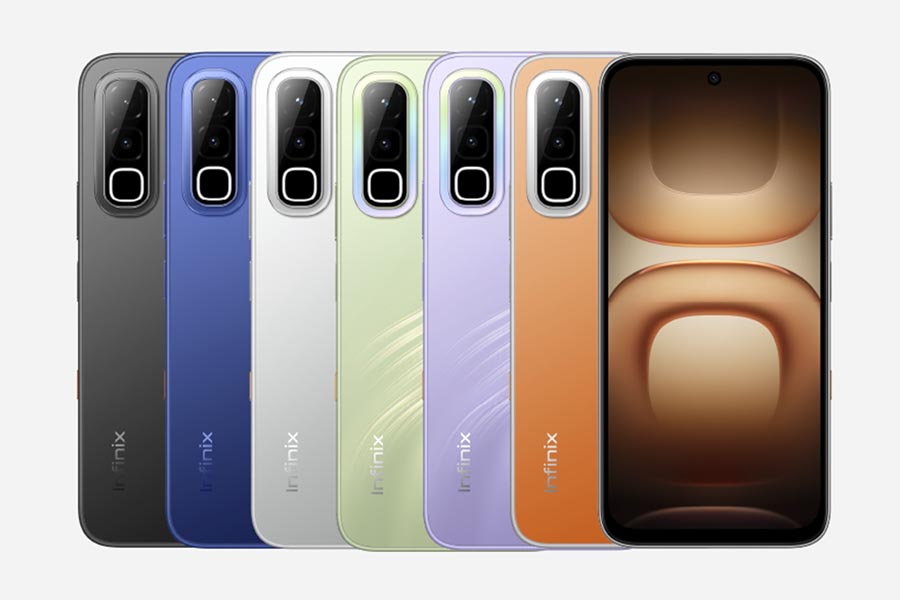
For cameras, there's a 50MP main camera at the back and an 8MP selfie camera. And just to clarify something from my earlier description: that 8MP sensor is the front camera, not an ultrawide camera. The rear setup doesn't include a proper ultrawide.
Another surprisingly good aspect is audio—you get stereo speakers, which is a nice addition for multimedia.
But the real highlight for me is battery life. Despite its relatively slim body, Infinix has managed to fit a massive 6,000mAh battery here. And unlike the Honor, you get proper 45W fast charging, with Infinix claiming 50% charge in around 25 minutes.
Overall, the Hot 70 feels considerably more complete than the Honor. If you value design, battery life, faster charging, and a smoother display, this is a good budget phone.
| Pros | Cons |
|---|---|
| Sleek design with IP65 protection | Display is still only HD+ |
| Smooth 120Hz display and stereo speakers | 4G only |
| Excellent 6,000mAh battery with 45W charging |
Infinix Hot 70 Specifications
- Display: 6.78-inch IPS LCD, HD+ (1576 × 720), 120Hz, 700 nits HBM
- Chipset: MediaTek Helio G100 Ultimate (6nm)
- Memory: 4/128GB, 6/128GB, 8/128GB, 6/256GB, 8/256GB; UFS 2.2
- Software: Android 16, XOS 16; up to 3 major OS upgrades
- Rear Camera: 50MP main + auxiliary lens
- Front Camera: 8MP
- Battery: 6,000mAh
- Charging: 45W wired
- Security: Side-mounted fingerprint scanner
3. Redmi 15 4G
At number three, we have the Redmi 15. Yes, this is technically a last-generation phone now, but I still think it's very relevant, especially if your priority is storage and display quality. If you want 256GB of storage under Rs. 30,000, the Redmi 15 remains one of the most compelling choices in this list.
And one area where the Redmi 15 is actually better than its newer successor is the display. You get a massive 6.9-inch FHD+ IPS LCD with a 144Hz refresh rate. That's a resolution of 2340 × 1080 pixels, making it considerably sharper than most of the HD+ panels you find at this price.
Now, in my experience, you shouldn't buy it just because the spec sheet says 144Hz. Many apps aren't going to constantly operate at the full 144Hz anyway. But the screen still feels very smooth, and that FHD+ resolution is genuinely nice to have. There's also IP64 dust and splash resistance.
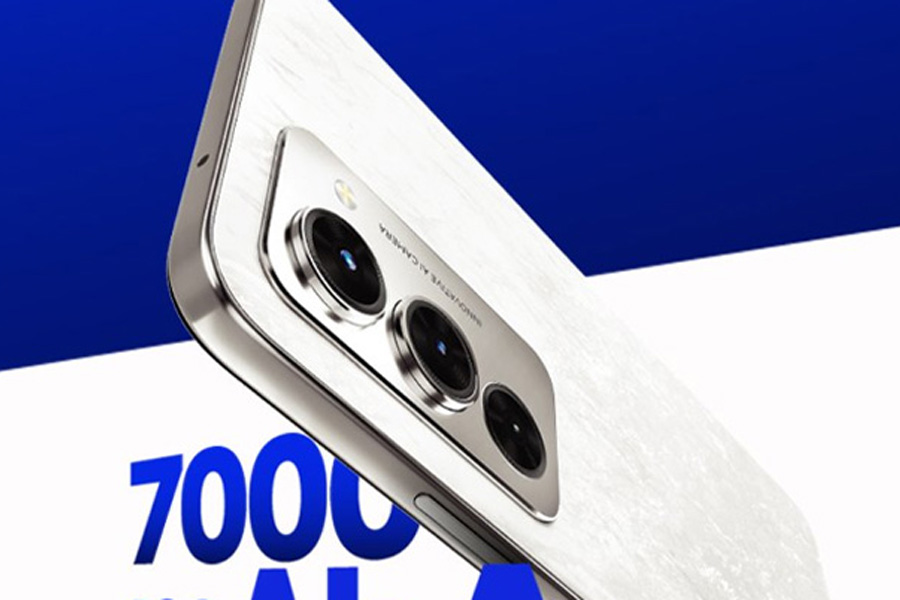
The Redmi 15 is powered by the Snapdragon 685, so it's certainly not a gaming powerhouse, but I've used plenty of phones with the Snapdragon 685, and for normal social media, and everyday tasks, it still gets the job done.
The phone originally launched with Android 15, but it is upgradable to Android 16 with HyperOS 3. For cameras, you get a 50MP main camera and an 8MP selfie camera, with no proper ultrawide. So camera versatility isn't one of its strengths. But battery life definitely is. The Redmi 15 packs a huge 7,000mAh silicon-carbon battery, which is one of the largest batteries in this segment. You also get 33W wired charging.
So even though it's an older model, the Redmi 15 still has two very compelling advantages: a sharp FHD+ display and up to 256GB of storage.
| Pros | Cons |
|---|---|
| Sharp FHD+ 144Hz display | Snapdragon 685 is getting old |
| Massive 7,000mAh silicon-carbon battery | 33W charging is only average for such a large battery |
| Up to 256GB storage |
Redmi 15 4G Specifications
- Display: 6.9-inch IPS LCD, FHD+ (2340 × 1080), 144Hz
- Chipset: Qualcomm Snapdragon 685 (6nm)
- Memory: 4/128GB, 6/128GB, 8/128GB, 8/256GB; microSD support
- Software: Android 15, upgradable to Android 16 / HyperOS 3
- Rear Camera: 50MP main + auxiliary lens
- Front Camera: 8MP
- Battery: 7,000mAh silicon-carbon
- Charging: 33W wired
- Security: Side-mounted fingerprint scanner
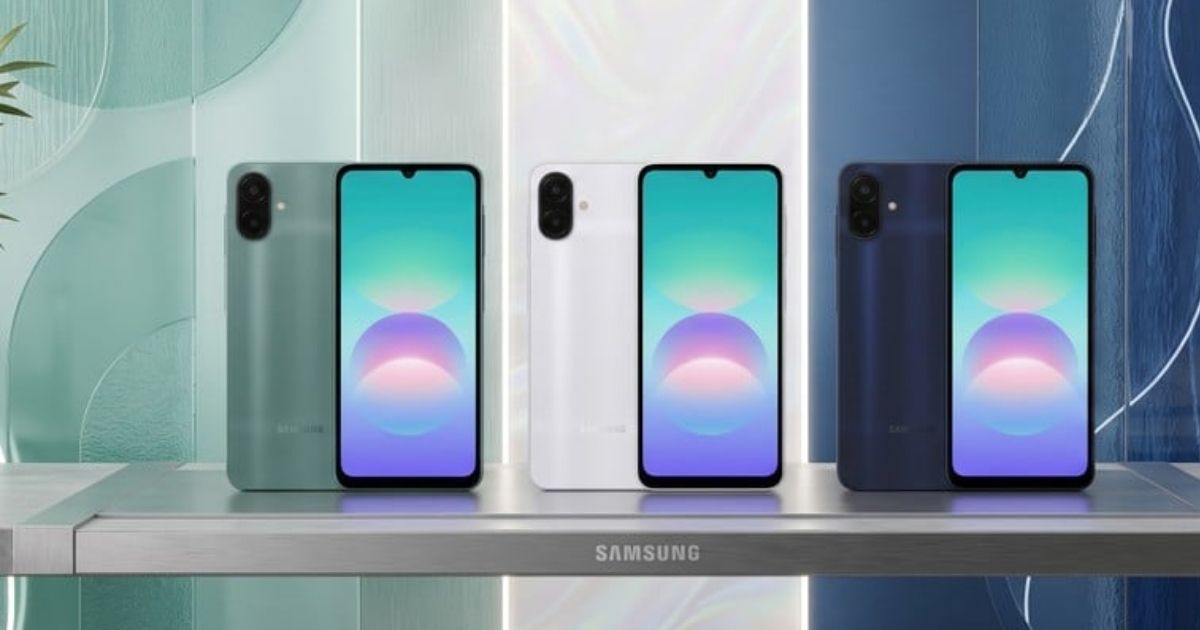
2. Samsung Galaxy A07 4G
At number two, we have the Samsung Galaxy A07 4G. And I think this is the phone for someone who simply wants a Samsung experience under Rs. 30,000. The pricing situation is admittedly strange. This is a phone that originally belonged much closer to the sub-Rs. 20,000 category, whereas now we're talking about it in a list of phones below Rs. 30,000.
On pure hardware, it isn't the best phone here. You get a 6.7-inch PLS LCD with HD+ resolution and a 90Hz refresh rate. That's considerably less impressive on paper than the 120Hz and 144Hz displays offered by some of its competitors. The phone does at least come with an IP54 rating.
But Samsung's biggest advantage isn't the spec sheet—it's the overall experience. The Galaxy A07 uses the MediaTek Helio G99, which is still a capable 6nm budget chipset.
Then there's the software. You get Samsung's One UI, and from my experience, this remains one of the biggest reasons to choose Samsung over something from Redmi, Honor, or Infinix. More importantly, Samsung promises up to six major Android OS upgrades, which is exceptional for a phone this affordable. The phone launched with Android 15, so the long-term software support is easily the best among the phones on this list.
For cameras, there's a 50MP main sensor at the back and an 8MP selfie camera. The hardware itself doesn't look dramatically different from its competitors, but in my experience, Samsung's processing tends to deliver dependable colors, skin tones, and HDR for this class.
Battery capacity is fairly standard at 5,000mAh, while charging tops out at 25W. There's normally no charger inside the retail box, although in Nepal, Samsung Nepal has been bundling an official 25W Samsung charger separately, which normally carries an MRP of around Rs. 2,500.
So no, the A07 doesn't win the spec-sheet battle. But if I were buying a phone for someone who values good software, reliable everyday performance, long-term updates, and Samsung's ecosystem, this would still be one of my safest recommendations.
| Pros | Cons |
|---|---|
| Best software experience among these phones | Only an HD+ 90Hz LCD |
| Excellent six-generation OS update policy | Smaller 5,000mAh battery than rivals |
| Good Helio G99 performance with UFS 2.2 storage |
Samsung Galaxy A07 4G Specifications
- Display: 6.7-inch PLS LCD, HD+ (1600 × 720), 90Hz
- Chipset: MediaTek Helio G99 (6nm)
- Memory: 4/64GB, 4/128GB, 6/128GB, 8/256GB; UFS 2.2, dedicated microSD
- Software: Android 15, One UI 8; up to 6 major OS upgrades
- Rear Camera: 50MP main + auxiliary lens
- Front Camera: 8MP
- Battery: 5,000mAh
- Charging: 25W wired
- Security: Side-mounted fingerprint scanner
1. Redmi 17 4G
And finally, at number one, we have the newly launched Redmi 17 4G. For me, this is the phone to buy right now under Rs. 30,000, mainly because of how well-rounded the overall package is.
But there are a couple of areas where the Redmi 17 is actually a downgrade from the Redmi 15, so let's get those out of the way first. You still get a massive 6.9-inch IPS LCD, but refresh rate drops from 144Hz on the Redmi 15 to 120Hz on the Redmi 17. More importantly, the resolution drops from FHD+ on the Redmi 15 to HD+ on the Redmi 17.
The positive side is that the newer display is more brighter and Xiaomi has upgraded the screen protection to Corning Gorilla Glass 7i. You also get an IP64 rating. The Redmi 17 boots with Android 16 and HyperOS 3, which is another advantage of buying the newer model.
For performance, Xiaomi has switched from the Snapdragon 685 to the MediaTek Helio G91 Ultra. But I wouldn't describe this as a meaningful upgrade. In fact, the Helio G91 Ultra is manufactured on an older 12nm process, compared to the Snapdragon 685's 6nm process. So performance is not really the reason to upgrade from the Redmi 15 to the Redmi 17. The camera setup remains straightforward: a 50MP main camera at the back and an 8MP selfie camera, with no proper ultrawide.
The Redmi 17 packs an enormous 7,500mAh silicon-carbon battery, which is the largest battery among all the phones on this list. And unlike some budget phones where you get a huge battery but painfully slow charging, Xiaomi has paired it with 45W wired fast charging. You also get stereo speakers and a 3.5mm headphone jack, which makes it a pretty good multimedia phone despite that lower-resolution display.
| Pros | Cons |
|---|---|
| Massive 7,500mAh silicon-carbon battery | HD+ resolution is a downgrade from Redmi 15 |
| 45W charging with 22.5W reverse charging | eMMC 5.1 storage instead of faster UFS |
| Android 16, stereo speakers, IP64, and Gorilla Glass 7i |
Redmi 17 4G Specifications
- Display: 6.9-inch IPS LCD, HD+ (1600 × 720), 120Hz, 825 nits HBM, Gorilla Glass 7i
- Chipset: MediaTek Helio G91 Ultra (12nm)
- Memory: 4/128GB, 6/128GB, 4/256GB, 6/256GB; eMMC 5.1, microSD support
- Software: Android 16, HyperOS 3
- Rear Camera: 50MP main + auxiliary lens
- Front Camera: 8MP
- Battery: 7,500mAh silicon-carbon
- Charging: 45W wired
- Security: Side-mounted fingerprint scanner
Summary list of best mobile phones under NPR 30000 in Nepal [2026 Updated]
| S.N. | Smartphone | Price in Nepal | Best for |
|---|---|---|---|
| 1 | Redmi 17 4G | Rs. 27,999 (4/128GB) | Best overall / Best battery life |
| 2 | Samsung Galaxy A07 4G | Rs. 29,499 (4/128GB) | Best software & long-term updates |
| 3 | Redmi 15 4G | Rs. 29,999 (8/256GB) | Best display & 256GB storage |
| 4 | Infinix Hot 70 | Rs. 31,999* (6/128GB) | Best design & fast charging |
| 5 | Honor X6d | Rs. 29,999 (4/128GB) | Best for 5G connectivity |
You might also like:
Article Last updated: August 20, 2026
![Xiaomi Mobile Price in Nepal [Updated 2026]](https://media.gadgetbytenepal.com/2026/01/Xiaomi-Mobile-Price-in-Nepal-2026.jpg)