Excellent battery life and smooth performance, but the cameras leave something to be desired.
Why Trust Gadgetbyte?
At Gadgetbyte, we invest substantial hours into rigorously testing each product or service we review, guaranteeing that you make informed purchases. Learn more about our testing process.
Review Overview
4.4
Design and Build
8/10
I genuinely enjoyed using the OnePlus Nord 6, especially its performance, clean software, and excellent battery life. It handles everyday tasks and demanding games really well. The cameras, however, are a bit of a letdown. The main camera takes good photos, but the average ultrawide and lack of a telephoto camera are disappointing for a phone at this price. It's a good phone, no doubt, but at Rs. 89,999, I'm still hesitant to recommend it when there are other strong options worth considering.
Display
9.2/10
Audio
8.5/10
Performance
9.3/10
Software and UI
9.5/10
Camera
8/10
Battery life
9.4/10
Value for money
8.5/10
Alright, here I am with another almost Rs. 90,000 smartphone review. This time, it's the OnePlus Nord 6 (yayyy). The OnePlus Nord 5 was one of my favorite upper-midrange phones from last year, and even today I see people asking whether it's still worth buying. So naturally, I was quite excited to see what OnePlus has improved with its successor, the Nord 6.
And well, there are some pretty interesting upgrades this time. We now get a more powerful Snapdragon 8s Gen 4 chipset, a smoother 165Hz AMOLED display, better water resistance, and most importantly, a massive 7,500mAh battery.
But, as expected, the price has gone up too. The OnePlus Nord 6 now costs Rs. 89,999 for its 8/256GB variant in Nepal. Of course, smartphone prices have been increasing lately—still at such a hefty price, I do expect a phone to get most things right.
After using the Nord 6 for about a month, I have quite a few things to share. I really enjoyed its performance, software experience, and especially the battery life. But I also found a few areas where OnePlus could have done better, particularly the cameras.
So, is the OnePlus Nord 6 actually worth buying? Let's find out in this review.
OnePlus Nord 6 Specifications:
- Design, build: 162.5 x 77.5 x 8.5 mm, 217 grams, IP66/68/69/69K rating
- Display: 6.78-inch 1.5K AMOLED, 165Hz refresh rate, 330Hz touch sampling, 1,800 nits HBM, PWM & DC dimming, Oppo Crystal Shield glass
- Chipset: Snapdragon 8s Gen 4 (4nm)
- Memory: Up to 16GB LPDDR5X RAM, up to 512GB UFS 4.1 storage
- Software & UI: Android 16, Oxygen 16
- Rear Camera: Dual (50MP main + 8MP ultrawide)
- Front Camera: 32MP
- Security: Optical in-display fingerprint scanner
- Connectivity: Wi-Fi 7, Bluetooth 6, NFC, IR blaster, USB Type-C
- Battery: 7,500mAh, 80W fast charging, 27W reverse wired charging, bypass charging


OnePlus Nord 6 price comparison:
| Nord 6 | Price in India | Price in Nepal |
| 8/256GB | INR 44,999 | NPR 89,999 |
OnePlus Nord 6 Review
Design and Build: A familiar aesthetic, but I expected a little more
- 162.46 x 77.45 x 8.5 mm, 210 gm, Plastic back and plastic frame
- IP66, IP68 and IP69 ratings
- Customisable Plus Key with Mind Space integration
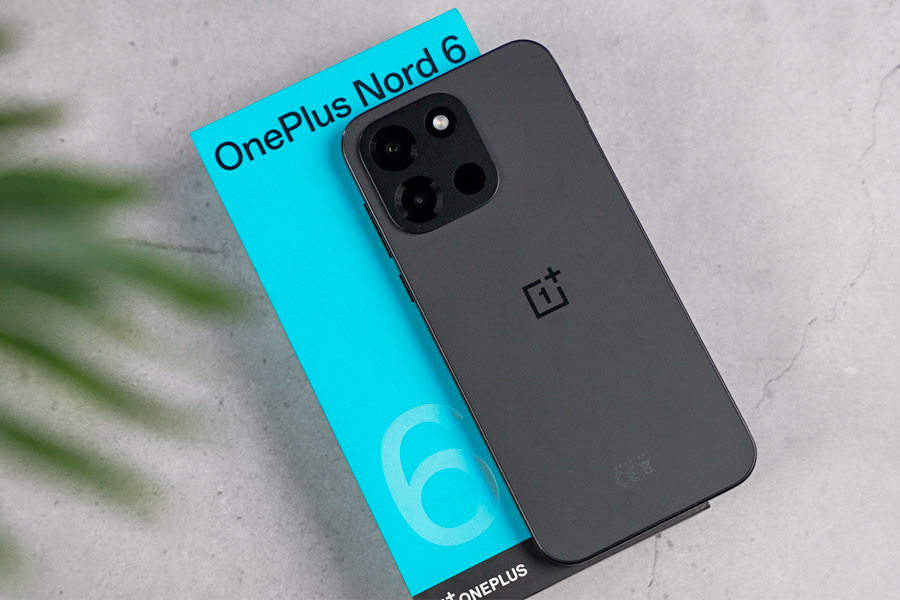
Starting with the design, OnePlus has been keeping things pretty consistent across its recent phones. Whether you look at the Nord series or the more expensive OnePlus models, there's a certain design language that makes them easily recognisable.
And the Nord 6 is no different.
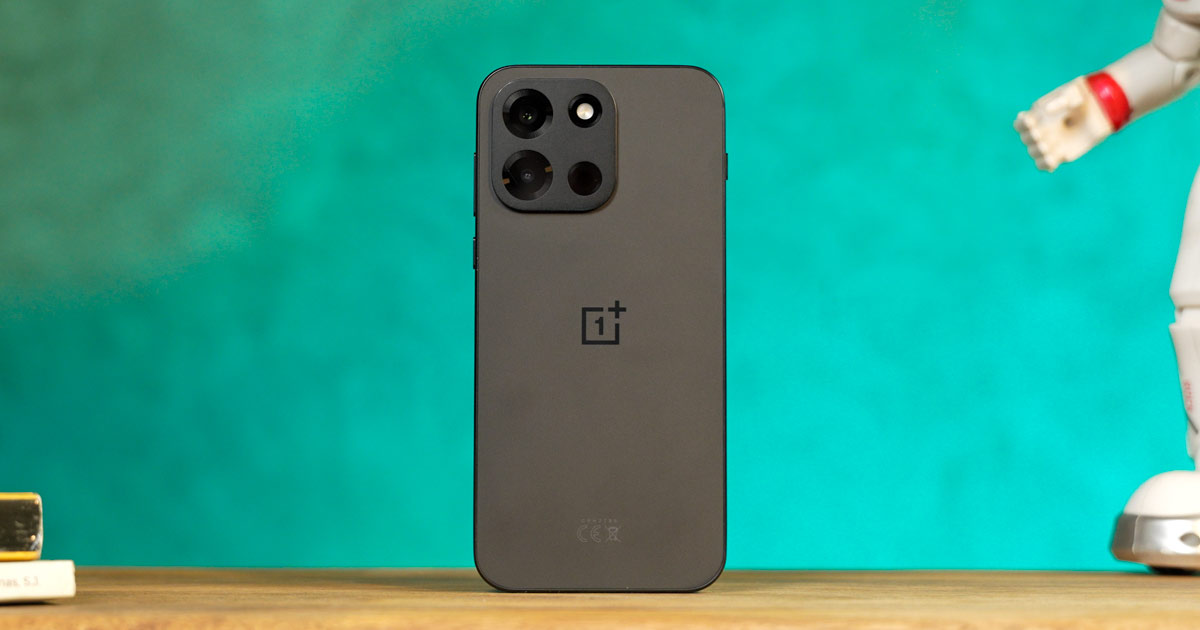
It has a clean, boxy design with a square-shaped camera module at the back. I quite like how it looks, although I wouldn't call it particularly exciting.
What I am not completely satisfied with, though, is the build material. Both the back panel and the frame are made of plastic. Now, I am not saying it feels cheap or poorly built, but at almost Rs. 90,000, I honestly would have appreciated a glass back or something that felt a little more premium.
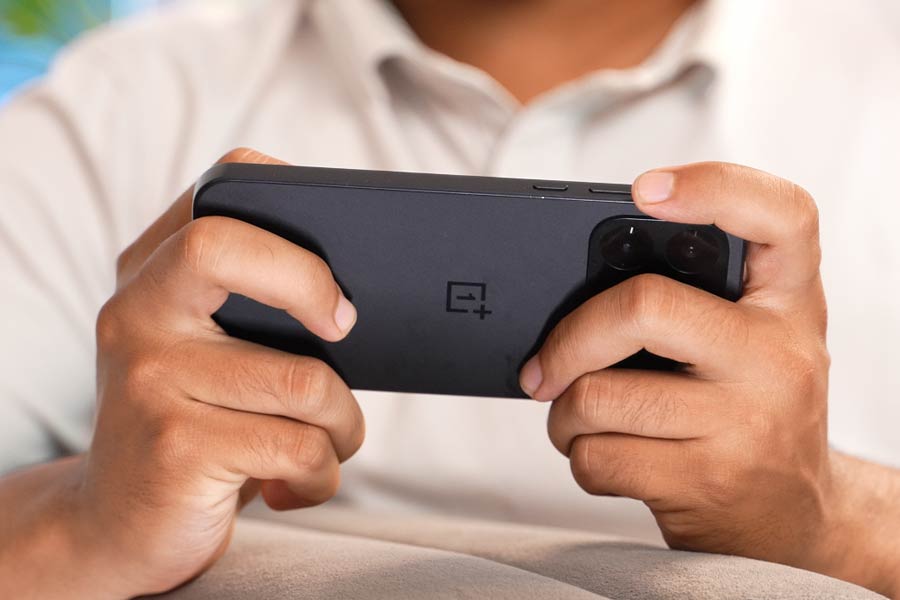
Still, thankfully, the phone doesn't feel as heavy or bulky as you might expect because of its massive battery. The weight distribution is surprisingly good. Even with that rather large camera module at the top, I didn't find the phone top-heavy or uncomfortable to hold. So, while the materials aren't exactly premium, the actual in-hand experience is quite good.
Another welcome improvement is durability. Last year's Nord 5 (review) came with an IP65 rating, but the Nord 6 now offers IP66, IP68, and IP69 protection. Of course, I still wouldn't recommend deliberately taking it underwater, but it's nice to have that added peace of mind.
You also get OnePlus's customisable Plus Key on the side, which works with features like Mind Space. It's a handy addition for quickly saving information or accessing shortcuts.
Altogether, I think OnePlus has done a good job with the build quality and weight distribution. I just wish the phone felt a little more premium for its price. (If you know what dil mange more… mean.)
Display: Just one word—beautiful
- 6.78-inch AMOLED panel
- 165Hz maximum refresh rate
- 1,800 nits high-brightness mode
Moving on to the display, without a doubt—I really enjoyed using. The Nord 6 comes with a large 6.78-inch AMOLED panel, and the quality is excellent. Colours look vibrant, the screen is sharp, and I particularly liked how bright it gets outdoors.
Like, reallllyyyy—even under bright sunlight, I didn't have much trouble seeing the content on the screen. And considering how often I use my phone outdoors, it is something I do appreciate.
There's HDR10+ support too, and I was able to enjoy HDR content on platforms like YouTube and Netflix. So, for watching movies, videos, or just scrolling through social media, the multimedia experience is pretty good.
Now, OnePlus has also given this phone a 165Hz refresh rate, which sounds quite impressive on paper. But there's something you should know. The full 165Hz refresh rate only works in selected supported games. For normal scrolling and most everyday applications, you're still looking at up to 120Hz.
Not that I'm complaining, because 120Hz already feels plenty smooth. And the touch response is good too, which is especially useful while gaming.
Another thing that deserves a mention is the haptics.
Honestly, the vibration feedback on this phone feels almost flagship-level. It's nicely integrated into OxygenOS, whether you're adjusting the brightness, unlocking the phone, or interacting with different parts of the interface.
These are small things, but they make the phone feel more polished in everyday use.
However, after many compliments—I do have two complaints about the display.
- First, OnePlus uses its own Crystal Guard Glass protection instead of a named Gorilla Glass solution. I'm not saying it's necessarily weaker, because I haven't done any durability testing, but I would definitely recommend using a good screen protector.
- And second, you still get an optical in-display fingerprint sensor instead of an ultrasonic one.
The sensor itself works fine, but I would have liked an ultrasonic sensor at this price. Its placement is also a little too low for my liking, especially since I have relatively small hands.
Apart from these things, though, I think the OnePlus Nord 6 has an excellent display. (ending with a good note, hehehe…)
Speakers: Loud, clear, and enjoyable
- Dual Stereo Speakers with 300% Super Audio Mode support
- OReality Audio support
Oh, and how can I forget about the audio—especially when I really liked how the Nord 6 sounds.
You get a stereo speaker setup, and the audio was loud and clear. Even at higher volume levels, I didn't notice any distracting distortion. I mean, combined with the large AMOLED display, it makes watching movies, YouTube videos, or listening to music quite enjoyable.
So, when it comes to the multimedia experience, I can confidently say I don't have much to complain about.
Performance: Fast, stable, and surprisingly cool
- Snapdragon 8s Gen 4 (4nm)
- LPDDR5X RAM
- UFS 4.1 storage
Okay, now let's talk about the most important aspect of a smartphone: performance. And this is where the Nord 6 seriously impressed me. OnePlus has upgraded the chipset to Qualcomm's Snapdragon 8s Gen 4, and the difference is noticeable.
But more than the raw processing power, what I liked was how consistently fast the phone felt during my usage. Whether I was using multiple apps, switching between tasks, or doing something demanding, I didn't notice any unnecessary lag or hiccups.
And after testing so many phones, I have to say it's refreshing to use one that feels this stable.
Gaming performance is excellent
Talking about performance without mentioning gaming wouldn't make much sense, would it? So, I also tested the phone with some demanding games, including PUBG and Genshin Impact.
And the results were quite impressive.
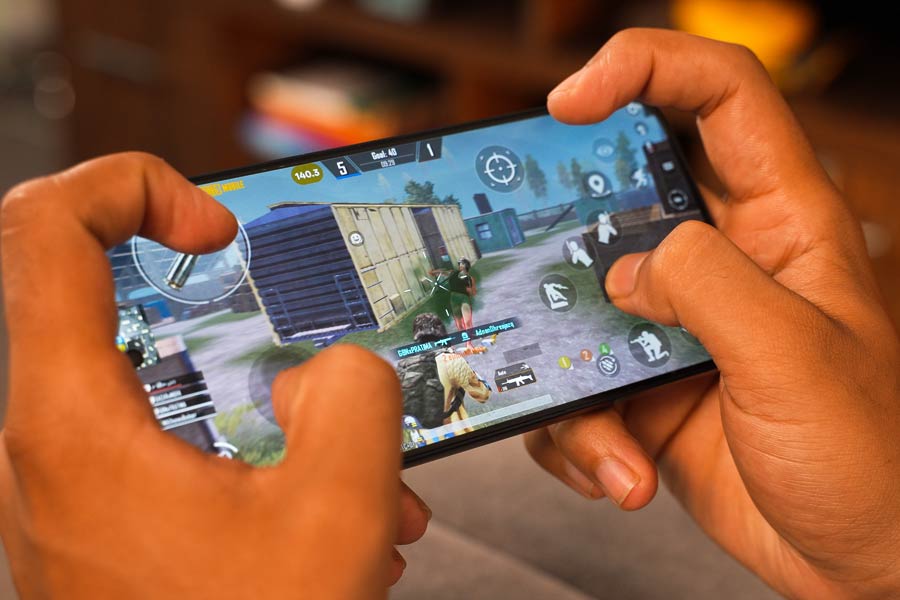
While playing PUBG with HyperBoost enabled, the gameplay felt smooth and responsive. The phone was able to deliver good frame rates without the kind of noticeable fluctuations that can sometimes affect the gaming experience.
But what surprised me more was the temperature. Even during demanding gaming sessions, the phone stayed around 35 to 40°C in my testing. That's a pretty good result, especially considering the performance you're getting.
As mentioned, I also tried Genshin Impact, which is considerably more demanding. And again, the Nord 6 handled it extremely well.
The frame rates remained consistent during longer sessions, and I didn't notice any major throttling issues. Even the lower frame-rate readings, which matter when judging occasional stutters, were relatively stable. Something I value more than just a high benchmark score. Because a phone might look powerful on paper, but if it starts heating up and dropping frames after a few minutes.
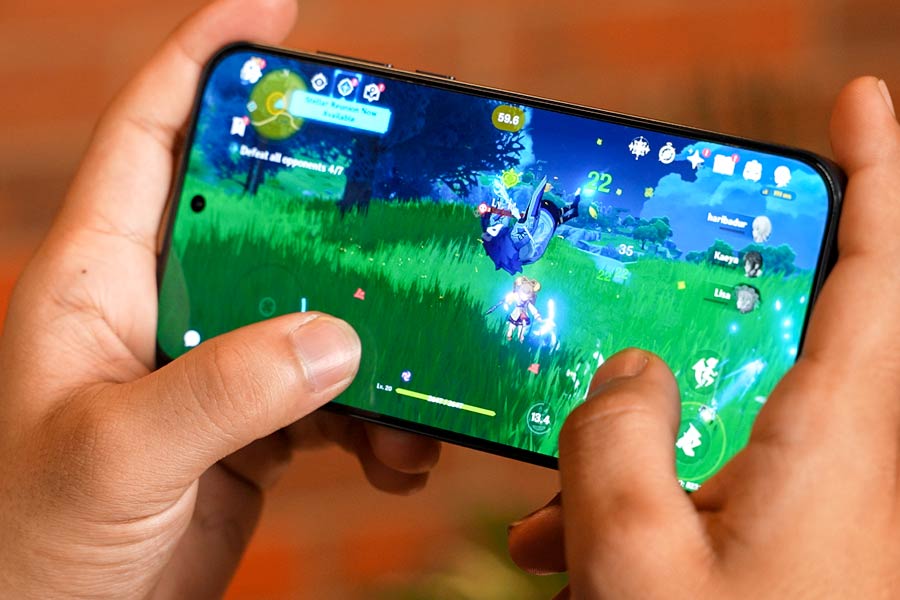
Fortunately, that wasn't my experience with the Nord 6.
And this consistency also carries over to normal multitasking. I could switch between applications and continue using the phone without any noticeable slowdown. So, in terms of everyday performance and sustained gaming, I think OnePlus has done an exceptionally good job.
But I still won't call it perfect. The Snapdragon 8s Gen 4 is a capable chipset, but phones like the POCO X8 Pro Max offer even stronger peak performance. Even the cheaper POCO X8 Pro delivers competitive gaming performance for less money.
Software and UI: Still one of my favorites
- Android 16 with OxygenOS 16
- Four major Android upgrades promised
- Six years of security updates
You might feel like I'm praising the Nord 6 a little too much at this point, but I genuinely enjoyed its software. I've always liked OxygenOS, and after using this phone for about a month, I'm happy to say that OnePlus has done a really good job with it.
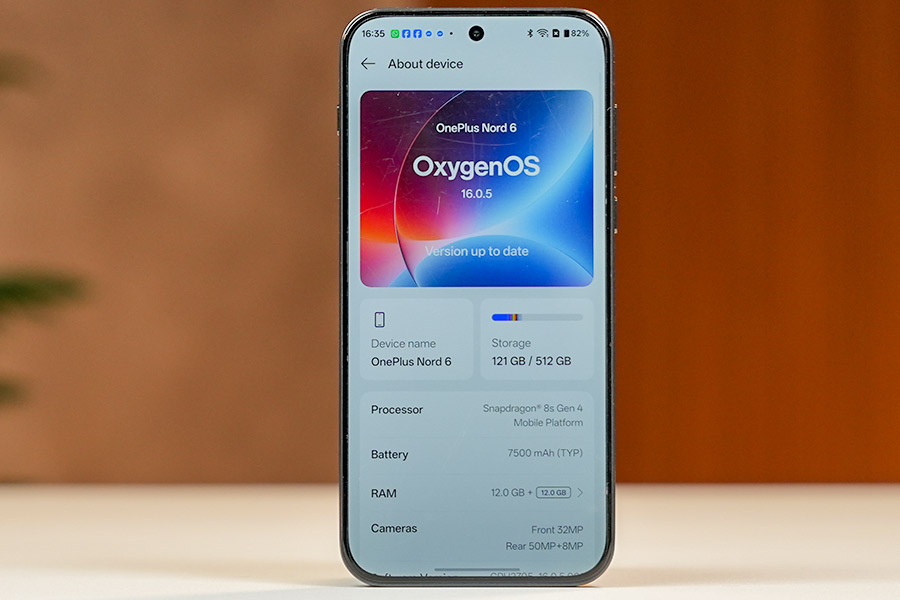
The interface feels fluid, whether I'm opening apps, switching between them, or simply navigating through the phone. I also appreciate how clean the experience is, with very little unnecessary bloatware.
More importantly, I haven't faced any major software-related issues. I've received two software updates since I started using the phone, and a few minor bugs that were present initially have already been addressed. It's good to see OnePlus continuing to refine the experience after launch.
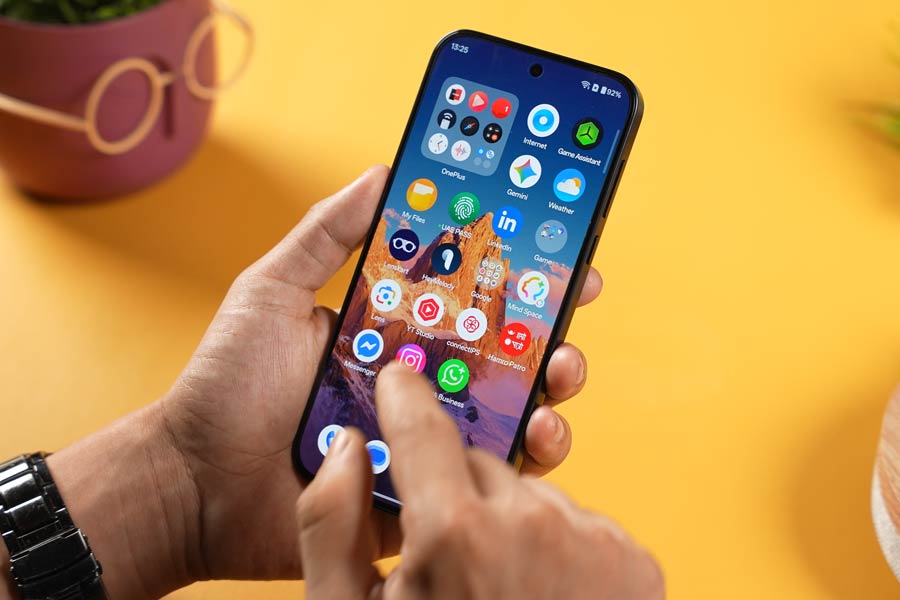
Of course, software preferences are personal. Some people might prefer the features and customisation options in HyperOS, while others may like the simpler approach of Nothing OS. But personally, OxygenOS remains one of my favourite Android interfaces.
Another notable point is that OnePlus has also promised four major Android upgrades and six years of security updates for the Nord 6. It is reassuring, especially if you're planning to keep the phone for three or four years.
Overall, software is easily one of the Nord 6's biggest strengths. It delivers the clean, reliable experience I've come to appreciate from OxygenOS.
Cameras: Good for everyday photos, but not the strongest feature
- 50MP Sony LYT-600 main camera with OIS
- 8MP ultrawide camera
- 32MP autofocus selfie camera
Okay, now we come to the part where I feel OnePlus could have done better. (Not only praise, mind that. Haha…)
The Nord 6 has a dual rear camera setup with a 50MP main camera and an 8MP ultrawide. And honestly, I find the camera hardware a little disappointing for the price.
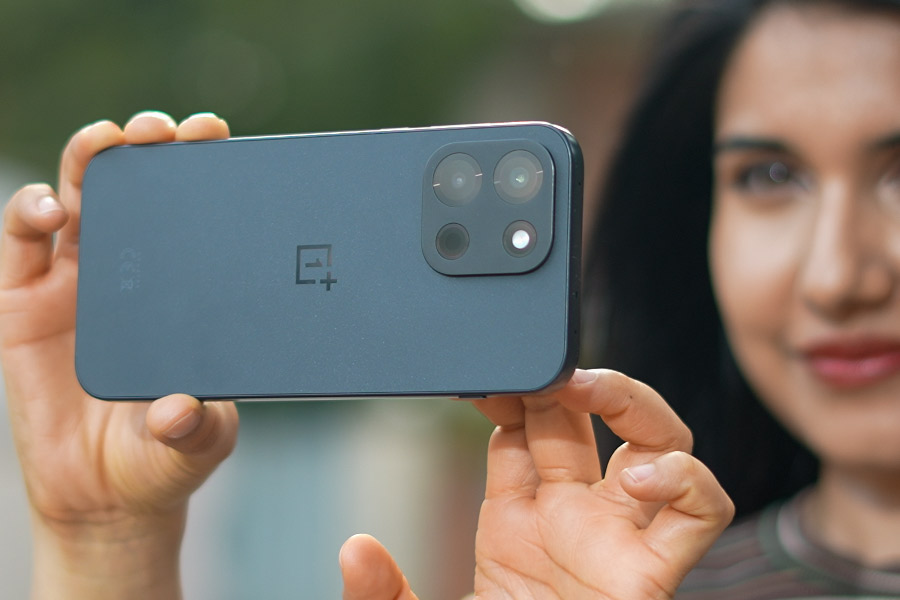
To start with, there's no dedicated telephoto camera (I mean, really?). It's something I would have liked to see, especially when competitors like the Nothing Phone 4a Pro offer one.
What's more, OnePlus has moved to a smaller main camera sensor compared to the previous generation. The Nord 5 used a Sony LYT-700, while the Nord 6 comes with the smaller Sony LYT-600. So, at least on paper, this looks like a downgrade.
But interestingly, the actual pictures aren't necessarily worse. (I know that sounds contradictory, but hear me out.)
Main camera: Good details and improved colour processing
In good lighting, the Nord 6 takes some pretty nice pictures. The photos are generally bright, with punchy colours and slightly contrasty processing, which is typical of OnePlus phones.
Personally, I think the colour processing has improved compared to the Nord 5. The dynamic range is good, and the camera retains a nice amount of detail in both bright and darker areas. In fact, despite the smaller sensor, I prefer the image processing on the Nord 6.
Whether it's a landscape, a building, or something interesting you come across outdoors, the main camera does a good job. Yes, it's not class-leading, but it can certainly capture good-looking pictures in favourable lighting.
Ultrawide: Fine in daylight, average otherwise
The 8MP ultrawide camera is fairly basic. In daylight, I found its colours and HDR processing reasonably consistent with the main camera, so switching between the two doesn't result in completely different-looking pictures.
However, the difference in detail is quite noticeable. The ultrawide images lack the sharpness of the main camera, and the quality drops further in challenging lighting. I'm glad OnePlus has included an ultrawide, but I wish it were a better one.
Portraits: A dedicated telephoto would have helped
The Nord 6 uses its main camera to capture 2x portraits through digital cropping, and the results are fine for casual photography.
However, when compared with the Nothing Phone 4a Pro, the difference is noticeable. Its dedicated 3.5x telephoto camera offers more flexibility for portraits, and I also found its subject separation and skin tone processing more pleasing.
So, if portrait photography is important to you, I think the Nothing Phone 4a Pro is the better option. The Nord 6 can take decent portraits, but it's not particularly impressive in this department.
Selfies: Decent, but nothing special
For selfies, the Nord 6 gets a 32MP autofocus front camera. The results are decent, with sufficient detail for social media and everyday use, particularly in good lighting.
However, it's worth mentioning that the Nord 5 had a 50MP front camera, so this is another hardware change that doesn't look like an upgrade on paper. Still, the Nord 6 gets the job done for regular selfies and video calls.
Night photography: Better than I expected
Now, the night photography was actually quite good, especially with the main camera.
I liked how it handled exposure and highlights. Bright lights weren't unnecessarily blown out, and the overall exposure remained nicely balanced. The photos also had a slightly warm tone, which I personally liked because it preserved the atmosphere of the scene rather than making everything look artificially bright.
The ultrawide, on the other hand, was much less impressive, with reduced detail and weaker overall image quality. So, while the main camera is quite capable at night, I wouldn't say the same for the secondary sensor.
Video: Good for casual use
The Nord 6 can record videos at up to 4K 60fps with its rear main camera and 4K 30fps with the selfie camera.
The video quality is decent for casually recording family moments, travel clips, or interesting things happening around you. However, if you regularly create social media videos or want more flexibility while shooting, there are better camera options at this price.
The lack of a telephoto camera limits your shooting options, while the ultrawide is also restricted to lower-resolution video recording.
All in all, the Nord 6's cameras are good enough for everyday photography, but they aren't its strongest selling points.
Battery and Charging: Another aspect where the phone shines
- 7,500mAh battery
- 80W SUPERVOOC fast charging
- Approximately 10–12 hours of screen-on time in my usage
Finally, let's talk about the battery, which is another area where the Nord 6 really delivers. The Nepal variant packs a massive 7,500mAh battery, and honestly, the backup has been excellent.
During my regular usage, I consistently got around two days of battery life. Even after using the phone throughout the first day, I would still have roughly 50% charge left, which was enough to comfortably get me through the following day, sometimes until the evening. In terms of screen-on time, I was getting around 10 to 12 hours.
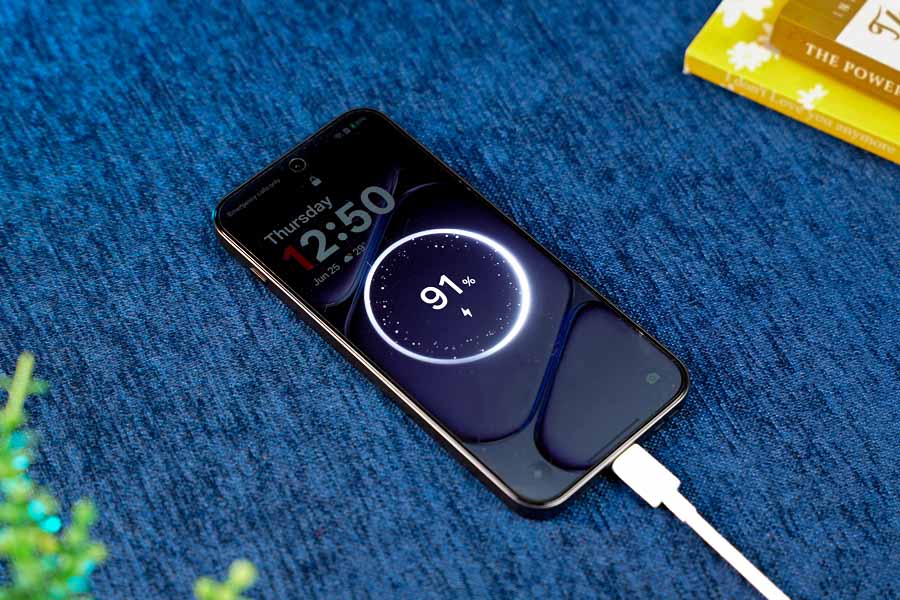
I mean, clearly, this isn't a phone with some basic processor that barely consumes power. It has a powerful Snapdragon 8s Gen 4 chipset and a high-refresh-rate AMOLED display. So, getting this kind of endurance alongside strong performance makes it even more impressive.
For heavy users, this means less worrying about finding a charger during the day or carrying a power bank everywhere. And even if you're a more casual user, getting through two days without charging is certainly convenient.
Charging is pretty good too
OnePlus has included 80W SUPERVOOC fast charging, and despite the large battery, charging doesn't take too long. It took me roughly an hour to get the phone from empty to full, which is quite reasonable for a battery of this size.
In the end, the Nord 6 offers excellent battery endurance without compromising on performance, and that's something I really appreciate about this phone.
OnePlus Nord 6 Review: Conclusion
After spending a month with the OnePlus Nord 6, I can say that it's a phone I genuinely enjoyed using. It gets the fundamentals right, particularly when it comes to performance, software, and battery life. However, I do wish OnePlus had paid more attention to the cameras, especially considering its Rs. 89,999 price tag.
And that's where the competition becomes difficult to ignore. The POCO X8 Pro Max (review) offers more powerful hardware, as it delivers strong performance at a lower price, and the Xiaomi 17T (review) is another option worth considering for both camera and performance. Whereas if cameras—particularly portraits and zoom shots— matter more to you, the Nothing Phone 4a Pro might be a better fit.
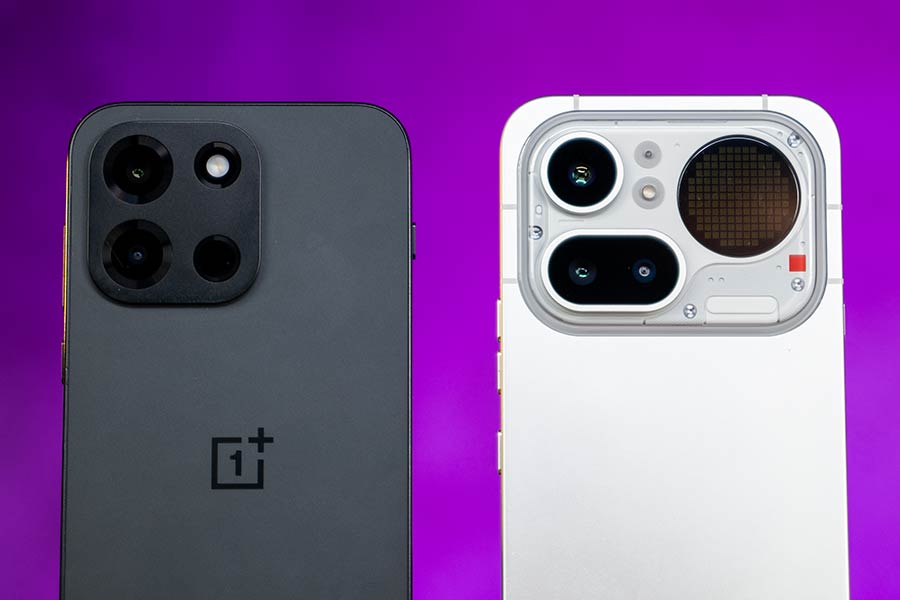
But if you're looking for a dependable phone that handles demanding games well, offers a clean software experience, and doesn't need to be charged every night, the Nord 6 makes a pretty compelling case.
It's not the most well-rounded option at this price, but there's a lot to like about the experience OnePlus has delivered.
OnePlus Nord 6: Pros and Cons
| Pros | Cons |
| Bright AMOLED display | Plastic build feels less premium |
| Excellent haptics and good audio | No dedicated telephoto camera |
| Fast and stable performance | Average ultrawide |
| Smooth, well-optimised software and UI | A bit expensive compared to other options |
| Excellent battery life |
Article Last updated: November 3, 2026