Both phones have their strengths, but where do they fall short? Here's what I found after a week of testing.
Why Trust Gadgetbyte?
At Gadgetbyte, we invest substantial hours into rigorously testing each product or service we review, guaranteeing that you make informed purchases. Learn more about our testing process.
Review Overview
3.6
Design and build
7.5/10
Display
7.7/10
Audio
6/10
Software and UI
7.5/10
Performance
6.9/10
Cameras
6.5/10
Battery
8.5/10
Value for money
7/10
The Redmi Note 17 4G and 5G offer excellent battery life, good AMOLED displays, and a decent everyday experience. However, average cameras, weak gaming performance, and missing stereo speakers are disappointing at these prices. While the 5G model is slightly faster and takes more consistent photos, I think the 4G variant offers better value for money, saving you Rs. 5,000 without sacrificing much.
A few years ago, Redmi Note phones were easy to recommend. They offered good performance, decent cameras, and great value for money. But things have changed. Redmi phones are getting more expensive, and the focus now seems to be more on battery life, design, and multimedia than performance.
For the past week, I have been using the more affordable Redmi Note 17 4G and 5G side by side. But with starting prices of Rs. 42,999 and Rs. 47,999 in Nepal, they aren't exactly cheap either.
What's interesting is that despite the price difference, both phones offer a very similar experience. So, after a week of testing, here's what I liked, what disappointed me, and which one I think makes more sense.
Redmi Note 17 4G and 5G Price in Nepal
Before getting into the details, let's quickly look at the prices of both phones in Nepal. The Redmi Note 17 4G starts at Rs. 42,999 for the 6/128GB variant, while the 8/256GB version costs Rs. 47,999. Meanwhile, the Redmi Note 17 5G starts at Rs. 47,999 for 6/128GB and goes up to Rs. 52,999 for 8/256GB. So, there's a Rs. 5,000 price difference between the two models for the same RAM and storage configuration.
| Variant | Price in Nepal |
| Redmi Note 17 4G (6/128GB) | NPR 42,999 |
| Redmi Note 17 4G (8/256GB) | NPR 47,999 |
| Redmi Note 17 5G (6/128GB) | NPR 47,999 |
| Redmi Note 17 5G (8/256GB) | NPR 52,999 |
Redmi Note 17 4G and 5G Specifications:
- Design: 169.7 × 79.1 × 8.5mm, 224g (4G) / 225g (5G), plastic frame and back, Gorilla Glass 7i, IP65 rating
- Display: 6.99-inch AMOLED, FHD+ resolution (1080 × 2396 pixels), 120Hz refresh rate, 1,200 nits HBM brightness
- Chipset: Snapdragon 6s 4G Gen 2 (6nm) on 4G / Snapdragon 4 Gen 4 (4nm) on 5G
- Memory: 6GB/8GB RAM, 128GB/256GB storage
- Software: Android 16 with HyperOS 3
- Rear Camera: 50MP main camera (f/1.8)
- Front Camera: 16MP selfie camera
- Video: Up to 1080p at 30fps
- Security: Optical in-display fingerprint sensor
- Audio: Single speaker
- Battery: 7,700mAh silicon-carbon, 45W fast charging, 22.5W reverse wired charging
- Connectivity: 4G LTE / 5G, Wi-Fi 5, Bluetooth 5.0 (4G) / 5.1 (5G)
- Colors: Celestial Purple, Sky Teal, Black


Redmi Note 17 4G and 5G Review
Design and Build Quality: Almost identical in every way
- Dimensions: 169.7 × 79.14 × 8.45 mm
- Weight: 224g (4G), 225g (5G)
- Plastic back and frame
- IP65 dust and water resistance
- Corning Gorilla Glass 7i protection
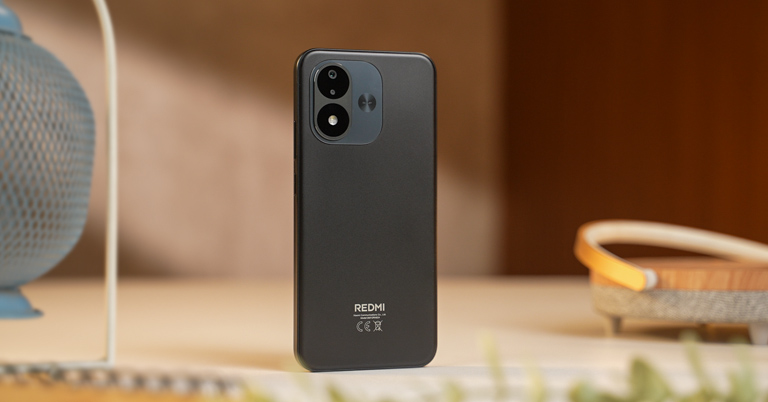
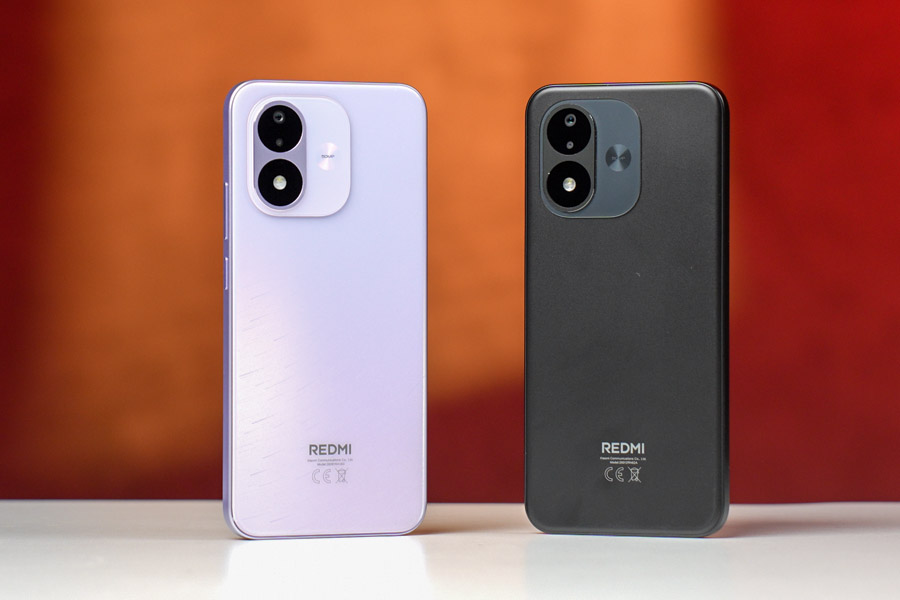
Starting with the design, both phones look almost identical. The camera module, dimensions, and even the in-hand feel are pretty much the same. You can barely tell them apart just by looking at them.
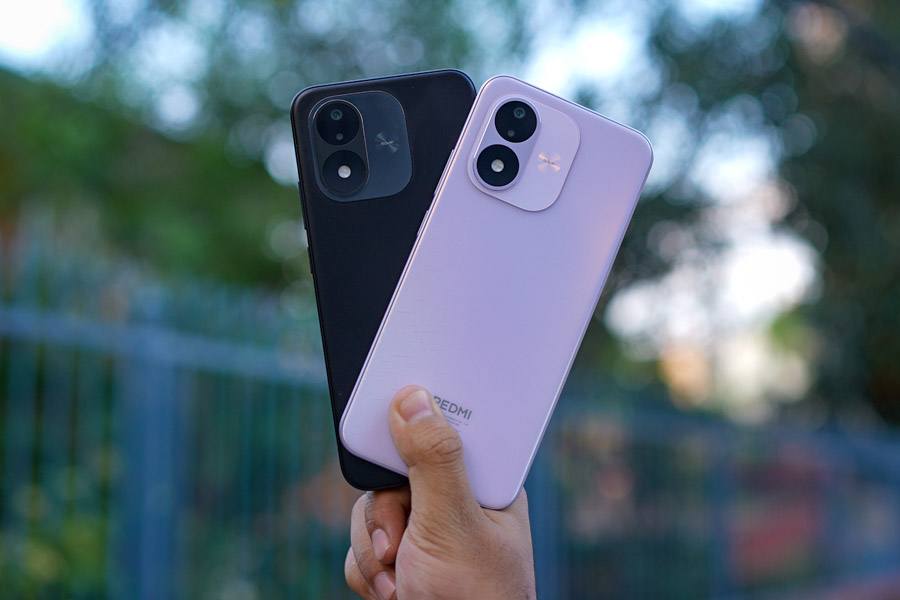
Both are quite large phones, weighing around 224 grams. Despite their size, I didn't find them uncomfortable to hold, although one-handed use can be a little difficult. As for the build, both have plastic backs and frames, which is pretty standard, so no complaints there.
You also get Gorilla Glass 7i protection on the front and an IP65 rating for dust and water resistance on both models. And as someone who's a bit clumsy and doesn't always handle phones carefully, I appreciate having that extra protection.
If you wonder what Xiaomi includes inside the box, then it's the same as before. Both phones come with a protective case, USB-C cable, and a 45W charger. As for the phones themselves, they look decent, feel comfortable in hand, and offer a pretty similar overall experience.
Display: Good AMOLED panels, but no HDR
- 6.99-inch FHD+ AMOLED display
- 120Hz refresh rate
- 1,200 nits HBM, 1,800 nits peak brightness
- In-display fingerprint sensor
Moving to the display, it's pretty much the same story. Both phones have a large 6.99-inch Full HD+ AMOLED display with a 120Hz refresh rate, and honestly, I could barely tell them apart during my testing.

The displays are quite good. Colours look vibrant, scrolling feels smooth, and touch response is equally good on both. Brightness is also not an issue. With up to 1,200 nits in High Brightness Mode, I didn't have any trouble using either phone outdoors.
One small difference I noticed was the colour tuning. The 4G variant looks slightly warmer by default, while the 5G version has a more balanced colour tone. But the difference is so small that you probably wouldn't notice it unless you're comparing them side by side.
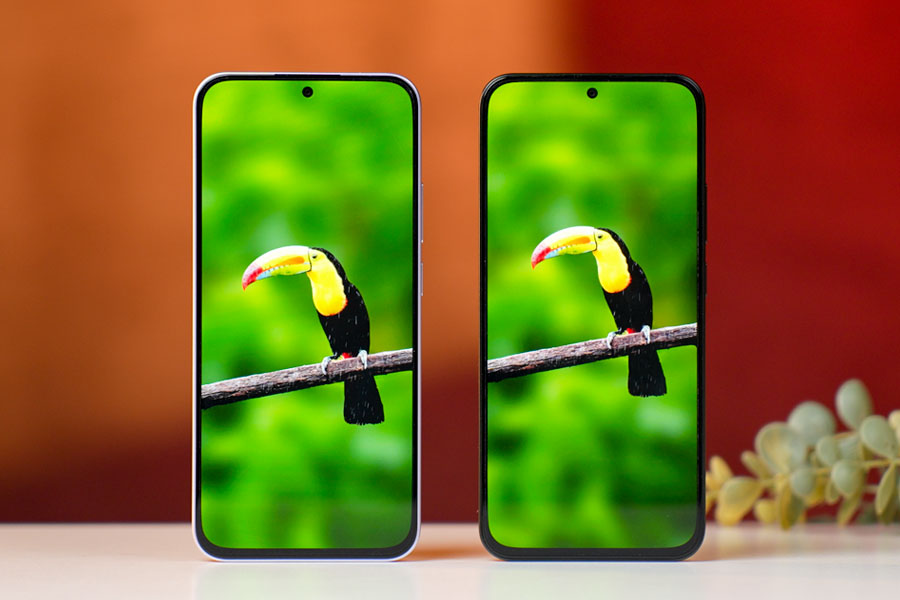
However, one thing I found disappointing is the lack of HDR support. Neither phone supports HDR playback on YouTube or Netflix, which I think should have been included at this price.
Both phones also have an in-display fingerprint sensor. It's not as fast as the ones on more expensive phones, but it gets the job done.
So, apart from the missing HDR support, I don't have any major complaints about the displays. Both offer a pretty good viewing experience, whether you're scrolling through social media or watching movies.
Audio: Where are the stereo speakers?
Now, one thing I really didn't like about either phone is the speaker setup. Despite costing over Rs. 40,000, both phones come with a single speaker instead of stereo speakers, which is quite disappointing.
The speaker quality is almost identical on both, and it's decent enough for casual use. But what bothers me is that previous Redmi Note phones had stereo speakers, so removing them feels like a downgrade.
Honestly, at this price, stereo speakers should be a basic feature, and I'm not happy that Redmi has skipped them on both models.
Battery Life and Charging: Easily the best thing about both phones
- 7,700mAh silicon-carbon battery
- 45W wired charging
- 22.5W reverse wired charging support
- 45W charger included in the box
Now, battery life is easily the best thing about both phones. The Redmi Note 17 4G and 5G come with massive 7,700mAh silicon-carbon batteries, and honestly, the battery life is excellent.
I tested both phones side by side, and with casual use like scrolling through social media, watching videos, and messaging, they easily lasted more than two days on a single charge. Even with heavier usage, I could comfortably get more than a full day out of them without worrying about the battery. Interestingly, the 4G variant lasted roughly an hour longer than the 5G version, but both are equally impressive in everyday use.
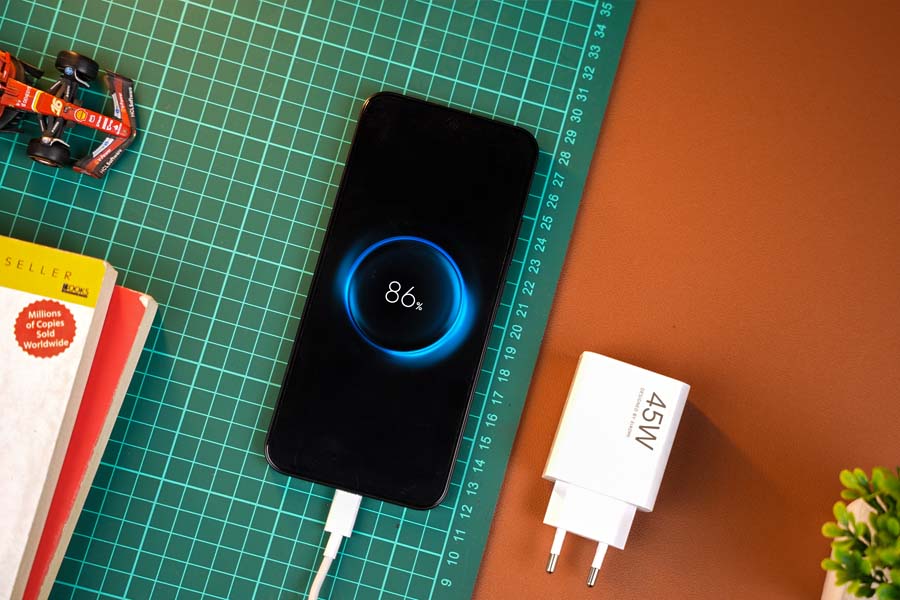
Another useful feature is the 22.5W reverse wired charging. I found it quite handy for topping up accessories like my earbuds and smartwatch in an emergency, especially when I didn't have another charger around.
And charging is pretty convenient too. Both phones support 45W fast charging, and with the included charger, they took around 1 hour and 15 minutes to charge fully. Considering the huge battery capacity, that's quite reasonable, and I didn't have to spend too much time waiting for them to charge.
Overall, battery life is one area where I have absolutely no complaints. Both phones are excellent in this regard, and the combination of long endurance and reasonably quick charging makes them very reliable for daily use.
Performance: The 5G version is faster, but don't expect too much
- Redmi Note 17 4G: Snapdragon 6s 4G Gen 2 (6nm)
- Redmi Note 17 5G: Snapdragon 4 Gen 4 (4nm)
- LPDDR4X RAM and UFS 2.2 storage
- Up to 8GB RAM and 256GB storage
Battery life might be excellent, but performance is where the two phones finally show some differences.
The Redmi Note 17 4G comes with the Snapdragon 6s 4G Gen 2, while the 5G variant gets the Snapdragon 4 Gen 4. Now, looking at the names, you might think the Snapdragon 6-series chip is more powerful, but that's not the case here.

The Snapdragon 6s 4G Gen 2 is based on an older architecture, similar to the Snapdragon 680, whereas the Snapdragon 4 Gen 4 is a newer 4nm chipset.
And I could notice that difference during my testing. The 5G variant felt slightly faster when opening apps, switching between them, and navigating through the interface. It also managed background apps a little better than the 4G model.

That said, neither phone is particularly powerful. For everyday tasks like scrolling through social media, messaging, watching videos, or browsing, both get the job done. But when it comes to heavier multitasking, you can feel their limitations.
Honestly, considering their prices, I expected better performance from both phones. Redmi seems to have shifted its focus more towards battery life and multimedia, while Poco remains a better option if performance is your main priority.
Gaming Performance
Coming to gaming, I wasn't expecting much from either phone, considering their entry-level chipsets. But I still wanted to see how well they could handle a popular game like PUBG Mobile.
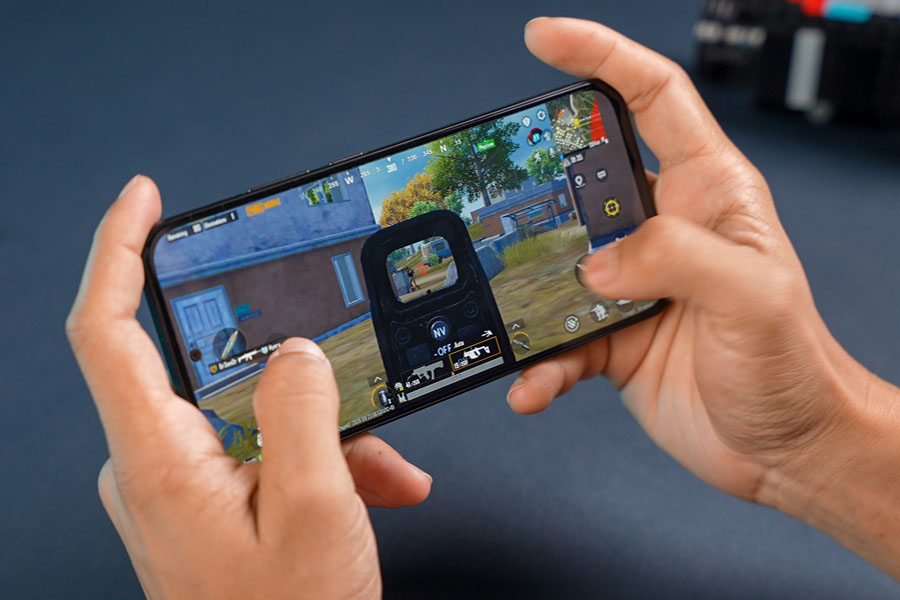
We tested PUBG Mobile on the Redmi Note 17 5G, and the results weren't particularly impressive. The game ran at around 40 FPS, with an average of 38.6 FPS during our testing. While that might sound decent, the actual gameplay wasn't very smooth. We noticed frequent frame drops to around 29 FPS, and sometimes even as low as 17 FPS. These fluctuations were quite noticeable, especially during gameplay when you need quick and consistent responses.
Another thing that disappointed me was the lack of a hardware gyroscope. If you're someone who relies on gyro controls for aiming in PUBG, this could be a big drawback.
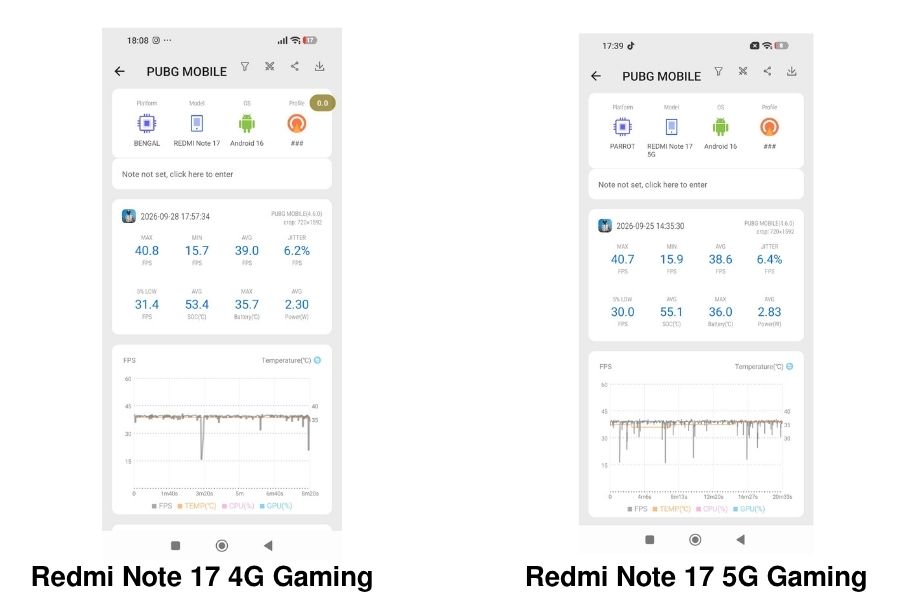
On the positive side, thermal management was pretty good. Even after the gaming session, the phone didn't heat up much. We recorded around 39°C on the front and 37.5°C on the back, which is quite reasonable.
So, while the phone handles heat well, the gaming experience itself is nothing special. You can still enjoy lighter games or play PUBG casually, but I wouldn't recommend either phone for serious gaming. Especially considering the cost of the Note 17 5G, I expected more consistent performance for the price.
Software and UI: Familiar HyperOS, with a few unwanted apps
If you've used a Xiaomi or Redmi phone before, everything will feel familiar. Both phones run HyperOS 3 based on Android 16, and the software experience is pretty much the same.
During my week of testing, I found the interface decent enough for everyday use. The 5G variant felt slightly smoother when opening apps and switching between them, but that's mainly because of its better chipset.
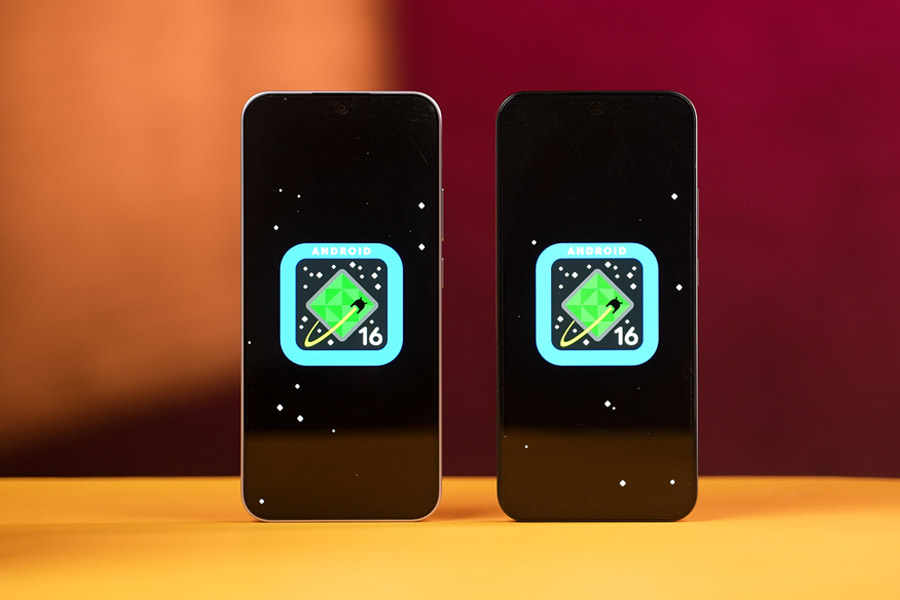
One thing I noticed was a few ads popping up in the system apps. Both phones also come with some pre-installed apps that I don't really use. The good thing is that most of them can be uninstalled, so it's not a big issue. Still, at this price, I wish Xiaomi had kept the software a little cleaner.
On the positive side, Xiaomi promises six years of security updates for both models, which is reassuring if you're planning to use your phone for a long time.
Cameras: The 5G version has slightly better processing
- 50MP primary rear camera, f/1.8
- 16MP front camera
- Up to 1080p 30fps video recording
- No ultrawide or telephoto camera
Now, coming to the cameras, this is another area where I expected a little more from both phones, especially considering their prices.
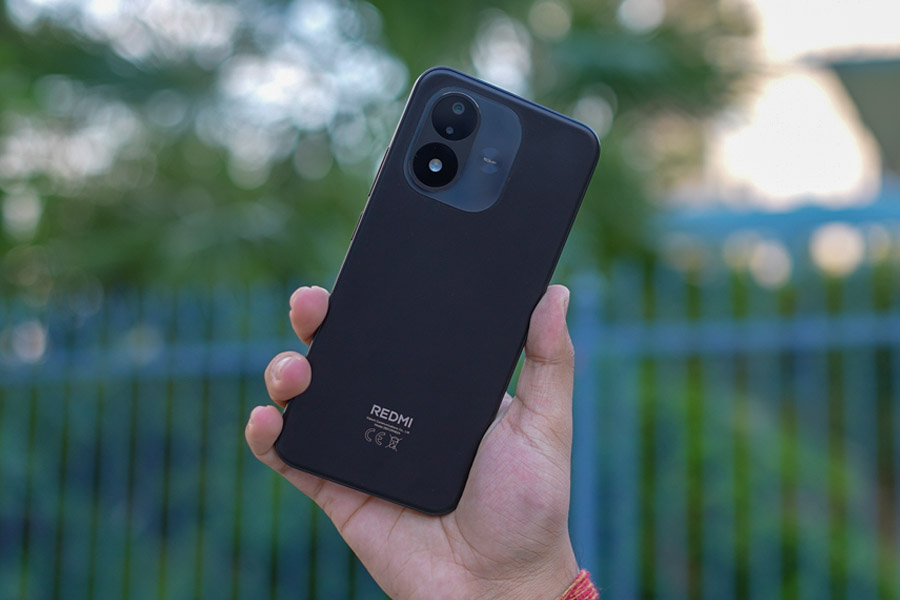
Both the Redmi Note 17 4G and 5G come with a 50MP primary camera, but there's no ultrawide or telephoto lens. So, you're basically relying on just one camera for everything.
Daylight Photography
In good lighting, both phones take decent photos. As you would expect from Redmi, the colours are quite punchy, with slightly higher contrast that makes photos look attractive at first glance.
I took some photos of flowers, leaves, and other everyday subjects, and the results looked pretty good on the phone's display. But when I zoomed in to check the details, I wasn't that impressed. Fine textures look quite soft, and neither phone manages to retain much detail.
So, for casually taking photos and posting them on social media, both cameras do a decent job. But at this price, I was expecting better image quality.
Low-light Photography
Things get a little more challenging in low light. Both phones can take usable night photos, but I had to be extra careful to keep my hands steady while shooting. Otherwise, the photos would easily turn out blurry.
Even when I managed to get a stable shot, the details weren't particularly impressive. Photos might look fine at first, but once you zoom in, you can clearly notice the lack of sharpness.
So, I would say the nighttime performance is just average on both phones.
Portraits and Selfies
Now, this is where I noticed a small difference between the two.
While comparing portrait shots, I found the Redmi Note 17 5G to be more consistent with skin tones. The 4G variant sometimes made faces look too yellow, while in other shots, the skin appeared unusually bright or pale. The 5G model handled skin tones a little better and gave me more balanced results.
Another thing I missed was a 2X portrait option. Both phones only offer the regular 1X perspective, which feels a bit limiting, especially when you want a closer portrait.
Coming to selfies, both phones have a 16MP front camera. And here again, I preferred the 5G variant. The 4G model tends to apply too much sharpening to faces, which makes the skin look a little artificial. The 5G version, on the other hand, produces more natural-looking skin tones.
The difference isn't huge, but after comparing photos from both phones side by side, I found the 5G model more reliable for portraits and selfies.
Video Recording
Video recording is another area where I wasn't impressed. Neither phone supports 4K video recording, so you're limited to 1080p at 30fps. And honestly, for phones costing this much, that's disappointing.
During my testing, I also noticed that exposure management wasn't particularly good. The footage looked quite shaky when recording handheld videos, so I wasn't very confident using either phone for video recording. Since I regularly shoot videos, I personally wouldn't pick either of these phones, considering my priority of good video quality.
After comparing the cameras side by side, I wasn't particularly impressed with either phone. They take decent photos in good lighting, but the lack of detail and average video quality are disappointing at this price. If I had to choose one, I'd go with the Redmi Note 17 5G, mainly because it handles skin tones better and takes more natural-looking selfies.
Redmi Note 17 4G vs 5G: Which One Should You Buy?
After testing both phones side by side, I personally think the Redmi Note 17 4G offers better value for money. It's Rs. 5,000 cheaper, yet you get almost the same design, AMOLED display, excellent battery life, and charging experience.
Of course, the 5G variant has a few advantages. It offers slightly better performance, 5G connectivity, and more consistent skin tones in photos. But honestly, these improvements aren't significant enough for me to justify spending the extra money, especially when both phones have average cameras, weak gaming performance, and no stereo speakers.
And this is where things get tricky. At Rs. 47,999, the Note 17 5G faces some tough competition. If you can stretch your budget, phones like the OnePlus Nord CE5 offer much better performance, while the Honor X9d is worth considering for its battery life and durability. Even older models like the Redmi Note 15 Pro and Pro+ could be better deals if you can still find them at a good price.
So, between these two, I would choose the Redmi Note 17 4G and save Rs. 5,000. But if performance or camera quality matters more to you than battery life, I would suggest looking beyond both of these phones.
Verdict: Redmi Note 17 4G and 5G Review
The Redmi Note 17 4G and 5G have a few things going for them. I really liked their excellent battery life, good AMOLED displays, and decent everyday experience. Both phones get the basics right, especially if you're a casual user.
But at these prices, I expected better performance, more versatile cameras, and at least stereo speakers. These compromises are hard to ignore, especially when there are better alternatives available.
Between the two, I would recommend the Redmi Note 17 4G since it offers almost the same experience for less money. But if performance, gaming, or camera quality is your priority, I'd suggest looking elsewhere.
Pros and Cons of Redmi Note 17 4G and 5G
| Pros | Cons |
| Excellent battery life | Average camera performance |
| Large and Bright Display | No stereo speakers |
| IP65 rating and Gorilla Glass 7i protection | No HDR playback or 4K video recording |
| 45W charger included in the box | Underwhelming performance for the price |
Article Last updated: November 3, 2026