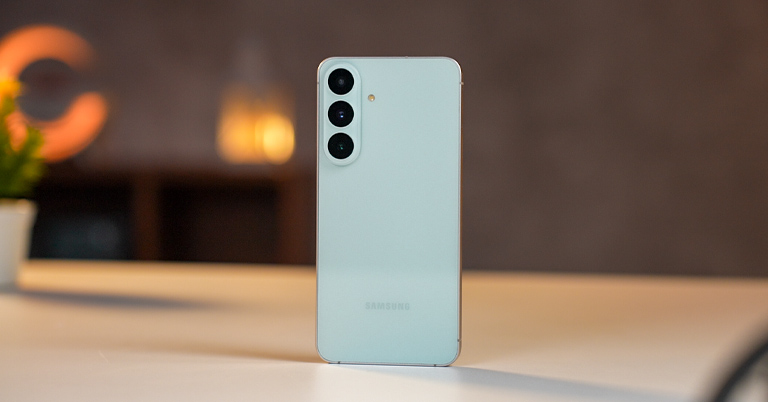
Why Trust Gadgetbyte?
At Gadgetbyte, we invest substantial hours into rigorously testing each product or service we review, guaranteeing that you make informed purchases. Learn more about our testing process.
Review Overview
4.3
Display
9.5/10
The Galaxy S26 FE is a very good all-rounder with a premium display, smooth software experience, and excellent cameras. While gaming isn’t its strongest suit, its core experience is hard to beat at this price. At around Rs. 1,20,000, it also offers strong value compared to significantly more expensive flagships like the iPhone 17.
Design & Build
9/10
Software
9.5/10
Performance
8/10
Speaker & Haptics
8.5/10
Back Camera
8.5/10
Front Camera
8.5/10
Battery & Charging
7.5/10
Everyone’s talking about iPhones right now, but for the past week, I’ve been using Samsung’s latest Fan Edition smartphone — the Galaxy S26 FE. And if you’ve followed our previous FE reviews, you’ll know that I’ve always had somewhat of a love-hate relationship with Samsung’s FE lineup.
I like the idea behind these phones. You get an experience that’s quite close to Samsung’s vanilla flagships without having to pay full flagship money. But at the same time, Samsung’s choice of chipset and launch pricing has almost always left me wanting more.
This year, though, things are slightly different. With smartphone prices going up across the board, I was actually surprised Samsung didn’t increase the price of the S26 FE by a huge margin. It starts at around Rs. 1,20,000 in Nepal (INR 79,999 in India), which doesn’t sound completely unreasonable considering how expensive other premium phones are getting.
That doesn’t mean it’s perfect, though. So after using the Galaxy S26 FE as my primary phone, here’s what I liked about it, where Samsung could have done better, and whether the FE formula finally makes sense this year.


| Category | Specifications |
|---|---|
| Display | 6.7-inch Dynamic AMOLED 2X, FHD+ (1080 × 2340 pixels), 120Hz refresh rate, HDR10+, 1900 nits HBM |
| Build | Gorilla Glass Victus+ front and back, aluminum frame, IP68 dust/water resistance |
| Dimensions / Weight | 161.6 × 76.9 × 7.4 mm, 193 grams |
| Chipset | Samsung Exynos 2500 (3nm) |
| Memory | 8GB RAM, 128GB / 256GB / 512GB UFS 4.0 storage |
| Software | Android 17 with One UI 9, up to 7 major OS updates |
| Rear Cameras | 50MP f/1.8 main (OIS) + 8MP f/2.4 telephoto (3x optical zoom, OIS) + 12MP f/2.2 ultrawide (123°) |
| Front Camera | 12MP f/2.2 selfie camera |
| Battery | 4,900mAh |
| Charging | 45W wired, 15W wireless, Qi2 compatible, reverse wireless charging |
| Security | Under-display optical fingerprint sensor |
| Connectivity | 5G, eSIM, Wi-Fi, Bluetooth 5.4, NFC |
| Extras | Samsung DeX, Wireless DeX |
Design
Let’s start with the design, and honestly, there isn’t a lot that has changed. The Galaxy S26 FE looks quite similar to last year’s S25 FE, which itself wasn’t dramatically different from the S24 FE. You still get a premium glass sandwich design with an aluminum frame, good glass protection on both sides, and an official IP68 rating for dust and water resistance.
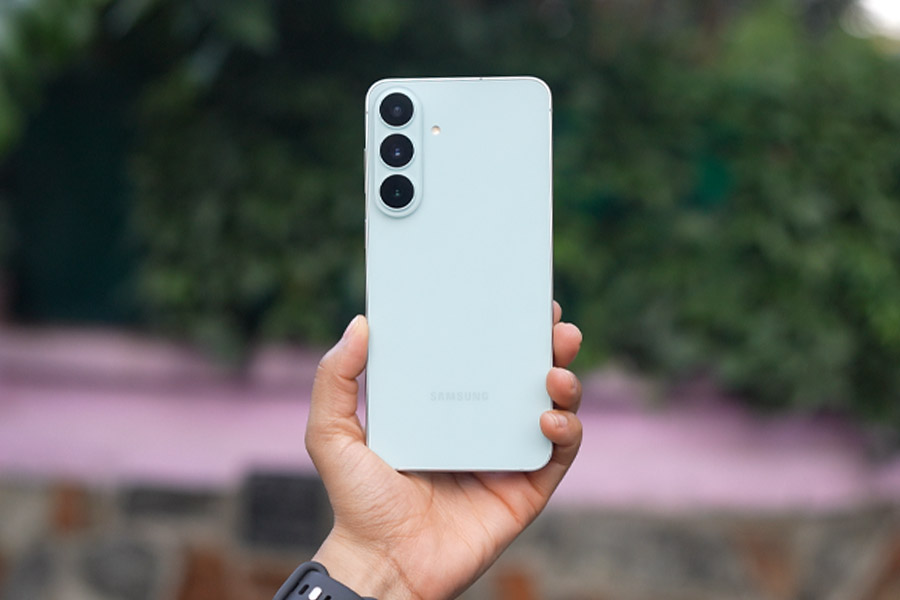
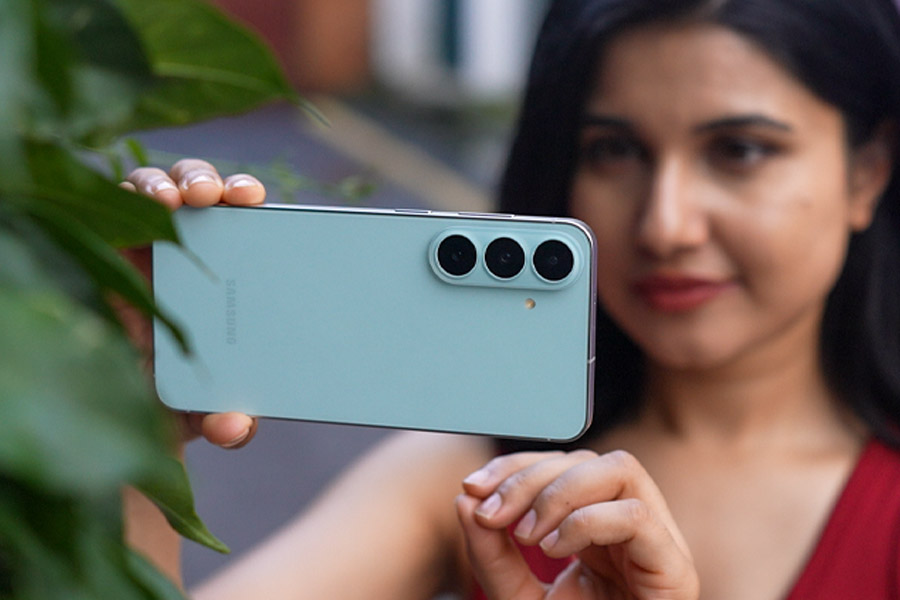
In fact, put it beside the regular Galaxy S26 and the two phones look surprisingly similar. The biggest visual difference is at the back. Samsung’s more expensive flagships have this really nice matte finish, whereas the S26 FE uses a glossy back panel.
I’ve seen some reviewers complain about fingerprints on it, but that hasn’t really been an issue on this green colorway. Smudges are barely visible here. I’ve also been using the phone without a case or screen protector for the past week, and so far, there aren’t any major scratches or scuffs.
So overall, I have very little to complain about here. The S26 FE looks premium, feels sturdy, and the build quality is exactly what I would expect from a phone in this segment.Design-wise, this is easily an A for me.
Display
The display is another area where the Galaxy S26 FE delivers. I switched to this phone right after reviewing the Pixel 11 Pro and Poco F9 Ultra, and there’s just something about Samsung displays that I really enjoy. Maybe it’s the color tuning, but everything looks incredibly pleasing.
The panel gets super bright outdoors, HDR playback works properly across almost all major apps, and touch response is excellent too. That said, there are two things missing here that Samsung reserves for its more expensive flagships.
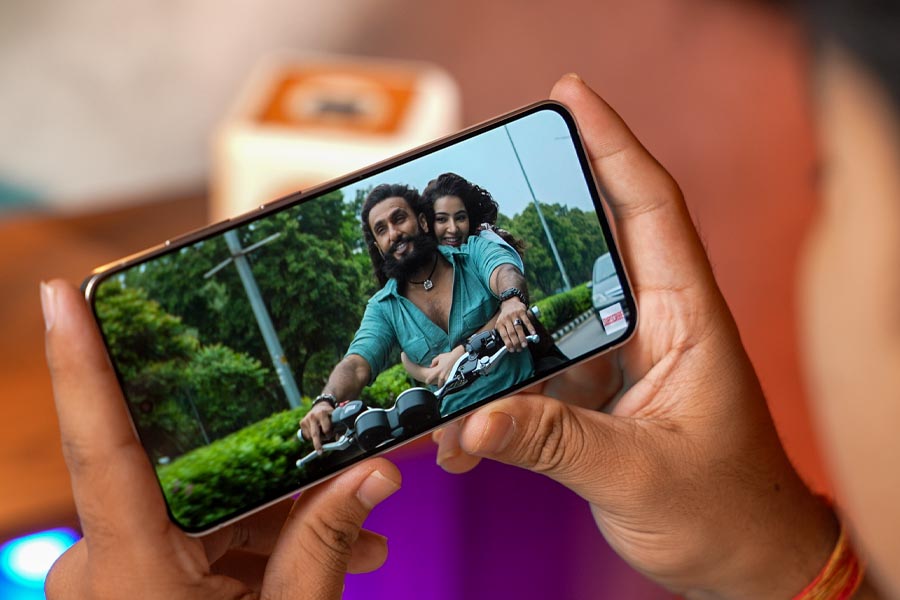
First, there’s no LTPO technology. The refresh rate only switches between 60Hz and 120Hz instead of dynamically dropping much lower when the screen is static. Apart from being less sophisticated, that also has an impact on battery efficiency.
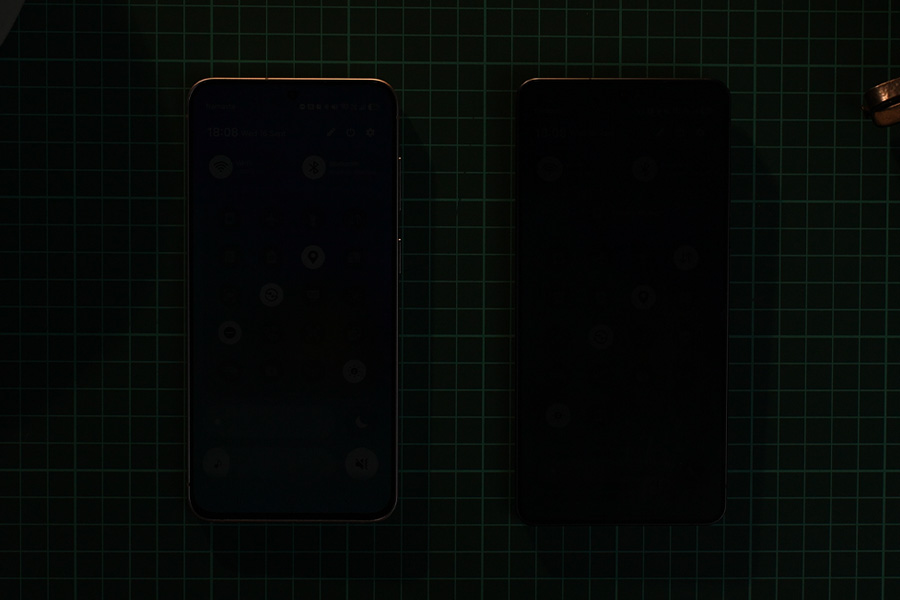
The second issue is minimum brightness. I found the S26 FE slightly uncomfortable to use in a completely dark room because the display simply doesn’t get dim enough. Even after enabling Samsung’s Extra Dim feature, the regular Galaxy S26 can go noticeably darker.
You also get a regular optical fingerprint reader instead of the ultrasonic scanner Samsung uses on its flagship phones. Still, it has been fast and reliable during my testing, so I don’t really have any usability complaints. And yes, I wish Samsung had made the bottom bezel symmetrical with the other three sides, but that’s a pretty minor complaint.
Speakers and haptics
The stereo speakers are good as well. They aren’t as loud as something like my Galaxy S26 Ultra or the iPhone 17 Pro Max, but the audio quality itself is rich, and there’s a nice sense of separation and soundstage.
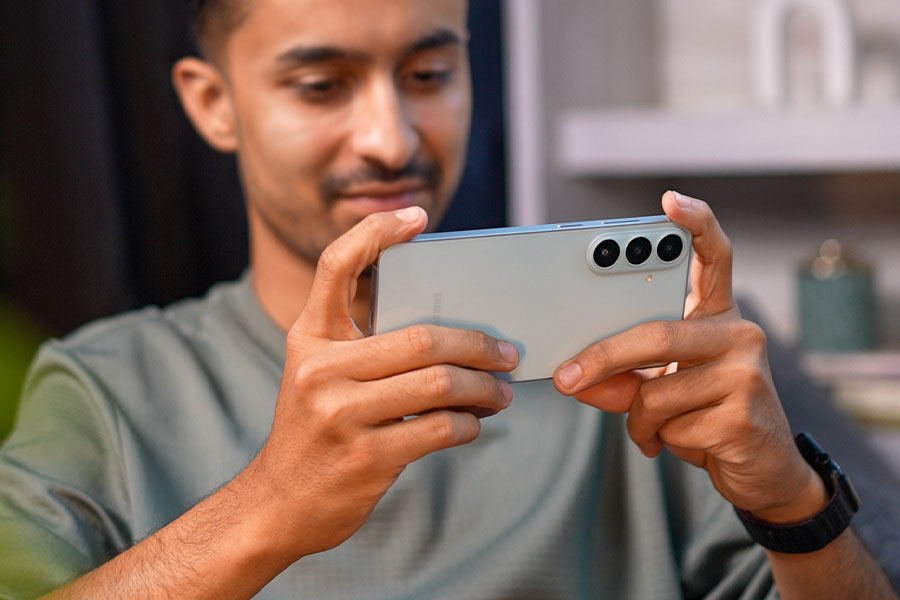
Watching movies and even listening to music directly through the speakers has been quite enjoyable. The haptic feedback is also good. It isn’t quite as strong or punchy as the regular S26, but typing still feels satisfying.
Software
Interestingly, the Galaxy S26 FE is the first non-folding Samsung phone to ship with One UI 9 out of the box. At the time of my testing, even my Galaxy S26 Ultra hadn’t received the update yet.
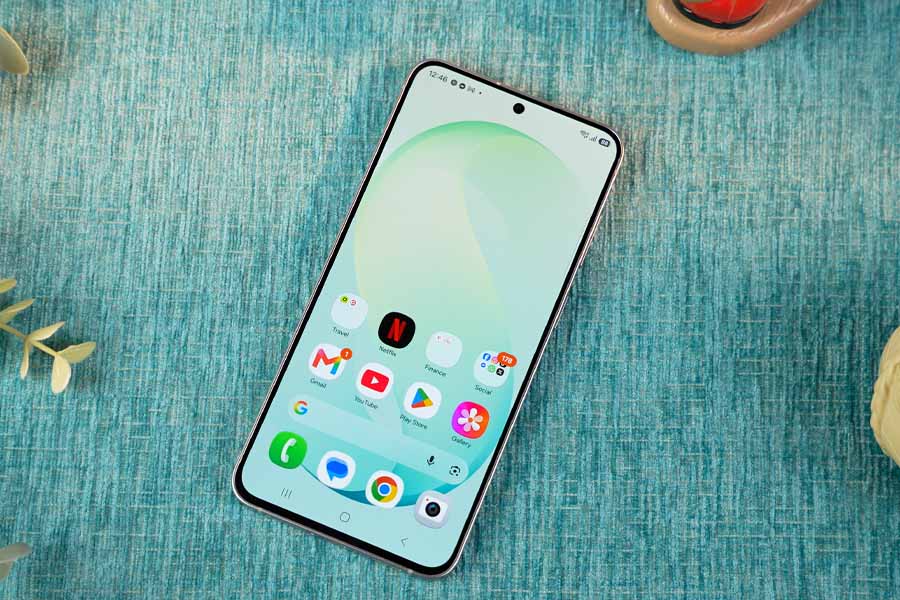
There aren’t any massive visual changes in One UI 9, but Samsung has made a few subtle refinements here and there. More importantly, the software is really well optimized.
One-handed usage is excellent, there isn’t unnecessary bloatware everywhere, and the overall experience is still one of the best you can get on Android.
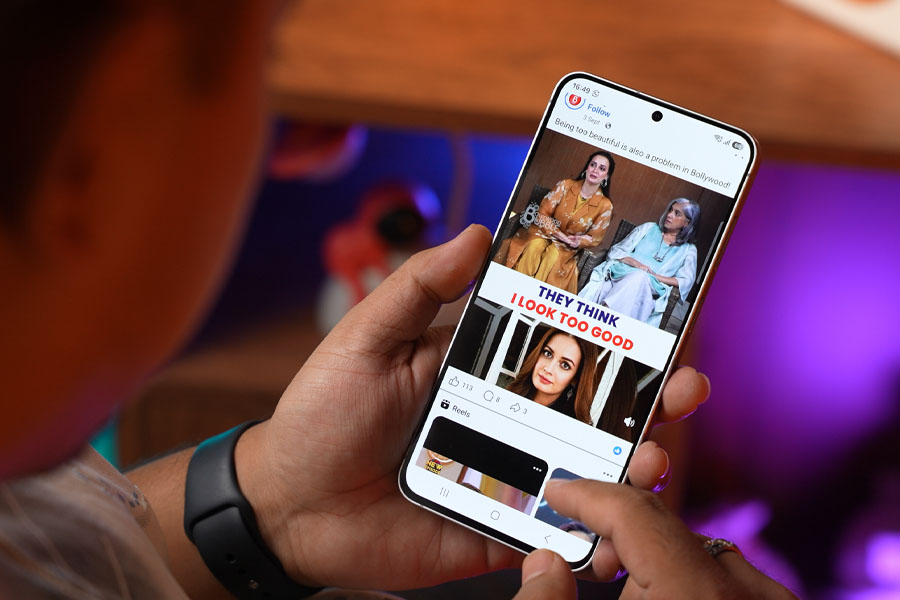
And I think hardware plays a role here too. On Samsung’s Galaxy A-series phones, like the A57 or A37, One UI can sometimes feel noticeably slower. On a more premium device like the S26 FE, everything feels much smoother and more responsive.
Performance
Powering the Galaxy S26 FE is Samsung’s Exynos 2500 chipset. It moves to a newer 3nm process compared to the Exynos 2400 from last year and brings modest improvements to both CPU and GPU performance.
Thermals are slightly better too. The phone still gets warm when I’m gaming or pushing it for a longer period, but compared to last year’s S25 FE, the heat feels more manageable.
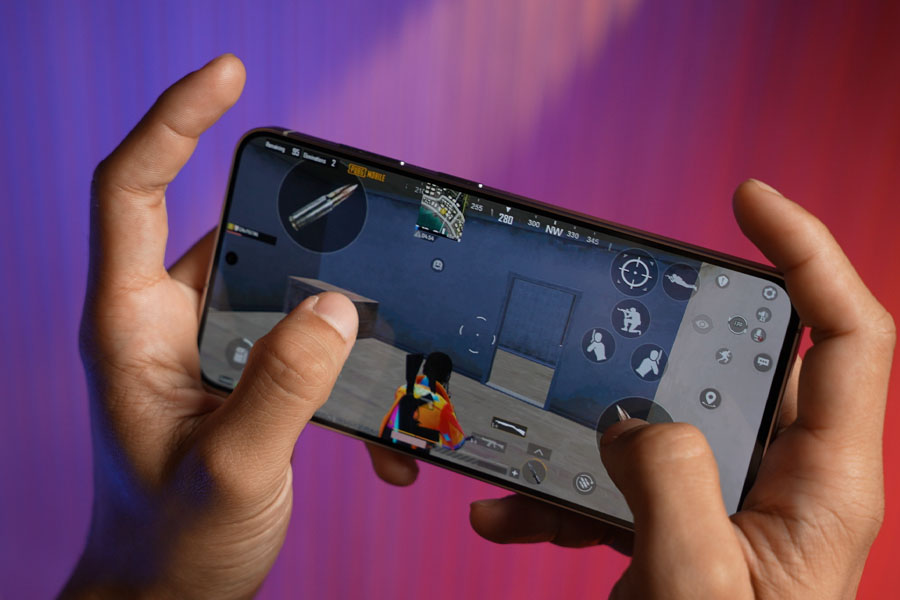
And actual gaming performance was better than I expected. In PUBG Mobile, I was getting an average of around 112 fps, while Genshin Impact managed around 55 fps on High settings. That’s not bad at all. So for everyday use and occasional gaming, the Exynos 2500 is absolutely powerful enough.
But this is also where I think Samsung missed another opportunity. At this price, something like the Snapdragon 8 Gen 5 or Dimensity 9500s would have given the S26 FE much better benchmark numbers and, more importantly, stronger sustained gaming performance.
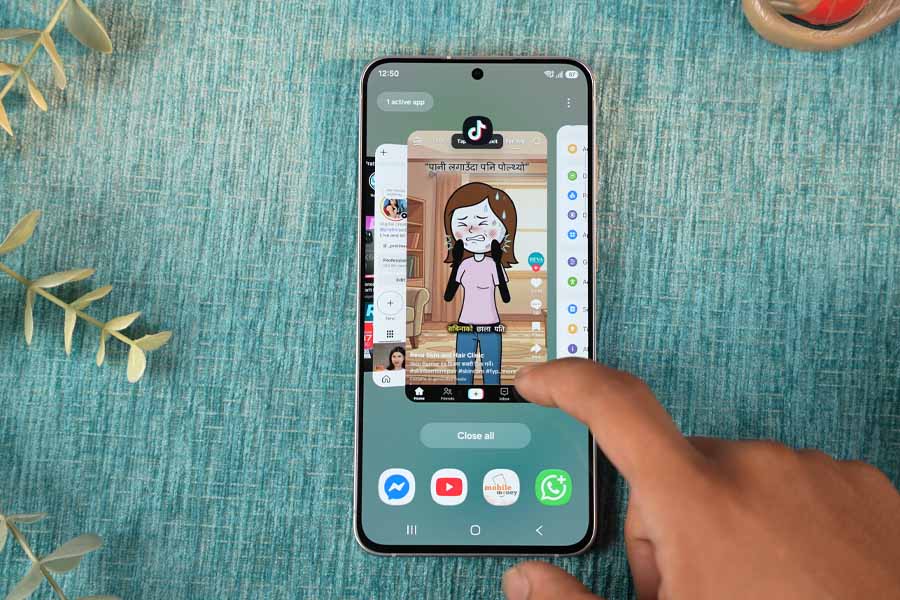
And that has been my complaint with FE phones for years. If Samsung really wants to call this a “Fan Edition,” I would love to see them take performance a little more seriously.
Battery life: Still behind the competition
The battery is probably one of my bigger complaints with the S26 FE. Chinese smartphone brands are now pushing silicon-carbon batteries with capacities of 8,000mAh, 9,000mAh, and even 10,000mAh. Samsung, meanwhile, is still using a traditional battery here with the same 4,900mAh capacity as last year. Even Samsung’s new Z Fold 8 uses some form of silicon-carbon battery technology, so I was hoping the S26 FE would at least receive a modest capacity upgrade.
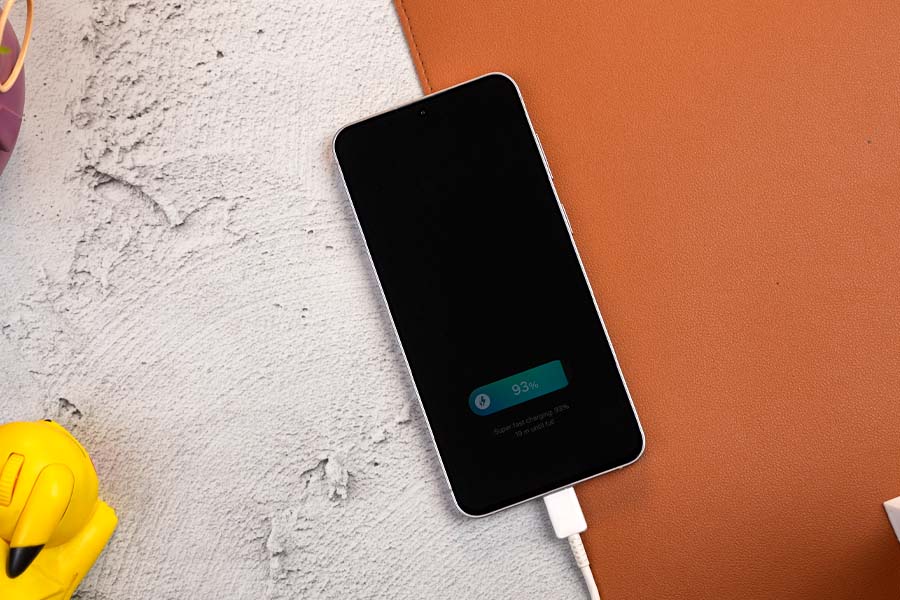
Unfortunately, battery life hasn’t been particularly impressive either. It is slightly better than the regular Galaxy S26, but the combination of an Exynos chipset and the lack of an LTPO display doesn’t help efficiency.
For someone like me who uses the camera quite a lot and stays active on social media throughout the day, the phone usually doesn’t make it through an entire day. I normally have to plug it in at around 6 or 7 PM.
Charging remains unchanged at 45W, and with Samsung’s official charger, a full 0–100% charge takes roughly an hour.There’s also 15W wireless charging, which is nice to have.
Why USB 2.0, Samsung?
There is one strange downgrade this year that I really don’t understand. Last year’s Galaxy S25 FE supported USB 3.2 Gen 1, whereas the S26 FE drops down to basic USB 2.0.
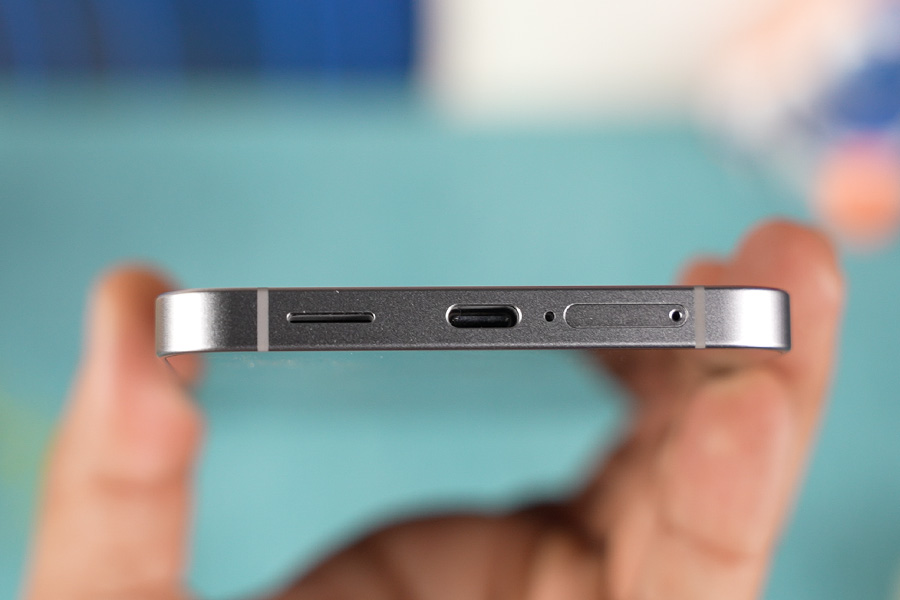
Most users probably won’t care about this. But if you regularly transfer large photos or videos between your phone and computer using a USB cable, the difference in transfer speed can be significant.
Cameras
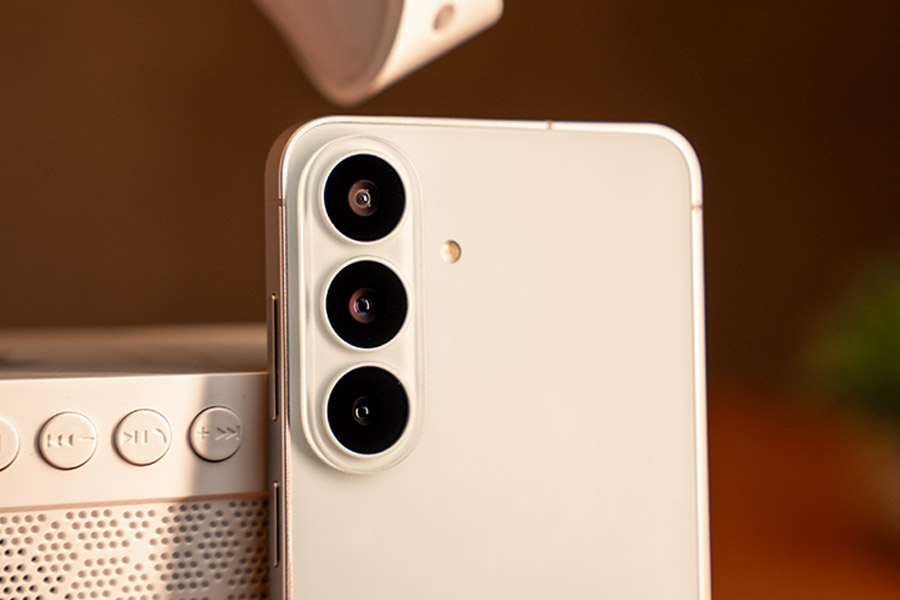
When I first looked at the camera specifications, I honestly wasn’t expecting much. Samsung has essentially been using the same camera setup on its FE phones for around three generations now:
| Camera | Sensor | Sensor Size / Pixel Size | Lens | Focus / Stabilization | Video |
|---|---|---|---|---|---|
| Main | 50MP Samsung ISOCELL GN3 (S5KGN3) | 1/1.56", 1.0µm–2.0µm | 24mm, f/1.8 | Dual-pixel PDAF, OIS | 8K@30fps, 4K@60fps |
| Telephoto | 8MP OmniVision OV08A10 | 1/4.4", 1.0µm | 69mm, f/2.4 | PDAF, OIS | 4K@30fps |
| Ultrawide | 12MP | 1/3.2", 1.12µm | 13mm, f/2.2 | Fixed focus | 4K@30fps |
| Front | 12MP | 1/3.2", 1.12µm | 23mm, f/2.2 | Fixed focus | 4K@60fps |
But you know what? The camera actually surprised me. I compared the Galaxy S26 FE quite extensively against the iPhone 17, and in terms of photography, Samsung gives the iPhone some serious competition.
Samsung’s color optimization is excellent. The images have slightly punchier colors that give them a fresh and pleasing look. During an early morning photowalk, I even noticed the S26 FE delivering better dynamic range than the iPhone 17 in a few situations.
I also compared it against the regular Galaxy S26, and the image processing is surprisingly similar. That is a big compliment for the FE. Especially from the main camera, I have been genuinely impressed with the results.
Portraits and selfies are excellent too
Portrait photography is another strong area. Skin tones look rich, while highlight management around the face is handled really well. The iPhone sometimes tends to make faces slightly darker, whereas Samsung brightens the subject a little more, resulting in a very pleasing portrait.
You get similarly nice skin tones from the selfie camera too. My only complaint with selfies is the relatively narrow field of view. I would have preferred something slightly wider, especially for group selfies. Color-wise, though, I really like what Samsung is doing here.
No macro camera is disappointing
One thing I really wish Samsung had added is macro capability. The telephoto camera cannot focus close enough for telemacro photography, and the ultrawide camera doesn’t support macro shots either. For someone who enjoys macro photography, that feels like a missed opportunity.
Low-light photos are good
Low-light performance from the main camera is good as well. One thing I particularly noticed during my comparison was glare control. The Galaxy S26 FE handled bright lights and glare better than the iPhone 17 in several situations.
Details are good enough, highlight control is decent, and overall, nighttime photos from the main camera are quite reliable. Unfortunately, I can’t say the same about the ultrawide.
The ultrawide camera needs an upgrade
The 12MP ultrawide is easily the weakest camera on this phone. In good lighting, it’s usable, but the amount of detail isn’t particularly impressive, and dynamic range can sometimes be inconsistent.
Once the light drops, things get noticeably worse. There’s quite a bit of grain and muddiness, and overall, the images start looking more like something you would expect from a midrange phone rather than a premium device.
Video is average
Videography is another area where the iPhone 17 has a clear advantage. The Galaxy S26 FE produces nice colors, but video footage doesn’t have the same smoothness and consistency that you get from the iPhone.
And once again, the ultrawide is noticeably worse. There’s also a limitation when it comes to recording modes. You can shoot 4K 60 fps only from the main camera. Neither the telephoto nor the ultrawide supports 4K 60 fps recording. So while the Galaxy S26 FE does an excellent job with still photography, I would describe its videography as average for the price.
Samsung Galaxy S26 FE Review: Conclusion
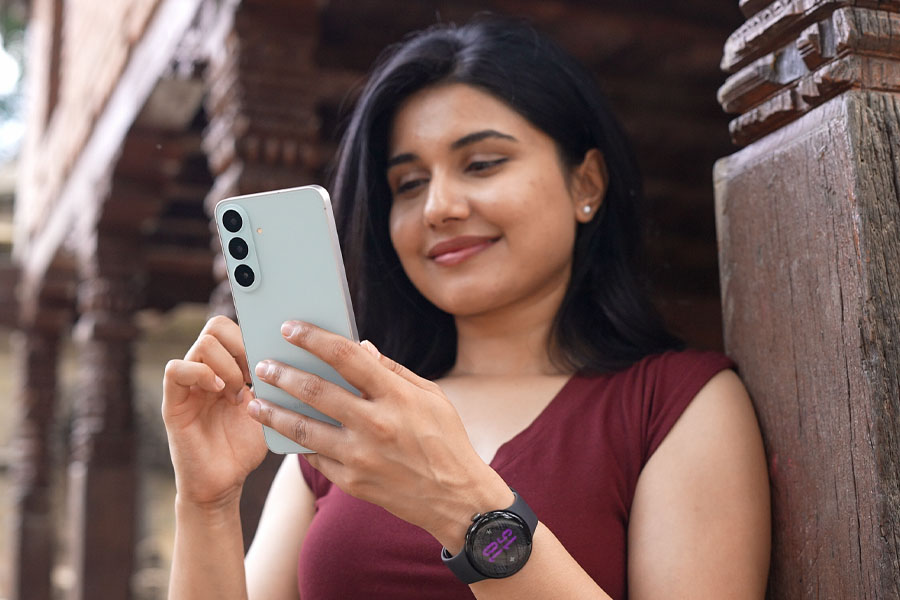
After using the Galaxy S26 FE for the past week, I think this is a very good, well-rounded phone. The display is excellent, One UI continues to be one of the best Android experiences around, and the main camera takes genuinely impressive photos. Performance is also more than enough for most people.
If you were considering something like Samsung’s A-series and can stretch your budget to the S26 FE, you are getting a noticeably more premium overall experience here.
That said, it isn’t perfect. Battery life could have been better, videography is only average, and this certainly wouldn’t be my first choice if gaming performance is your top priority.
But all things said, at Rs. 1,20,000 in Nepal, I actually think the Galaxy S26 FE makes decent sense considering how much smartphone prices have gone up recently. Especially with phones like the iPhone 17 getting significantly more expensive, Samsung is giving you a strong display, software experience, and camera package at a comparatively reasonable price.
The equation is a little more complicated in India, though. At its launch price, you can sometimes find the regular Galaxy S26 for around the same money on Flipkart. And if both phones cost the same, I would obviously choose the S26 since you are getting a more premium device with upgrades in several areas. Last year’s Galaxy S25 FE is also around INR 15,000 cheaper, which makes it another interesting alternative.
Samsung Galaxy S26 FE Pros & Cons
| Pros | Cons |
|---|---|
| Excellent display | Average battery life |
| Great main camera and portraits | Weak ultrawide camera |
| Smooth and polished One UI experience | Videography could be better |
| Premium build with IP68 rating | No LTPO display |
| Good everyday performance | Not the best choice for gaming |
| Good stereo speakers and haptics | USB 2.0 downgrade |
Article Last updated: September 17, 2026