Why Trust Gadgetbyte?
At Gadgetbyte, we invest substantial hours into rigorously testing each product or service we review, guaranteeing that you make informed purchases. Learn more about our testing process.
Review Overview
3.9
Display
9/10
Performance
9/10
Software & UI
8/10
Design & Build
7.5/10
Back Cameras
7.5/10
Front Camera
5.5/10
Battery
8.5/10
Speaker & Haptics
7.5/10
Value for Money
7/10
ZTE Axon 30 pushes the boundary for under-display camera phones. While we're all for new innovations, the fact of the matter remains that UDCs are simply not ripe enough for the mainstream market. This—and a couple of other nuisances—ultimately keep the Axon 30 from being a technological marvel.
ZTE Axon 30 Specifications:
- Body: 77.8 x 170.2 x 7.8mm, 189 gm, 3D composite polymer material with nano-level glow texture
- Display: 6.92-inches AMOLED panel, 120Hz refresh rate, 360Hz touch sampling rate, Gorilla Glass 3, 100% DCI-P3
- Resolution: FHD+ (2460 x 1080 pixels), 20.5:9 aspect ratio, 400 PPI
- Chipset: Qualcomm Snapdragon 870 5G (7nm Mobile Platform)
- Memory: 8/12GB LPDDR5 RAM, 128/256GB UFS 3.1 storage (fixed)
- Software & UI: Android 11 with ZTE's MyOS 11 on top
- Rear Camera: Quad (with LED flash); – 64MP, f/1.8 Sony IMX682 sensor – 8MP, f/2.2 ultra-wide camera, 120º FOV – 5MP, f/2.4 macro lens – 2MP, f/2.4 portrait lens
- Front Camera: 16MP f/2.45 sensor (under-display)
- Audio: Loudspeaker, No 3.5mm headphone jack
- Security: Optical in-display fingerprint sensor, Face unlock
- Sensors: Accelerometer, Gyro, Proximity, Compass
- Connectivity: Dual-SIM (Nano), WiFi 802.11 a/b/g/n/ac/ax (Dual-band), Bluetooth 5.1, GPS / AGPS / Glonass / Galileo / BDS, USB Type-C, NFC, 5G
- Battery: 4200mAh with 65W fast charging (65W adapter provided)
- Color Options: Black, Aqua
- Price in Nepal: N/A (not launched yet)
ZTE Axon 30 Review:
Design and Build
- 77.8 x 170.2 x 7.8mm, 189 grams
- Glass front, polycarbonate back/frame
The limitations
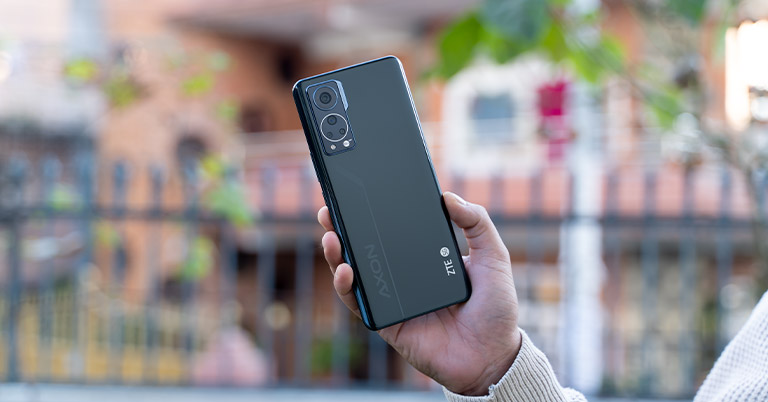
Here, the Axon 30 retains the design DNA of last year's Axon 20, with two glossy color options—Black and Aqua. I have it in black, which does look quite premium, although the back is actually made of plastic. And its glossiness means that the phone is also prone to fingerprints or smudges.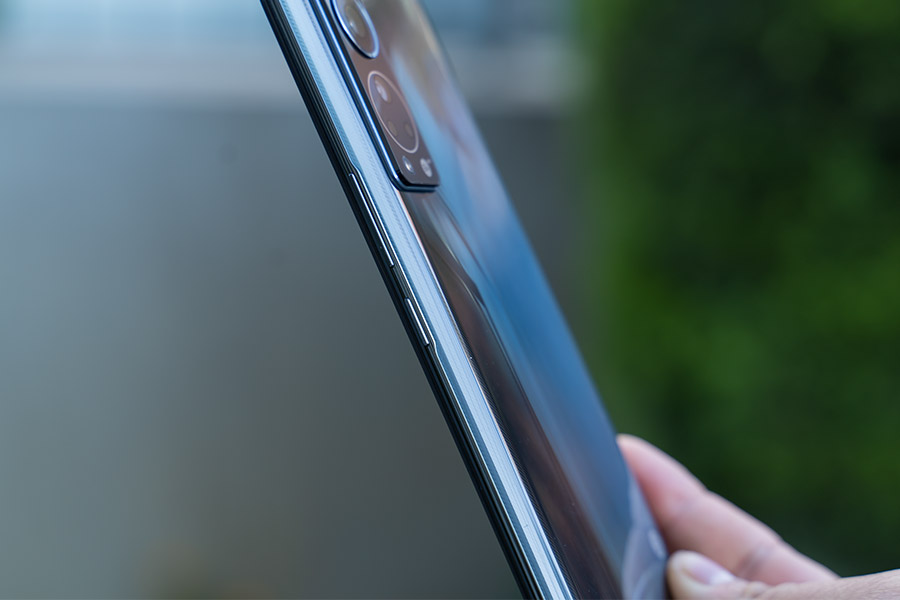
Display
- 6.92-inches FHD+ AMOLED screen
- 120/360Hz refresh/touch sampling rate
- Gorilla Glass 3, 100% DCI-P3 color
Hidden stuff
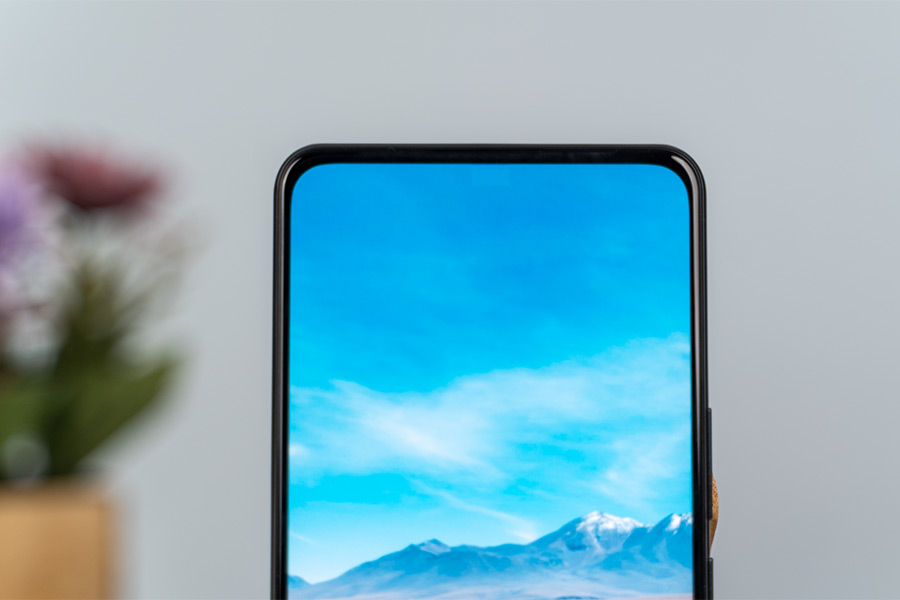
Now, it's a true full-screen display, thanks entirely to the under-display camera, which is practically invisible from a direct line of sight. Yet, one can readily steal a peek inside under direct sunlight or from certain angles.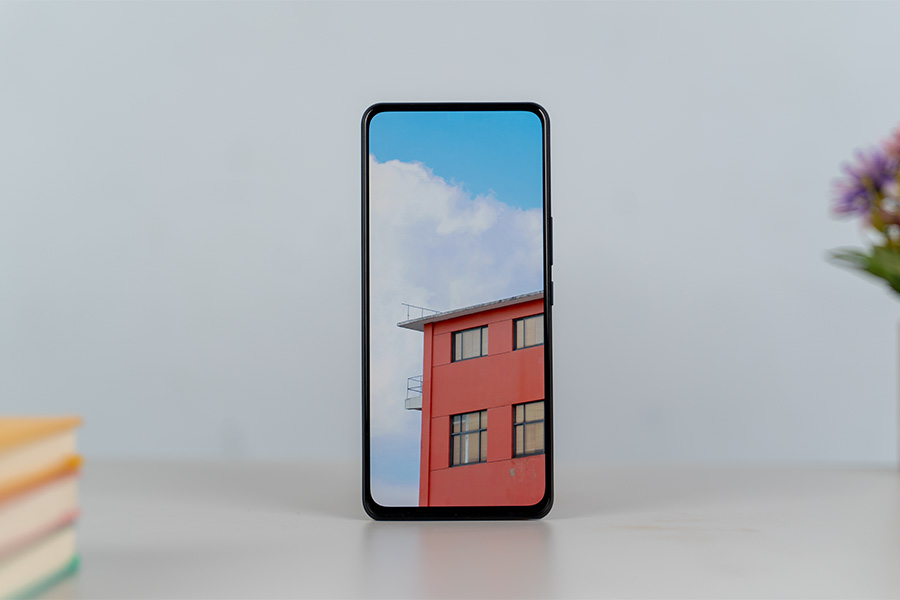
In-display fingerprint
Furthermore, this display also hosts an optical in-display fingerprint sensor that works well most of the time. However, with moist fingers, it fails to authenticate my fingerprints. And there's no face unlock alternative either—so you'll have to rely on the good ol' password or pattern biometric options in such scenarios.Performance
- Octa-core Qualcomm Snapdragon 870 5G SoC (7nm)
- 8/12GB LPDDR5 RAM, 128/256GB UFS 3.1 storage (fixed)
- Android 11 with ZTE's MyOS 11 on top (upgradeable)
Unpolished software
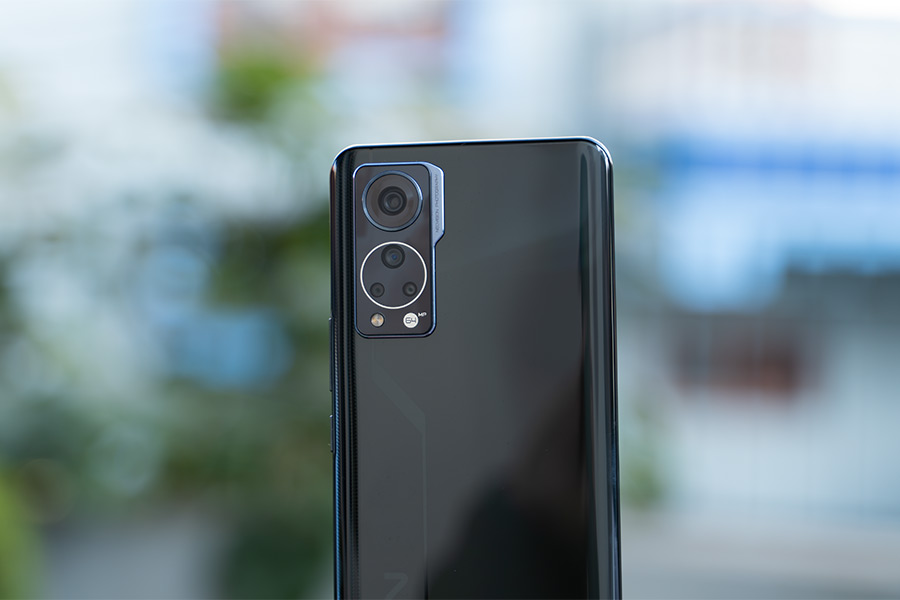
However, the software is what really needs further optimization in Axon 30. The handset boots on Android 11-based MyOS 11 with little to no extra bloatware—the exception being the Facebook and ZTE Cares app, which can’t be uninstalled. Overall, its UI is easy to understand and the live wallpapers here are some of my personal favorites. Nonetheless, I did notice micro stutters on a couple of occasions here.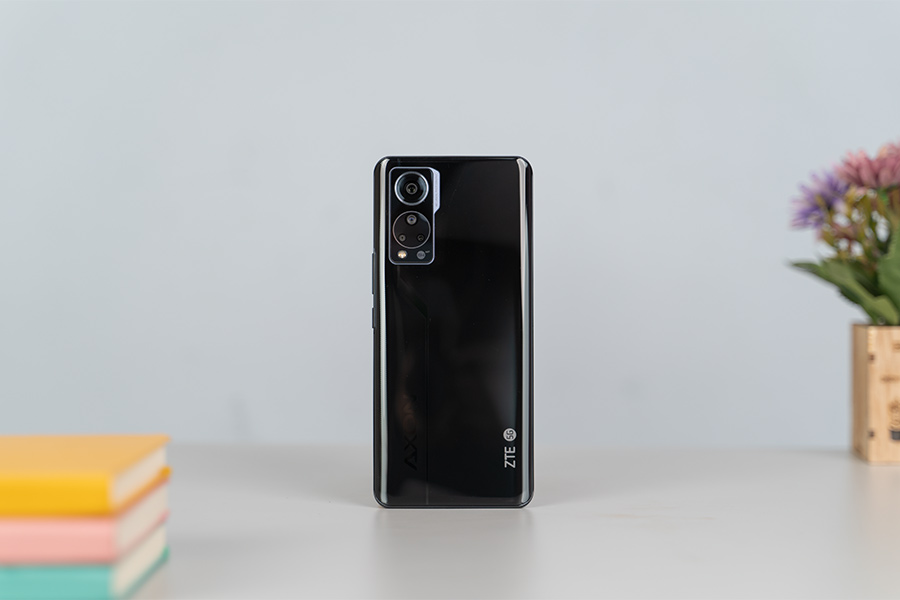
Gaming
That being said, gaming on this Snapdragon 870-powered phone is, as expected, fairly reliant. I tried Genshin Impact at the highest graphics settings with 60fps turned on, and the game is smoothly playable with few jitters. Similarly, 120fps games like Critical Ops and Injustice 2 only run at 60fps. Additionally, PUBG Mobile plays best at HDR graphics and Extreme frame rate.Camera
- Quad-camera setup at the back
- (64MP main, 8MP ultrawide, 5MP macro, 2MP portrait)
- 16MP selfie camera (an under-display mechanism)
Normal Images
The photos from the primary 64MP lens don't have the punchy colors we've seen on Realme or Samsung phones, but are more on the natural side.No gallery images available
They retain a slightly warm tone but handle the exposure well enough. Likewise, the images have a good dynamic range and contrast.
Ultrawide Images
The Axon 30's ultra-wide photos, on the other hand, will not wow you. As you can see, the images have a warm/reddish tone to them, and the imaging algorithm tries too hard to control the highlights, resulting in a darker image.No gallery images available
On top of this, the photos are lacking in detail and the luminance of the greens is compromised too.
Portrait Images
Similarly, it deepens the shadows in portrait shots—thereby losing details on those areas.No gallery images available
The edge detection here requires a lot of work, while the subject's face looks smoothened too. It also blows out the skies in some cases.
Nighttime Images
Nonetheless, Axon 30's normal nighttime photos have great highlights and light-glare control. Yet, the images are soft and hazy.No gallery images available
As usual, the night mode boosts sharpness while retaining a reasonable amount of detail. In a darker environment, this camera preserves a reasonable level of brightness, whereas the regular nighttime images look rather nice in a fairly well-lit condition.
No gallery images available
That's because night mode adds unnecessary exposure and sharpness to the image in a place where there is already sufficient light.
Selfie Images
Now, I didn't have high hopes for Axon 30's under-display selfie camera. The images, as predicted, are soft and lacking in detail—with a hint of reddish tint as well. However, post-processing adds a good amount of sharpness, which does take some time.No gallery images available
Moving on, the portrait selfies fail in terms of edge detection and the images look undersaturated too.
Macro Images
No gallery images available
For macros, its 5MP lens does not artificially puff up the colors, but if you can keep your hands steady, the close-up shots are passable.
Videography
As for the videos, the Axon 30 can record up to 4K 60fps footage with gyro-EIS on. However, the stabilization isn’t that great and the videos come off darker for no apparent reason. Also, it struggles to maintain constant exposure most of the time.Audio
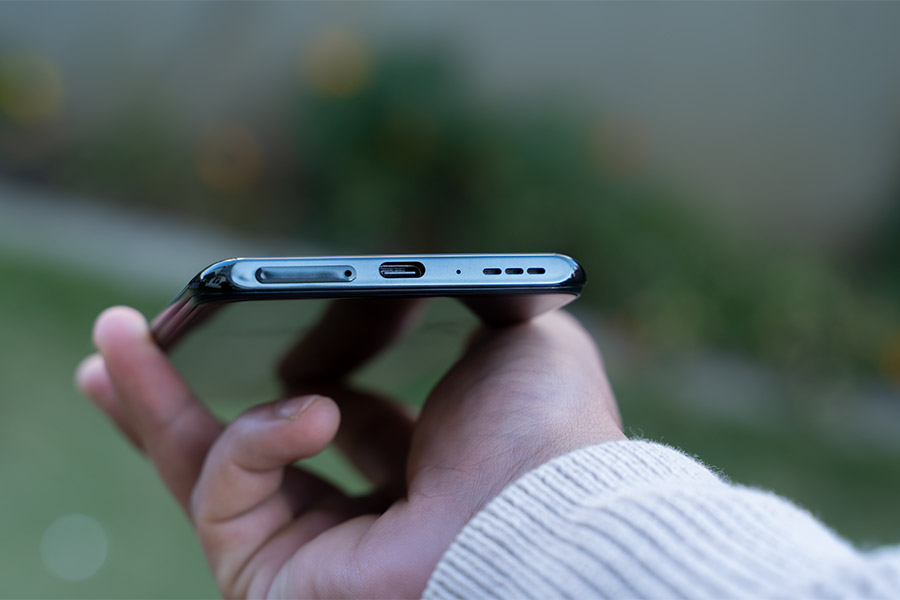
- Mono speaker, No 3.5mm jack
Battery
- 4200mAh battery with 65W fast charging
ZTE Axon 30 Review: Conclusion
Wrapping up this review, the ZTE Axon 30 has a bunch of talking points—with the star of the show being the no-notch display. It effortlessly handles everyday tasks while its battery life is no slouch either. Despite this, I would hesitate to recommend it to someone. Especially due to its cameras. The ones on the back require further optimization whereas the front camera is abysmal when compared to regular selfie cameras. But if you're someone who enjoys experimenting with cutting-edge technology, the Axon 30 could be worth a shot.
ZTE Axon 30 Review: Pros & Cons
Pros:- The no-notch display is gorgeous
- Vibrant 120Hz AMOLED panel
- Fairly reliable performance
- Decent battery endurance
- Impractical under-display camera
- Big, uncomfortable design
- MyOS 11 isn't well-optimized
- Lacks a stereo speaker setup
Article Last updated: November 22, 2021

![Best Laptops to Buy in Nepal at Every Price Segment [Updated]](https://media.gadgetbytenepal.com/2025/11/Best-Laptops-to-Buy-in-Nepal-at-Every-Price-Segment-2025.jpg)