"Explosions overpowering. Over the competition, I'm towering"
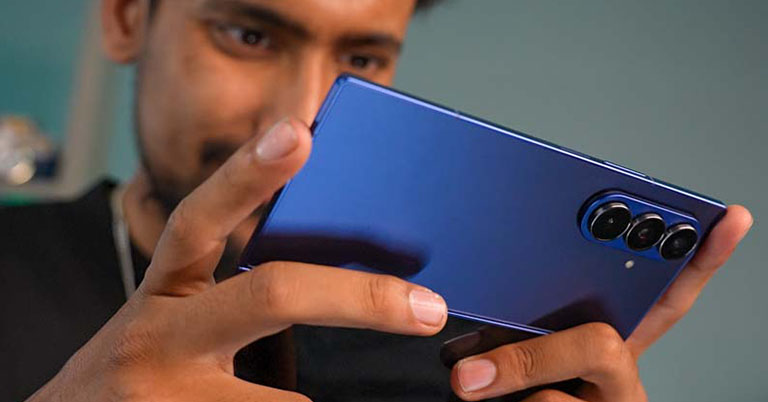
Why Trust Gadgetbyte?
At Gadgetbyte, we invest substantial hours into rigorously testing each product or service we review, guaranteeing that you make informed purchases. Learn more about our testing process.
Review Overview
4.6
Design and Build
9.4/10
Displays
9.6/10
Performance
10/10
Software and UI
10/10
Back Cameras
9/10
Front Camera
9/10
Battery
7.8/10
Audio and Haptics
9.1/10
Value for Money
8.8/10
Yeah, you can call it a comeback. After being bullied by Chinese foldablemakers for years, Samsung finally decided that it had had enough of it. And not only is the new Galaxy Z Fold 7 my favorite foldable phone ever, but it's also my all-time favorite phone. Period.
Ask, and ye shall receive.
How often does that happen in the world of smartphones? I don’t know the exact number but I think “rarely” is an adequate way to answer that question. You complain, you call out, you criticize… but most phonemakers rarely listen to ‘ya. And what better example than Samsung’s ironic stagnation in the world of foldables to drive the point home.
‘Cause after essentially pioneering this sector, Samsung got super lazy.
I can tell because I’ve used every Samsung foldable (except the very first Galaxy Fold), and the last one that truly impressed me was the four-year-old Galaxy Z Fold 3 (review). Yep. The next few entries in this lineup were, unfortunately, rinse and repeat jobs.
But something happened this year. Something I was hoping would happen—desperately—but also something I wasn’t counting on. The new Galaxy Z Fold 7 is somehow almost everything I’ve been asking from Samsung for all these years. And for the very first time, I felt like I was holding that “foldable dream” I had years ago in the palm of my hands.
The cherry on top? I’ve been using it for almost four months at this point. Lucky me! So settle in, get comfortable—maybe grab some snacks—as I walk you through my experience with the new Galaxy Z Fold 7 in this long-overdue, long-term review.
Samsung Galaxy Z Fold 7 long-term review: Specifications
- Design and Build: 215 gm, IP48 rating
- Folded: 158.4 x 72.8 x 8.9 mm
- Unfolded: 158.4 x 143.2 x 4.2 mm
- Display:
- Folded: 6.5-inch AMOLED screen, FHD+, 120Hz refresh rate
- Unfolded: 8.0-inch AMOLED screen, QXGA+, 120Hz refresh rate
- Chipset: Snapdragon 8 Elite for Galaxy (3nm mobile platform)
- Memory: 12/16GB RAM, Up to 1TB UFS 4.0 storage (non-expandable)
- Software & UI: Android 16 with One UI 8 on top
- Rear Camera: Triple (200MP primary, 12MP ultrawide, 10MP 3x telephoto)
- Front Camera: Dual (10MP main display, 10MP cover display)
- Security: Fingerprint sensor (side-mounted)
- Connectivity: Dual-SIM (Nano + eSIM), WiFi 7, Bluetooth 5.4, USB-C, NFC, 5G
- Sensors: Accelerometer, Barometer, Geomagnetic, Gyro, Hall, Proximity, Hall
- Battery: 4,400 mAh with 25W wired charging (no power adapter inside the box)
Price in Nepal: NPR 244,999 (12/256GB) | NPR 259,999 (12/512GB)
Check the full specifications of Samsung Galaxy Z Fold 7 here
Samsung Galaxy Z Fold 7 long-term review:
Design and build
- IP48 dust/water resistant, 215 grams
- Folded: 158.4 x 72.8 x 8.9 mm
- Unfolded: 158.4 x 143.2 x 4.2 mm
- Advanced Armor Aluminum frames
- Gorilla Glass Ceramic 2 (front), Gorilla Glass Victus 2 (back)
Okay.
The first thing I gotta talk about this guy is the design itself. Of course. That’s the one thing Samsung’s bookstyle foldable sucked at before; the grass was always greener on the Chinese side of the fence; but not anymore.
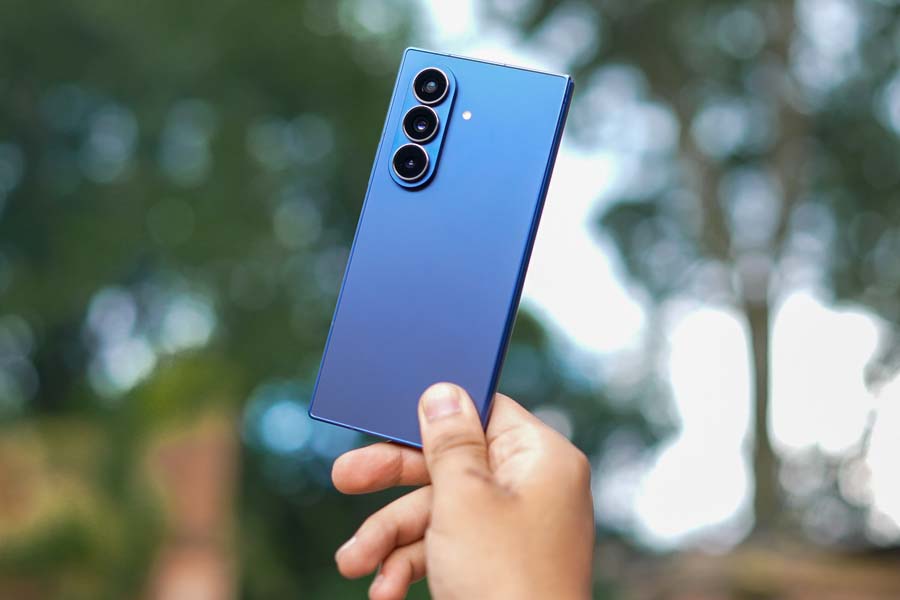
Maybe it was the dwindling market share with all the competition from Chinese brands that inspired this wave of innovation. Or maybe it was something else. I don’t really care. And it doesn’t really matter. The Fold 7 is here, and I can’t believe I’m saying this, but it’s the lightest foldable in the world; lighter than even something like the iPhone 17 Pro Max (review) and the Galaxy S25 Ultra (review)!
Not just that, but the Fold 7 is also arguably the thinnest foldable in the world, although Honor still claims that title belongs to its Magic V5.
We’re talking like… 0.1mm worth of difference, by the way.
That’s almost as thin a healthy strand of human hair—but the point is—the Fold 7 feels like any normal smartphone out there. Which was the goal all along, right? To make foldables as comfy and as pocketable as possible? And on its seventh attempt, I’m glad to see Samsung finally land on its feet.
The Fold 7 does such a convincing job of feeling like a normal smartphone that, for the first few days, I forgot that I could unfold it. I’m not kidding. I was even using YouTube and Chrome in split-screen on its cover display like a forgetful idiot when I could have just unfolded it for a much better view.
21:9 ftw!
And it might just be me and my tiny hands talking, but the Fold 7 feels much more comfortable to hold as well. Oh—I also wanna give a quick shoutout to Samsung ‘cause I finally get to check “use a 21:9 display” off of my bucket list ever since I first began daydreaming about it after seeing it on the original Sony Xperia 1.
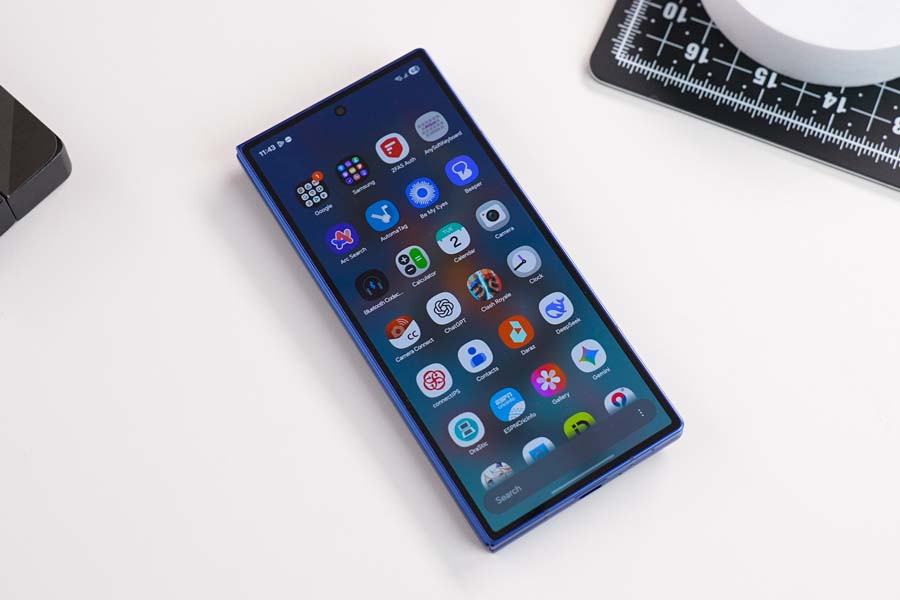
What I love even more is that, despite making the Fold thinner and lighter, Samsung was somehow able to improve its durability just as much. It’s still only IP48 rated instead of a proper IP68 dust and water resistance, but listen to this:
- The Fold 7’s new armor aluminum frame is apparently 10% stronger now,
- its cover display uses the same second-gen Gorilla Glass “Ceramic” as the S25 Edge for better protection against drops,
- and for the first time ever, Samsung says its foldable can survive 500,000 folds.
Which is literally 250% more than every other Samsung foldable before this.
So even if you obsessively fold and unfold it for 100 times a day, every day, the Fold 7’s hinge should be good enough for almost 14 years! That’s… a lot of years. I guess a foldable phone can never truly be as tough as a regular smartphone that doesn’t bend, but with the Fold 7, I’ve never felt more reassured.
Although if you’re reading this, Samsung, I definitely wanna see IP68 next year, okay?
If Google can do it, so can you. More importantly, that “IP48” rating basically means it’s free real estate for dust particles smaller than a millimeter to get into the phone.
Especially through the hinge. Which I think has already happened in my unit because I hear a faint crackling sound every time I unfold my Fold 7. I’m also looking forward to a different camera design next year, ‘cause this is by far the most wobbly phone I have ever used. The wobble is so bad that I can’t use it on a desk, folded, because of how shaky it is!
Displays
- Folded: 6.5-inch FHD+ AMOLED panel, 120Hz refresh rate
- Unfolded: 8.0-inch QXGA+ AMOLED panel, 120Hz refresh rate
Alright.
I wanna talk about its display next—the main reason why you’d wanna get a foldable in the first place. The good news this time is that, unlike Samsung’s older foldables, the Fold 7’s cover display has a very familiar aspect ratio. And the crease situation has also significantly improved over last year’s Galaxy Z Fold 6 (review).
And in a lot of ways, the Fold 7’s screen—excuse me, screens—are a lot similar to the one you’d find on the S25 Ultra. I’m talking the same, sublime color science, I’m talking the same speedy touch response, the same smoother 120Hz refresh rate, and even the same brightness levels at around 1,400 nits throughout the screens.
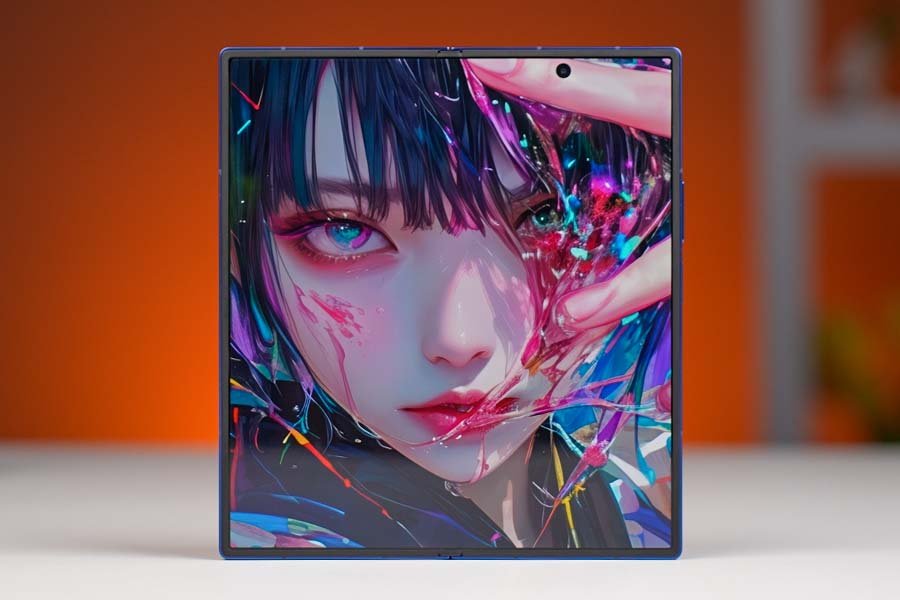
I was also hoping Samsung would bring over the excellent anti-reflective coating from the S25 Ultra to this guy, but nope. That didn’t happen.
What's weird is that, unlike its predecessor, the Fold 7 doesn’t have stylus support on the main display either. Yeah. I’ve never been much of a stylus person, to be honest. I may have used the one on my S25 Ultra for a grand total of 2 – 3 times to this day, but I have to assume this is a pretty big blow to anyone excited about jotting down on their Fold 7.
But it seems Samsung already thinks getting rid of the digitizer layer to enable S Pen support was a mistake and wants to bring it back on its next foldable. So, better luck next year?
This… pursuit of getting slim has taken a toll on the Fold 7’s speakers as well. There’s simply not enough space for the speaker drivers to move air, meaning this thing was never gonna get as loud or sound as full and detailed as something like the S25 Ultra.
Performance
- Snapdragon 8 Elite for Galaxy (3nm)
- 12/16GB RAM, Up to 1TB storage (non-expandable)
- Android 16 with One UI 8 on top
- 7 years of OS and security upgrades
You know where Samsung hasn’t compromised at all? Performance.
The Galaxy Z Fold 7 comes with Qualcomm’s Snapdragon 8 Elite chip, plenty of memory, plenty of storage… all working in tandem to deliver perhaps my favorite smartphone experience ever. Everything feels so smooth and so responsive, and Samsung’s One UI software is just the perfect icing on the cake.
Fun fact: the Fold 7 and the Flip 7 were actually the first Samsung phones to ship with One UI 8 (Android 16) right out of the box. But since One UI 7 was already such a major, major redesign, Samsung was more focused on ironing out the kinks this time. With some minor UI/UX improvements instead of anything groundbreaking.
- Like a new interface for the Quick Share screen,
- a “Dynamic Wallpapers” option that changes its appearance based on the time of day,
- some minor design refreshes to the Files, Gallery, and Weather apps,
- and also the Taskbar, which feels weirdly inspired by Apple’s “Liquid Glass”.
I say “weirdly” because this is the only visual element across the phone that I’ve noticed with that translucent, glossy blur effect like on iOS 26.
Not just Apple but Samsung pulled some inspiration from that “Open Canvas” thing on the OnePlus Open (review) as well. This one’s technically part of the Android 16 package, although the new “90/10 split-screen mode” feels like the perfect evolution to Android’s best multitasking feature if you ask me.
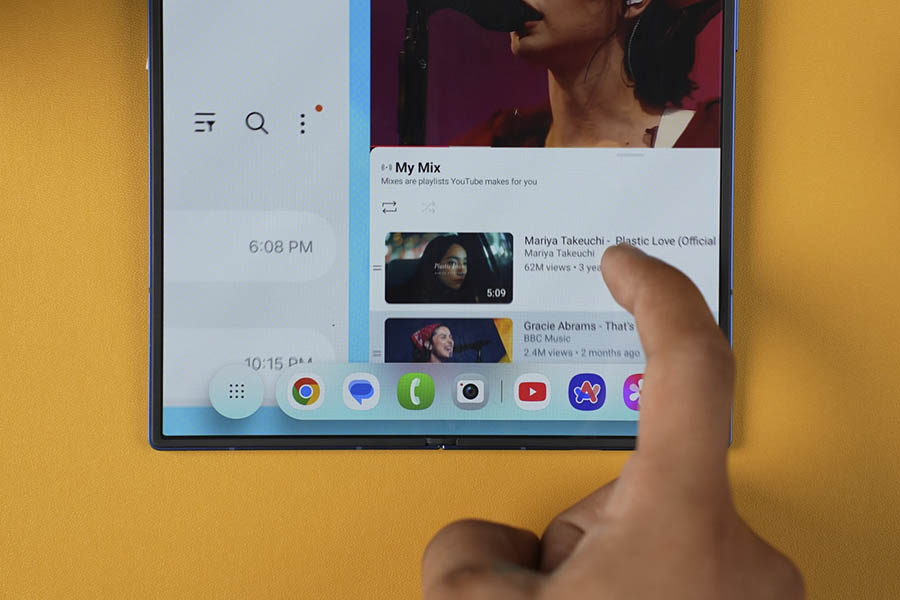
I can have one app eat up 90% of the screen and the other one take the remaining 10%... and just… switch between them with a tap when I need to. It’s genius!
The only new One UI 8 feature that I don’t see coming to non-folding phones like the S25 Ultra is something called “Side-by-Side Editing”. Where I can see both before and after versions of a photo on the main display when using generative AI edit. The Fold 7 also has 7 years of updates to its name—so as far as the software experience is concerned—I’m really not complaining.
And you know what? Its massive main display is great for gaming as well. Especially for emulator games. But its slim design comes to haunt us once again in the form of slightly poor thermals since Samsung obviously couldn’t fit a beefy vapor chamber system on such a lean, thin machine.
Battery
- 4400 mAh battery (25W charging)
- 15W wireless, 4.5W reverse wireless charging
Now I know most of you are dying to know about how its cameras stack up, but before I get into all that, I need to talk about the battery life real quick. I promise I’ll keep this one short ‘cause the Fold 7’s battery backup is just… not good. And depending on the kind of day I was having, I was mostly swinging between 5 – 6 hours of screen time only.
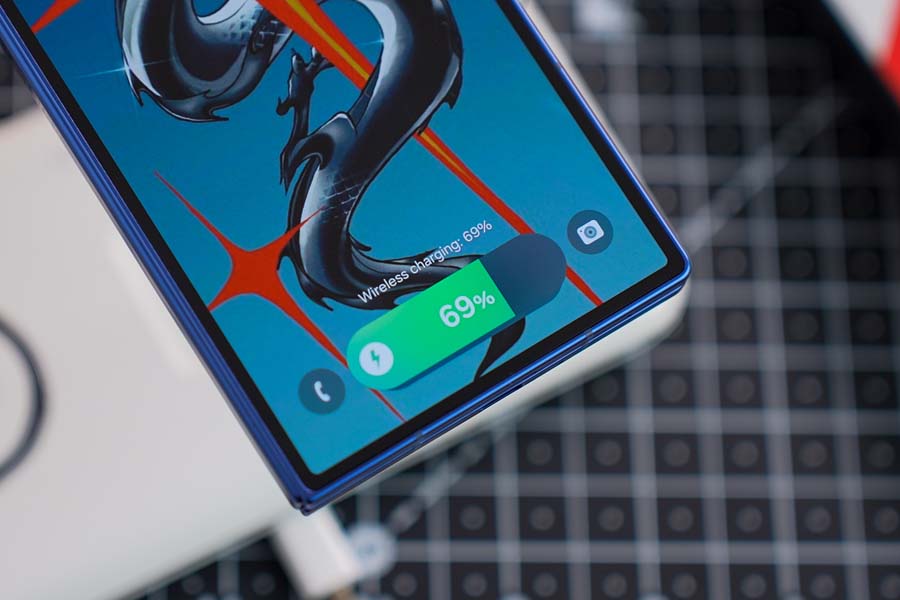
It’s still pretty impressive that Samsung was somehow able to fit the same 4,400 mAh battery as last year’s Fold 6 despite making it thinner and lighter, but come on. When is Samsung gonna give in to silicon-carbon batteries, because remember Honor’s Magic V5 I mentioned before?
The “technically” thinnest foldable in the world?
Yeah… what if I told you it has a more than 30% larger battery! Even the Fold 7’s charging speeds feel like something I’d see on a phone from half a decade ago, since it can only do 25W wired and 15W wireless charging.
Cameras
- Triple camera setup at the back
- 200MP main, 12MP ultrawide, 10MP telephoto
- 10MP selfie (cover display), 10MP (main display)
Alright. That brings me to the cameras.
And for the first time, in a very long time, we’re seeing some new camera hardware on the Fold lineup. So, except for the 3x telephoto lens and the 10MP selfie camera on the cover display, everything else is new on the Fold 7.
It borrows that 200MP HP2 sensor from the S25 Ultra, it’s got an upgraded 12MP ultrawide shooter with autofocus for macro shots, and a regular 10MP selfie camera on the main display instead of one that hides under the screen.
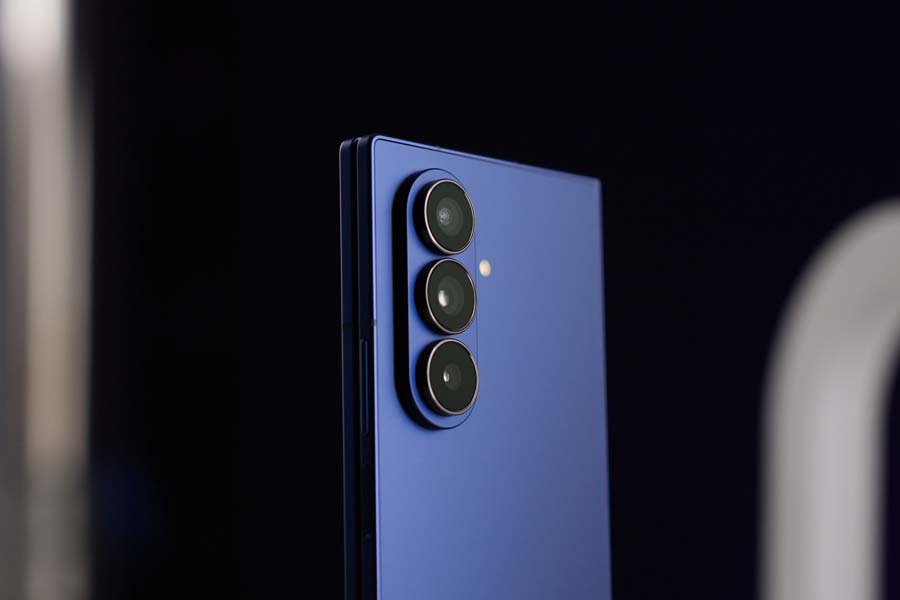
So how do the cameras on Samsung’s best foldable compare against Samsung’s best slab phone—the Galaxy S25 Ultra? That’s what I wanted to know. But before I could go ahead → take a bunch of pictures → and compare them, I already knew the Fold 7 wouldn’t beat the S25 Ultra’s cameras.
Especially not for zoom shots because on top of a 3x tele lens like the Fold 7, it also carries a 5x periscope camera. And yep, if you’re like me who loves zoom photography, you’ll definitely prefer the S25 Ultra more.
The Fold 7 actually does a pretty good job with close-ups if there’s not a lot of fine details like text, but yeah, the S25 Ultra’s zoom photos are clearly sharper and more detailed.
And a better telephoto lens means better portraits, too.
And once again, although the Fold 7 tries to keep up with the S25 Ultra the best it can, there’s only so much you can do with inferior hardware. I’m also noticing slightly pinkish skin tone in its portraits—and I don’t know what happened in that last photo—but the Fold 7 completely missed the edge detection around Pratima's hair as well.
I thought I’d be saying the same about their ultrawide photos since the S25 Ultra has a higher-res 50MP sensor, but nope. Unless I was really looking for a specific little detail, or unless when it was night, their ultrawide shots look almost exactly the same to me.
Just like the images from their main camera. Everything from the color optimization to the contrast level, details, dynamic range, and how they handle shadows and highlights is pretty much a copy-paste job. Which I guess was to be expected ‘cause—like I mentioned before—the Fold 7 and the S25 Ultra use the exact same 200MP sensor.
The only difference I’ve noticed is that the Fold 7’s photos sometimes have this greenish tint when there are a lot of bright-colored objects in the frame. So I hope this is something Samsung can sort out with a couple of updates.
I feel like I’m just repeating myself again and again at this point because their videos are a lot similar too. In terms of stabilization, dynamic range, and all that stuff.
The Fold 7 can also do 4K 60 fps videos from all its cameras and switch between all the lenses mid-recording. Its selfie videos also have a wider field of view, but other than how the S25 Ultra’s lowlight ultrawide videos are clearly more detailed and less noisy, I’d be perfectly happy with the Fold 7 in my pocket to record my favorite memories.
Samsung Galaxy Z Fold 7 long-term review: Conclusion
So all in all, I have absolutely loved my time with the Z Fold 7. I really have.
And yeah, this is easily my all-time favorite foldable phone! Wait—scratch that—this is my all-time favorite phone. Period. I know I’ve been very critical of Samsung’s foldables before, but the way Samsung has come guns blazing with the Fold 7 is remarkable. Almost every complaint I used to have about these phones has been addressed, and I just love a good comeback story.
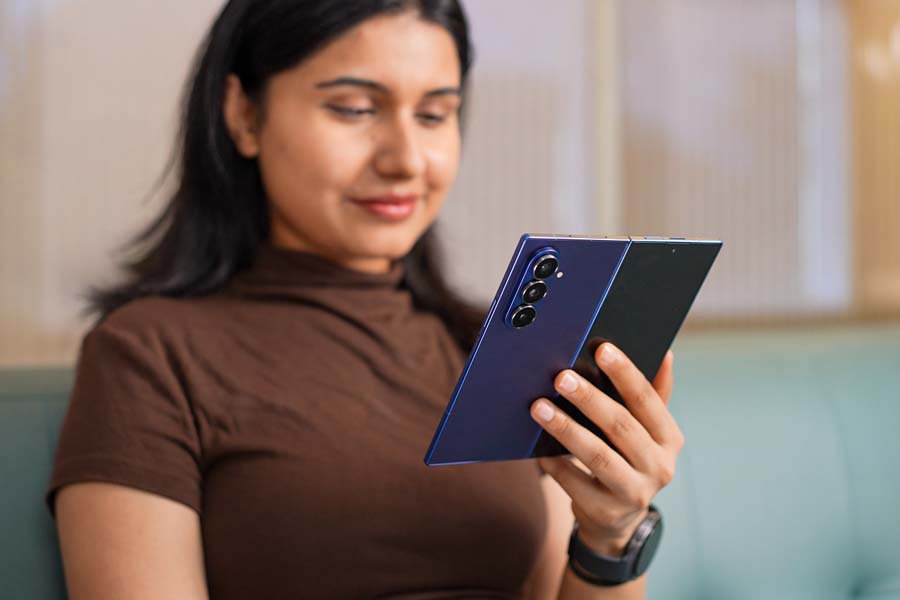
The Fold 7 still leaves some room for improvement, like with its speakers and battery life. And I feel like this giant camera module has room for a better zoom camera as well, right?
But all things considered, this is Samsung’s first foldable phone that I don’t have any hesitation recommending, despite all the excellent competition. It’s super expensive, yes, but if you can afford it, I bet you’re gonna love having a phone in your pocket that is somehow also a tablet.
There’s just... nothing else like it.
Samsung Galaxy Z Fold 7 long-term review: Pros and cons
| Pros | Cons |
| • The endgame design, finally | • Expensive |
| • A++ performance, software | • A proper dust protection is still missing |
| • A multitasker's dream machine | • Not the best battery life |
| • That camera wobble can be annoying |
Article Last updated: February 10, 2026