Why Trust Gadgetbyte?
At Gadgetbyte, we invest substantial hours into rigorously testing each product or service we review, guaranteeing that you make informed purchases. Learn more about our testing process.
Review Overview
4.3
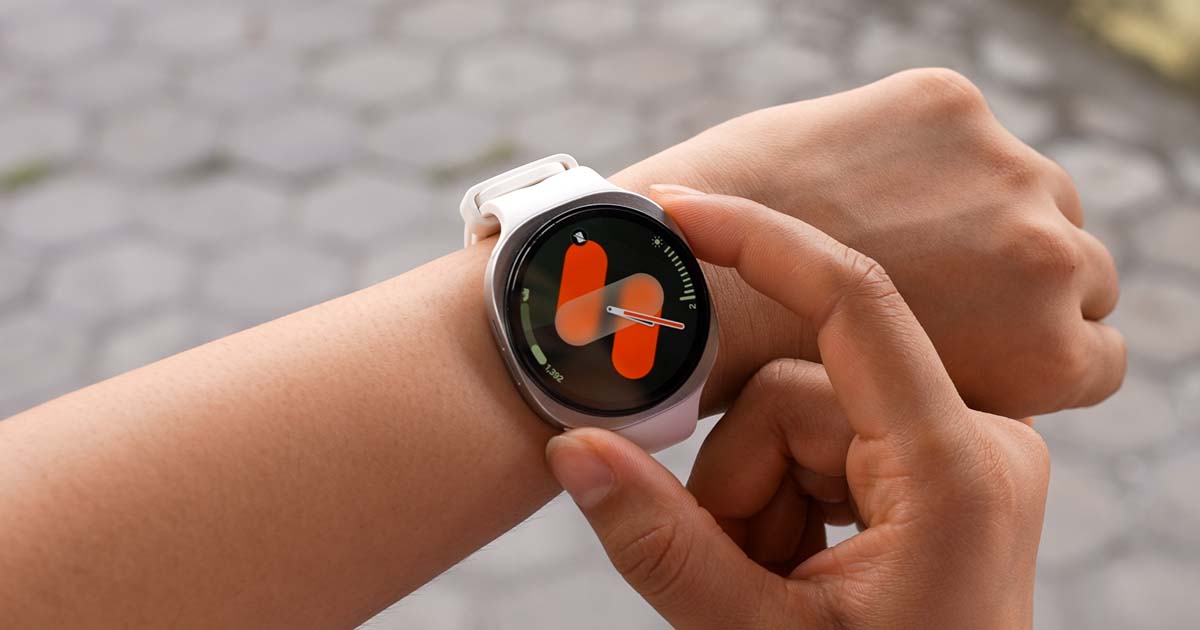
If you're using a Samsung flagship and you want one of the most complete smartwatch experiences available on Android, the Galaxy Watch 9 is still very easy to recommend. The health tracking is excellent, Samsung Health gives you an insane amount of useful information, the display is great, performance is smoother and the overall Wear OS experience is very polished.
Design & Build
9/10
Software & Performance
9/10
Fitness & Health Tracking
9/10
Battery Life & Charging
7/10
Samsung launched the Galaxy Watch 9 alongside its new Z Fold 8 as well as the more premium Galaxy Watch Ultra 2. While the Watch Ultra 2 sits at the top of Samsung's smartwatch lineup, the regular Watch 9 is the more value-packed option for most people. And this year, Samsung has made a couple of important hardware upgrades. The first one is the new Qualcomm Snapdragon Wear Elite chipset, replacing the Exynos chip from last year's Watch 8. And secondly, Samsung has increased the battery capacity, particularly on the smaller 40mm model.
Apart from those two things, however, the Watch 9 is not a massive upgrade over the Watch 8. The good thing is that Samsung hasn't increased the price this year either. So, if you use a Samsung flagship—or just an Android phone in general—and you're looking for a proper smartwatch, is the Galaxy Watch 9 worth buying I've been using it for around two to three weeks now, so let's find out.
Samsung Galaxy Watch 9 Specifications
| Specification | Samsung Galaxy Watch 9 |
|---|---|
| Body | 42.7 x 40.4 x 8.6mm, 31.5g (40mm) / 46.0 x 43.7 x 8.6mm, 34g (44mm) |
| Build | Sapphire Crystal front, Armor Aluminum 2 frame |
| Durability | MIL-STD-810H, IP68, 5ATM water resistance |
| Display | 1.34-inch (40mm) / 1.47-inch (44mm) Super AMOLED, up to 3,000 nits |
| Resolution | 438 x 438 pixels (40mm) / 480 x 480 pixels (44mm) |
| Chipset | Qualcomm Snapdragon SW6100 Wear Elite (3nm) |
| Memory | 2GB RAM, 32GB storage |
| Software | Wear OS 7 with One UI 9 Watch |
| Health | Heart rate, ECG, blood pressure*, SpO2, skin temperature, sleep tracking, BioActive Sensor, Antioxidant Index |
| Sensors | Accelerometer, barometer, gyro, geomagnetic, ambient light, temperature sensor |
| GPS | Dual-frequency GPS (L1 + L5), GLONASS, Galileo, BeiDou, QZSS |
| Connectivity | Bluetooth 6.0, dual-band Wi-Fi, NFC, optional LTE/eSIM |
| Battery | 390mAh (40mm) / 445mAh (44mm) |
| Charging | 10W wireless charging |
| Colors | 40mm: Graphite, Cream / 44mm: Graphite, Silver |


Galaxy Watch 9 Price
| Variant | US | India | Nepal |
| 40mm Bluetooth | USD 379.99 | INR 37,999 | NPR 66,499 |
| 44mm Bluetooth | USD 409.99 | INR 40,999 | NPR 71,499 |
| 40mm LTE | USD 429.99 | INR 41,999 | Not Available |
| 44mm LTE | USD 459.99 | INR 44,999 | Not Available |
Unboxing
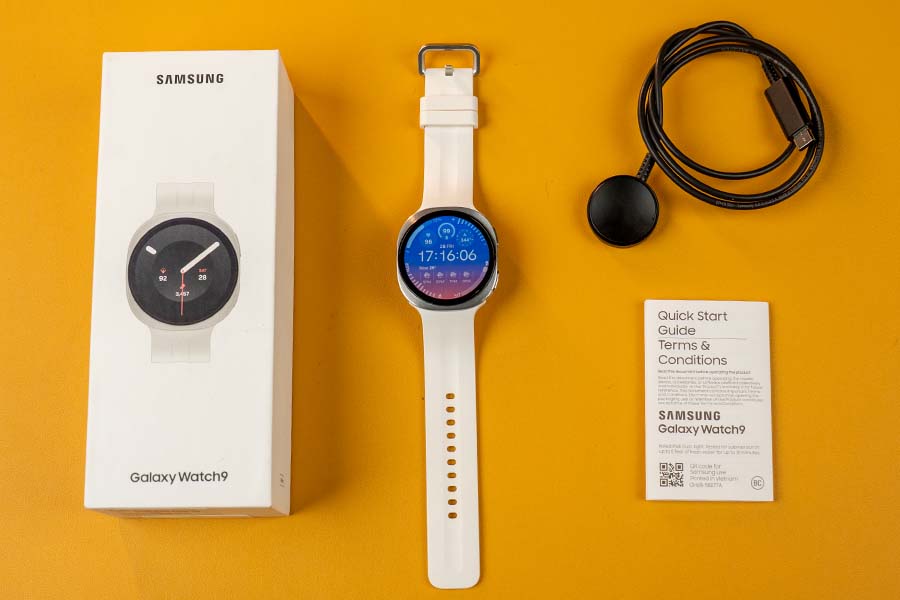
As far as the unboxing experience goes, there is nothing particularly new here. The Watch 9 comes in almost the same box as the Watch 8. Inside, you get the watch itself, the band, Samsung's wireless charging puck and some paperwork. And that's about it.
Design and Build
In terms of design and build, again, there is very little that has changed this year. The Galaxy Watch 9 looks almost identical to the Watch 8. You still get the same overall design, aluminium construction and Samsung's familiar cushion-style watch body.
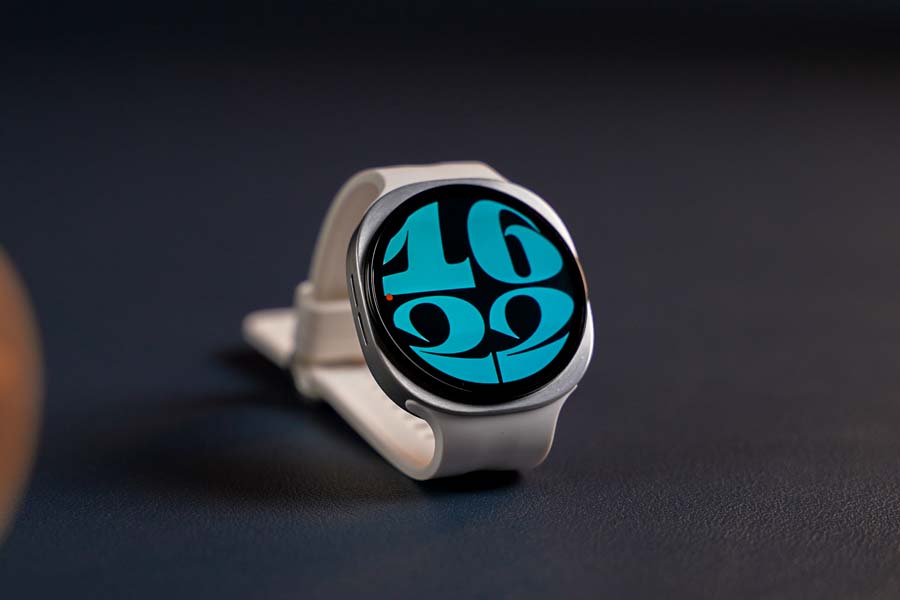
It is available in two sizes: 40mm and 44mm. I have been using the smaller 40mm version. I think this size is ideal if you have a smaller wrist, whereas if you're a guy with a bigger wrist, I would definitely recommend going with the 44mm version.
Colour availability also depends on the size. The 40mm comes in Graphite and Cream, whereas the bigger 44mm version is available in Graphite and Silver. You also get the same 5ATM water resistance and IP68 rating, so taking the Watch 9 swimming or using it in the rain isn't something I would worry about.
And durability has been pretty good in my experience. I have bumped the watch into things a few times during my usage, but I haven't noticed any major scratches either on the frame or the display. So overall, it has held up quite well.
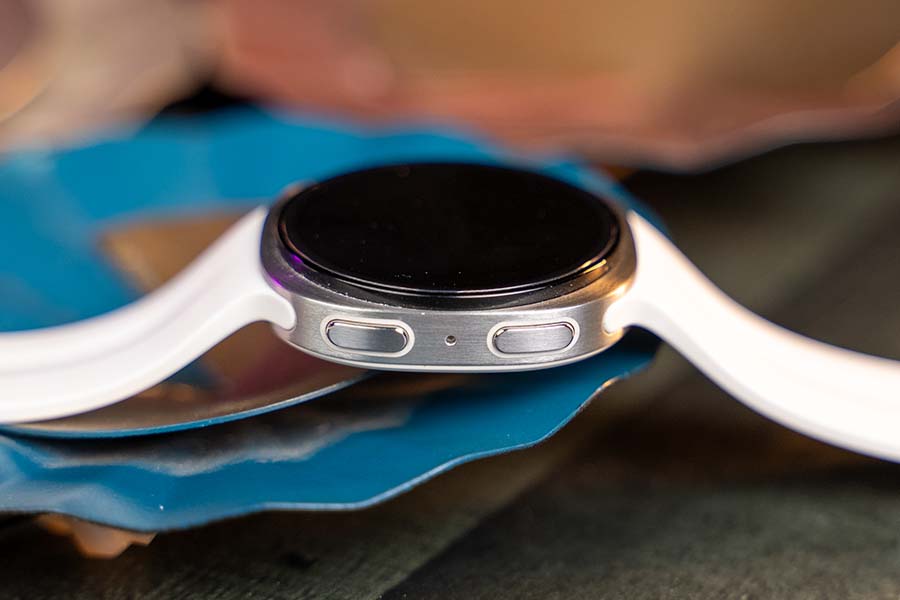
Samsung once again uses its own locking mechanism for the bands instead of a regular universal watch-band mechanism. That does limit your options compared to watches that support standard straps, although Samsung itself sells quite a few different bands.
The one I have been using is the silicone Sport Band. And to be very honest, during my first few days of wearing it, I actually had some skin irritation from the band. I think my skin is simply a little sensitive to silicone because after using it for some time, the irritation gradually went away. Still, if you have sensitive skin like me, I would probably look at one of Samsung's fabric-style bands instead.
Display
Moving on to the display, the smaller 40mm Watch 9 gets a 1.34-inch Super AMOLED display, while the 44mm version has a larger 1.47-inch panel. Both displays can reach up to 3,000 nits of brightness.
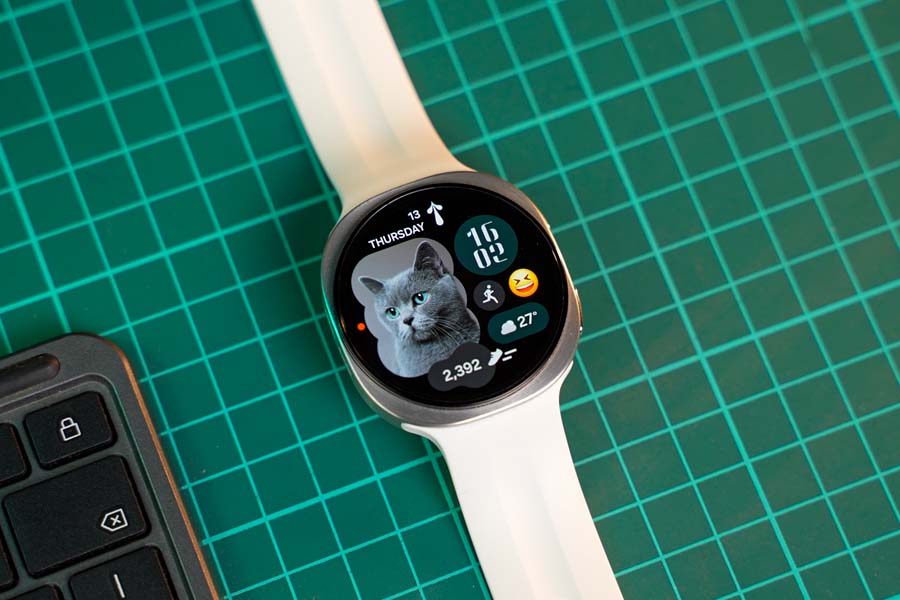
And I really don't have much to complain about here. The display is sharp, colourful and extremely bright. Even outdoors on a bright sunny day, I had absolutely no problem reading what's on the screen.
Touch response is also excellent. But again, the overall experience isn't dramatically different from the Watch 8. Samsung already had a very good smartwatch display last year, so there wasn't a whole lot that needed changing here.
Performance
Performance is where Samsung has made one of the biggest upgrades this year. Instead of Samsung's own Exynos chipset, the Galaxy Watch 9 is powered by Qualcomm's new Snapdragon Wear Elite platform, built on a 3nm process.And yes, the Watch 9 does feel faster. Scrolling through menus feels slightly smoother, opening apps is a little quicker and the overall interface feels more responsive.
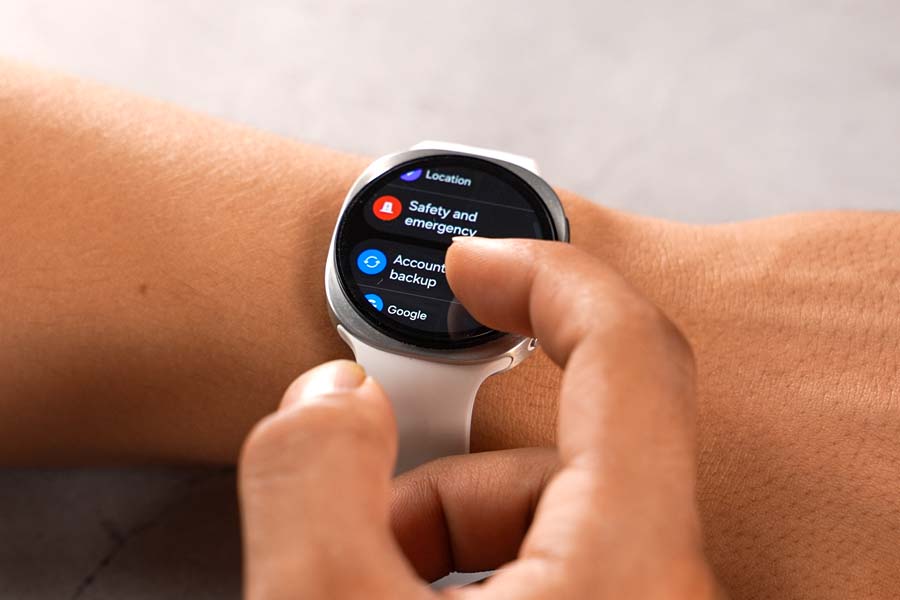
But I want to emphasize the word slightly. When I compared the Watch 9 side-by-side with the Watch 8, I didn't find the performance improvement to be huge. The Watch 8 was already pretty smooth, so I wouldn't upgrade from the Watch 8 just because of the new Snapdragon chip.
You also get 2GB of RAM and 32GB of storage, which is more than enough for the kind of apps, music and watch faces I normally use on a smartwatch. As for sensors, pretty much everything you would expect is here: accelerometer, barometer, gyroscope, geomagnetic sensor, temperature sensor, ambient-light sensor and Samsung's BioActive Sensor for things like heart rate and ECG measurements.
Software Experience
The Galaxy Watch 9 runs One UI 9 Watch based on Wear OS 7. And software is still one of the main reasons why I would choose a Galaxy Watch over something from Huawei or Amazfit.
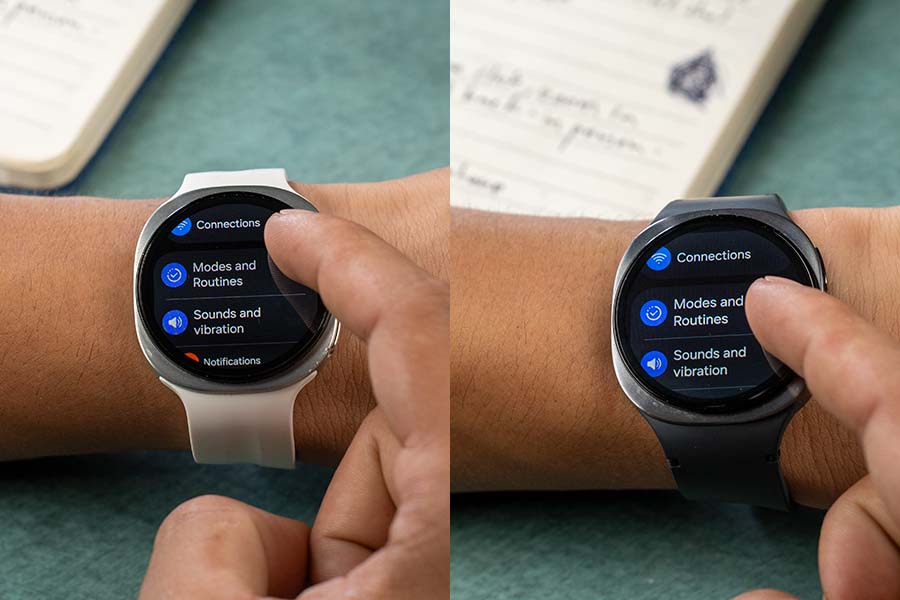
When I compared the Watch 9 with the Watch 8, I didn't find One UI 9 dramatically different in everyday usage. The interface is familiar, everything is nicely organised into tiles, and navigating through different health information and apps is pretty straightforward.
Wear OS itself has matured a lot as well. You get access to proper apps like Spotify and Google's services, which makes the Watch 9 feel more like an extension of your smartphone rather than simply a fitness tracker sitting on your wrist.
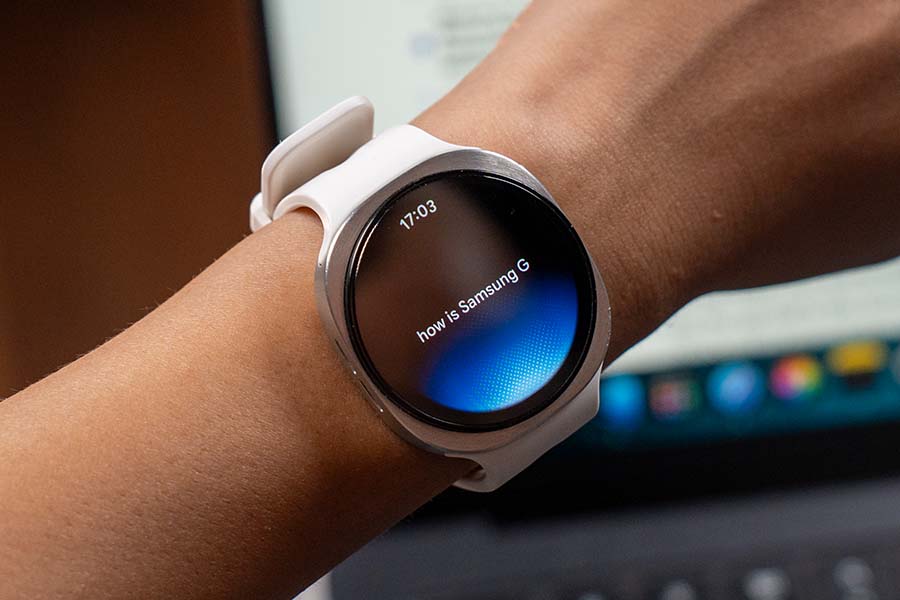
One feature I particularly liked is Gemini. I can simply long-press the top button to access Gemini and ask it to do basic things such as setting an alarm, creating something on my calendar or answering a simple question. It's not something I use every five minutes, but when I need it, having Gemini directly on my wrist is surprisingly convenient. And this overall software ecosystem remains one of Samsung's biggest advantages.
Health and Fitness Tracking
One of the things I have always liked about Samsung's Galaxy Watches is their health and fitness tracking, and I am quite happy with the Watch 9 in this department as well. I compared its sleep tracking side-by-side with the Watch 8, and I didn't notice a major difference between the two.
But overall, I found the sleep tracking to be fairly accurate. It gives you detailed information about your sleep stages, including light sleep, deep sleep and REM sleep. But what I really like is how Samsung takes all of this data and presents it in a way that's actually understandable.
For example, you get sleep efficiency, which gives me a better idea of whether I actually had a good night's sleep. Then there is sleep latency, which basically tells you how long it takes you to fall asleep after going to bed. Generally, you want this to be somewhere around 5 to 30 minutes.
And this actually made me more conscious about my sleeping habits. We all have this habit of going to bed and then spending another half an hour—or sometimes much longer—scrolling through Facebook, Instagram, TikTok or whatever.
Since I started wearing the Watch 9, I've actually been trying to avoid doomscrolling at night because I want to wake up the next morning with a good Sleep Score and Energy Score. So strangely enough, the watch has actually made me sleep a little better.
Samsung also provides a lot of additional information while you're sleeping. You get blood oxygen monitoring, snoring detection and skin-temperature tracking. Skin temperature is particularly interesting because our skin is an important part of the body's temperature-regulation system. Your temperature naturally changes throughout your sleep-wake cycle, so tracking those changes can add another layer of information about how your body is behaving overnight. Of course, I wouldn't treat a smartwatch as a medical device, but I think looking at these numbers as trends can be useful.
Vitals, Vascular Load and Cardio Load
Another feature I have been checking regularly is Vitals. Samsung Health brings together several measurements recorded while you're sleeping, including heart rate, heart-rate variability, respiratory rate, skin temperature and blood oxygen.
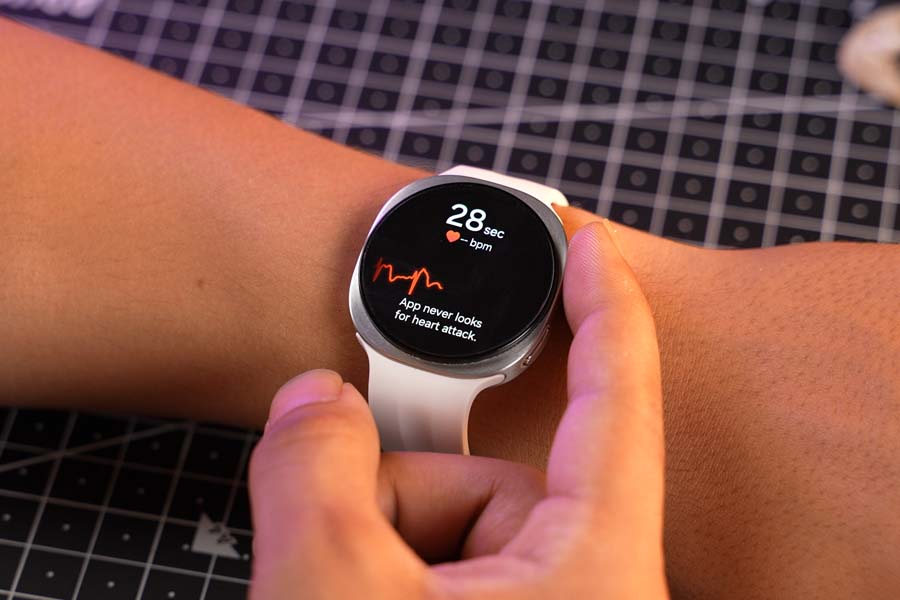
The idea is to establish your normal range and make it easier to see when something changes. And I have been checking this almost every morning. Samsung has also added more advanced information such as Vascular Load and Daily Cardio Load, and I have been checking those regularly as well.
My Vascular Load, for example, currently shows as consistent. And that's probably what I like most about Samsung Health right now. There is just so much information available.
I'm not saying you need to obsess over every single number every morning, but if you actually enjoy tracking your sleep, workouts and recovery, Samsung gives you a lot of data to work with.
Heart Rate, Workouts and GPS
Heart-rate tracking was also quite reliable throughout my usage. Auto-workout detection works really well, which means if I start walking or doing certain activities without manually starting a workout, the Watch 9 generally figures it out automatically.
GPS has improved too. When I compared it against the Watch 8, GPS locking felt noticeably faster on the Watch 9. Samsung is using dual-frequency L1+L5 GPS here, and combined with the new Snapdragon platform, GPS performance has been quite good in my testing.
However, there are some advanced outdoor features that Samsung keeps exclusive to the more expensive Watch Ultra 2. For example, Trail Run is exclusive to the Ultra 2, alongside its more rugged outdoor and diving capabilities. For normal everyday exercise though, I think the Watch 9 gives you pretty much everything most people will need.
Battery Life
And now we come to my biggest problem with the Galaxy Watch 9. Battery life. Samsung has increased the battery capacity this year. The 40mm Watch 9 has a 390mAh battery, which is around 20% larger than its predecessor, while the bigger 44mm version gets 445mAh.
But despite the larger battery, I still found the actual battery life pretty underwhelming. For me, this is basically a one-day smartwatch. And that's about it.
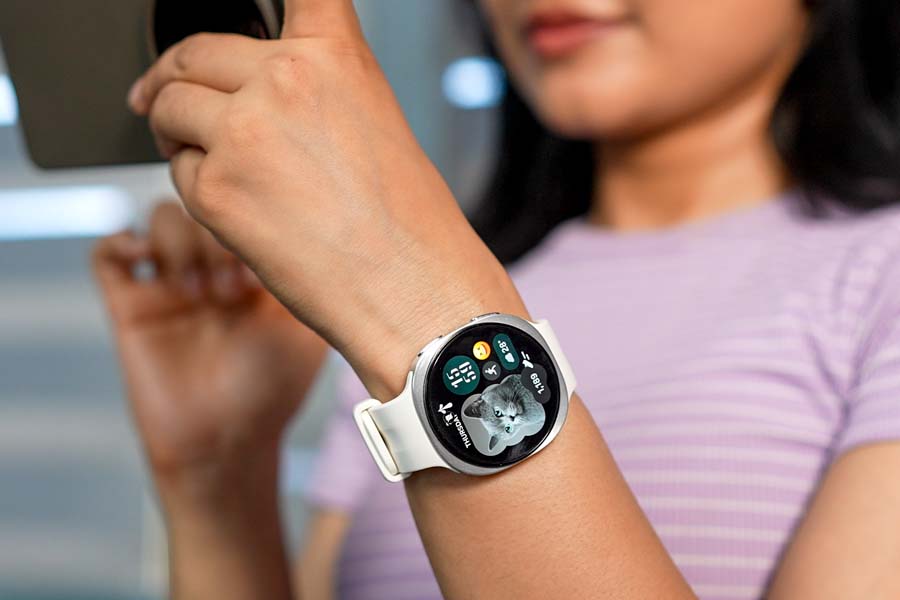
Samsung itself rates the Watch 9 for up to 30 hours with Always-On Display enabled, but in real-world usage, especially when I'm using sleep tracking, health monitoring, notifications and other smartwatch features, I still have to think about charging it every single day.
The bigger problem is that charging isn't particularly fast either. During my usage it could easily feel like more than an hour to get it properly topped up.
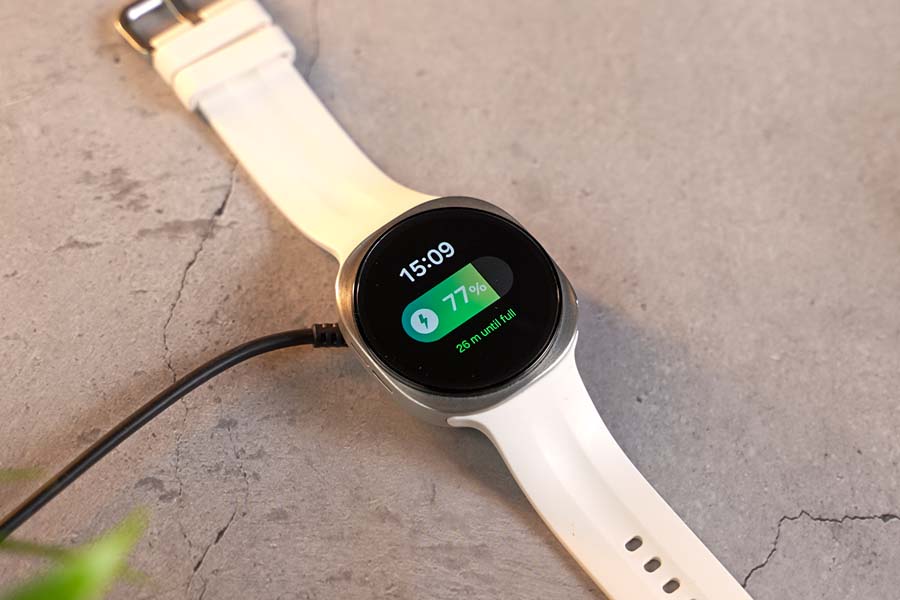
And this creates a slightly annoying situation. Because I want to use sleep tracking, I can't simply leave the watch charging overnight. So I normally put it on charge before going to sleep.
But there have been many occasions where it was only at around 60–70% when I wanted to go to bed. So I would just wear it at that charge level, track my sleep and continue using it the next morning.
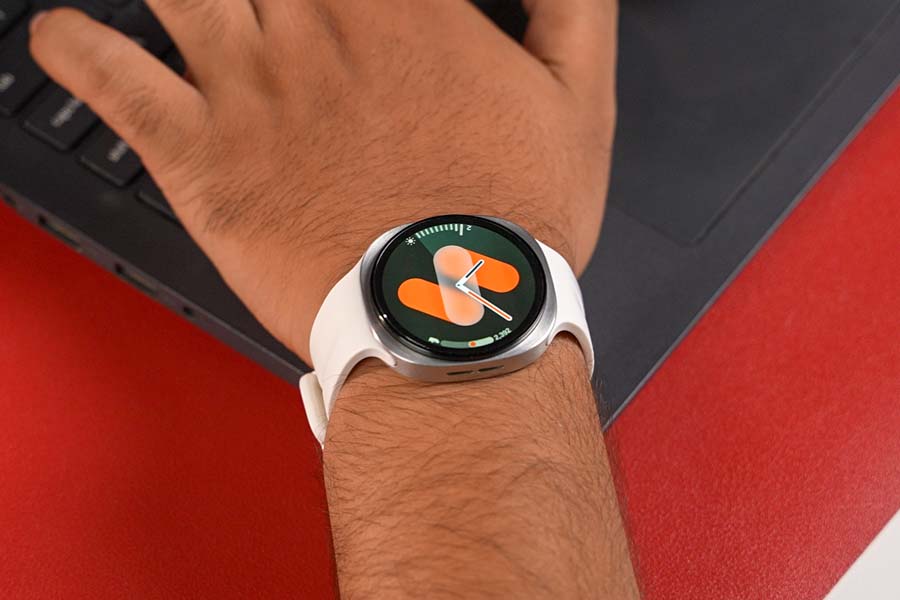
Then, by around 3 or 4 PM the next day, the watch would be out of battery. This happened to me multiple times during my two to three weeks of usage. And I think this is still the fundamental downside of these full-fledged Wear OS smartwatches.
Conclusion
Overall, I think the Galaxy Watch 9 is a very small incremental upgrade over the Galaxy Watch 8. Yes, the Snapdragon Wear Elite chipset is faster. The battery capacity is bigger. GPS locking felt faster in my testing. But outside of those things, the actual experience is very similar to the Watch 8.
The design is practically the same. The display experience is similar. Health and fitness tracking is already excellent on the Watch 8. And even when I used them side-by-side, I didn't feel like I was suddenly using a completely different generation of Galaxy Watch.
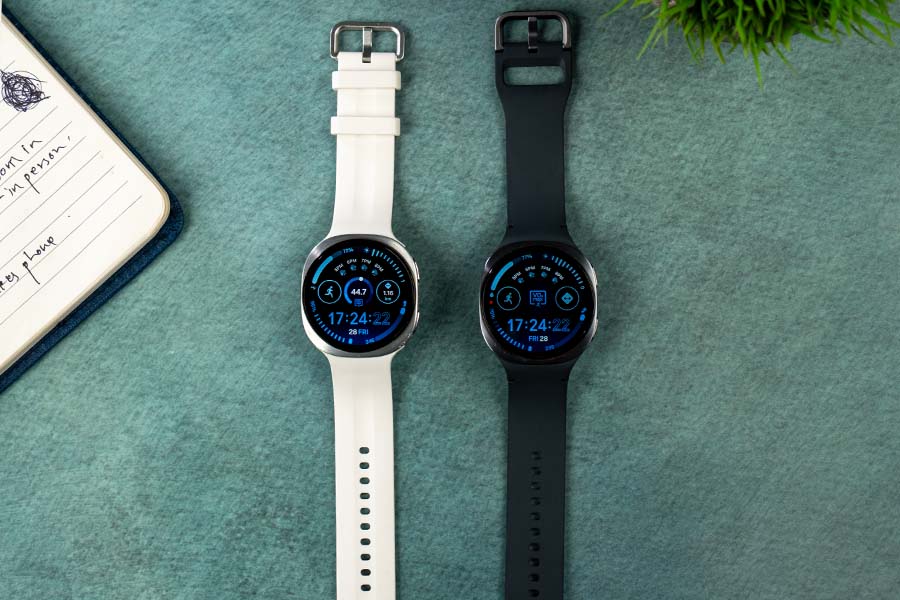
So I think the buying decision comes down to price. If you can find the Galaxy Watch 8 at a good discounted price—say around 25 to 30% cheaper than the Watch 9—I would simply buy the Watch 8.
And in markets like India, where the older Galaxy Watches usually receive significant discounts, I would definitely check the Watch 8 pricing before buying the Watch 9.
But if the price difference between the Watch 8 and Watch 9 isn't huge, then obviously I would get the newer Watch 9. You get the newer Snapdragon chip, a bigger battery and the advantage of buying a newer-generation product.
Pros and Cons of Galaxy Watch 9
| Pros | Cons |
|---|---|
| Excellent health and sleep tracking | Battery life is still around one day |
| Bright, responsive AMOLED display | Very incremental upgrade over Watch 8 |
| Smooth performance with Snapdragon Wear Elite | Charging is relatively slow |
| Mature Wear OS experience with Gemini and apps |
Alternatives
If you're someone who is careless about charging—or you simply don't want another device that you have to charge every single day—I think there are better options available. Something like the Huawei Watch Fit 5 series or Huawei Watch GT series can give you significantly better battery life while still doing most of the health and fitness tracking that an average person needs. You will lose the full Wear OS experience and its app ecosystem, but you'll gain dramatically better endurance.
Article Last updated: August 30, 2026
![Best Laptops Under Rs. 80,000 in Nepal [Updated 2026]](https://media.gadgetbytenepal.com/2026/10/Best-laptop-under-80000-in-Nepal.jpg)

![Xiaomi Mobile Price in Nepal [Updated 2026]](https://media.gadgetbytenepal.com/2026/01/Xiaomi-Mobile-Price-in-Nepal-2026.jpg)