Why Trust Gadgetbyte?
At Gadgetbyte, we invest substantial hours into rigorously testing each product or service we review, guaranteeing that you make informed purchases. Learn more about our testing process.
Review Overview
4.1
Front camera
6.8/10
Battery
9/10
Audio and haptics
8.5/10
Value for money
9/10
Design and build
8.5/10
Display
8.8/10
The Motorola Edge 70 Fusion gets a lot of things right with its slim design, beautiful AMOLED display, clean software, and excellent battery life. However, average gaming performance and inconsistent cameras, especially the lack of a telephoto lens, hold it back. Still, considering the current smartphone market in Nepal, it's one of the more balanced phones around Rs. 70,000.
Performance
7.5/10
Software and UI
7.7/10
Back cameras
7.5/10
Price, price, price! I feel like I have to talk about pricing in every single review these days because finding a phone that's actually worth every penny has become so difficult. Even phones that were once considered value-for-money options have become noticeably more expensive.
And that's where the Motorola Edge 70 Fusion comes in. Priced at Rs. 69,999 for the 12/256GB variant, this phone actually makes a lot of sense to me. It offers a slim and comfortable design, a beautiful curved display, clean software, and a massive battery.
Of course, it isn't perfect, especially when it comes to cameras and gaming performance. But after using it, I feel Motorola has delivered one of the more balanced phones in this price range.
So, let's discuss everything I liked and disliked about this phone in my Motorola Edge 70 Fusion review.
Motorola Edge 70 Fusion Price in Nepal
The official price of the Motorola Edge 70 Fusion in Nepal is NPR 69,999 for the 12/256GB and NPR 79,999 for the 12/512GB variant, respectively. You can buy this smartphone in Nepal from Motorola-authorized stores across the country, including our affiliate partner GBN Store.
| Motorola Edge 70 Fusion | Price in Nepal | Price in India |
| 12/256GB | NPR 69,999 | INR 34,999 |
| 12/512GB | NPR 79,999 | INR 36,999 |
Motorola Edge 70 Fusion Specifications:
- Design and Build: 162.8 x 75.6 x 7.2 mm, Glass front (Gorilla Glass 7i), IP68/IP69 rated
- Display: 6.78-inch 1.2K AMOLED panel, 1272 × 2772 resolution, 144Hz refresh rate, up to 5,200 nits (peak)
- Chipset: Qualcomm Snapdragon 7s Gen 4 (4 nm)
- Memory: 12GB RAM, 256GB / 512GB internal storage
- Software & UI: Android 16 up to 3 Major Android Upgrades
- Rear Camera: 50MP main (OIS) + 13MP ultrawide
- Camera: 32MP sensor (hole-punch cutout)
- Security: Fingerprint (Under-display optical)
- Connectivity: Dual (Nano-SIM + eSIM or Nano + Nano), Wi-Fi 6E (Dual-band), Bluetooth 6.0, USB Type-C, GPS / GLONASS / GALILEO
- Sensors: Accelerometer, Gyroscope, Proximity sensor, Ambient light sensor, Compass/magnetometer
- Audio: Stereo speakers
- Battery: 7000 mAh + 68W wired Charging


Motorola Edge 70 Fusion Review
Design and Build
- 162.76 × 75.60 × 7.99 mm, 193 grams
- Plastic frame, textured rear panel
- Gorilla Glass 7i, IP68/IP69 protection
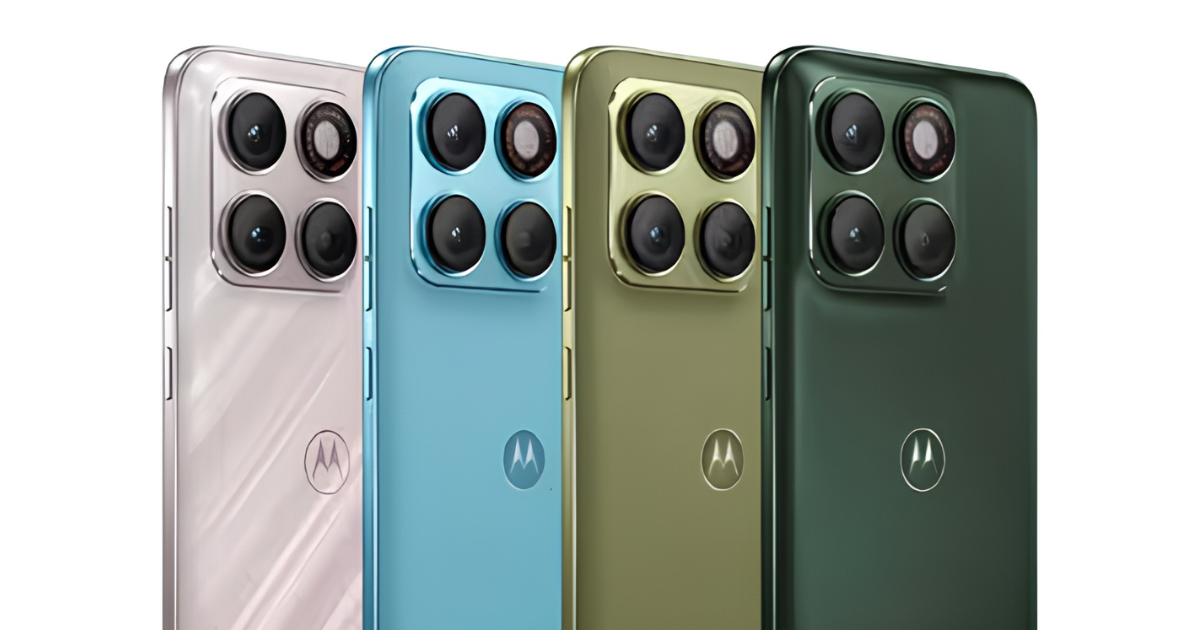
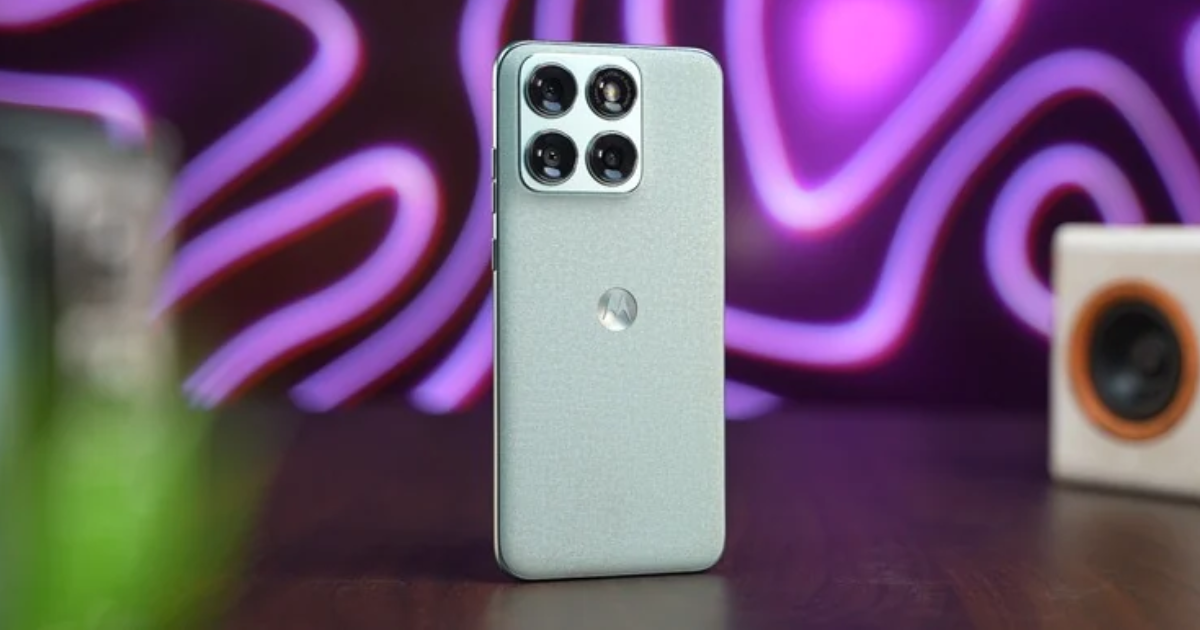
If you have used a Motorola Edge phone before, the design of the Edge 70 Fusion will feel quite familiar. It has the same curved design language, with both the front and back gently curving towards the frame.
Personally, I really like how this phone looks and feels. The curved edges make it appear slimmer than it actually is, and despite having a large display, it doesn't feel particularly wide or uncomfortable to hold. It is also relatively lightweight for a phone with such a massive battery.
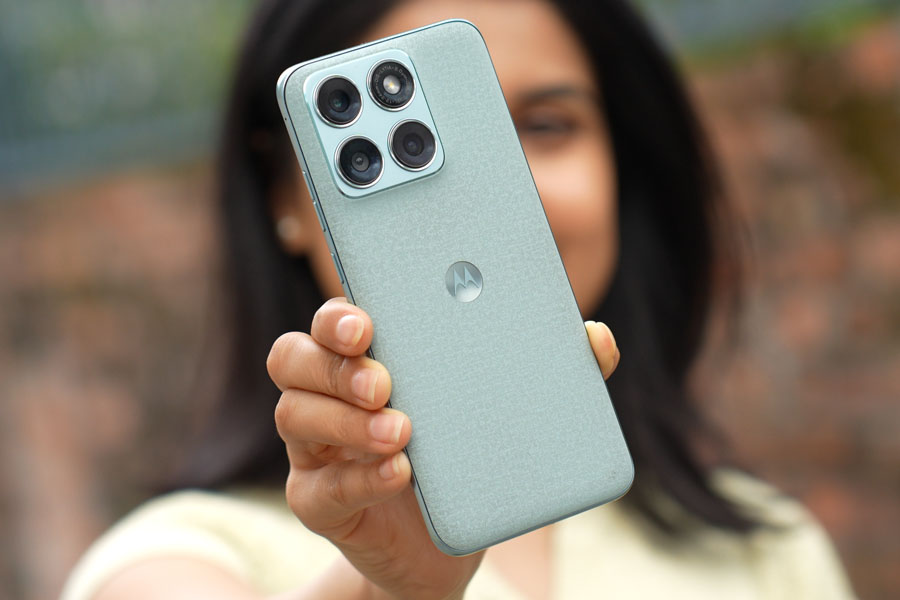
The frame is made of plastic, but I have no complaints about the overall build quality. The phone feels well put together, and the textured back adds a nice touch to its design. I tested the blue variant, which looks quite attractive, although the other colour options are equally appealing.
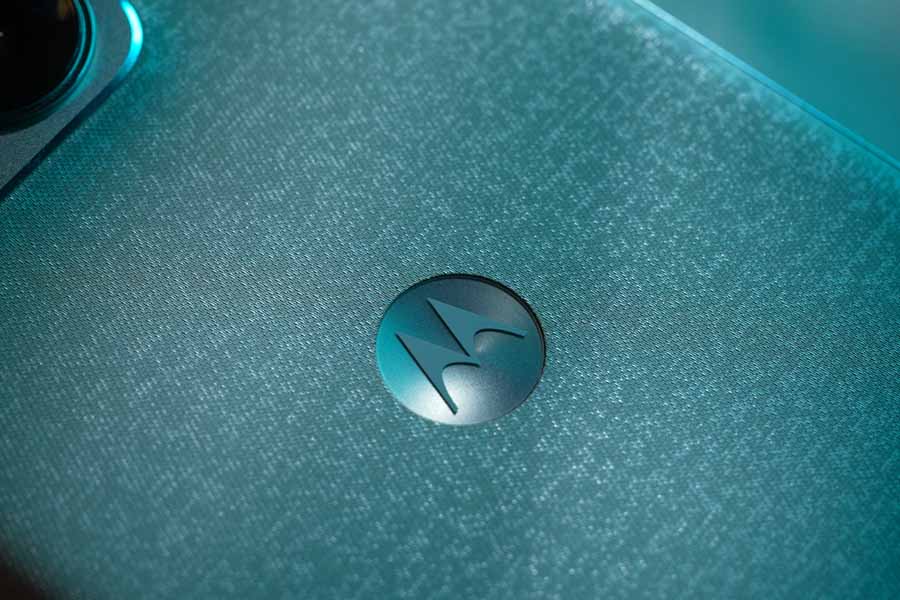
As for durability, I think the Corning Gorilla Glass 7i protection on the front is pretty good for this price. I haven't used a tempered glass protector on my unit, and thank Goddess, I haven't noticed any scratches so far. Still, I'd recommend adding one to be on the safer side.
The phone also features an optical in-display fingerprint sensor, which has been fast and accurate in my experience. It comes with IP68 and IP69 ratings for dust and water resistance, along with claimed drop resistance from heights of up to 1.2 metres. The only thing missing here is a 3.5mm headphone jack, which is just sadddd!
Overall, I am quite happy with the design. It looks stylish, feels comfortable to use, and doesn't have the bulky feel you might expect from a phone with a 7,000mAh battery.
Display
- 6.78-inch quad-curved AMOLED display
- 1272 × 2772 pixels, 144Hz refresh rate
- 10-bit colours, HDR10+, 5,200 nits peak brightness (claimed)
The display is easily one of my favourite things about the Motorola Edge 70 Fusion.
It has a large 6.78-inch quad-curved AMOLED panel, and the quality is genuinely impressive. Colours look vibrant, images are sharp, and the blacks are nice and deep. I particularly enjoyed watching movies and other content on this screen.
The panel also supports 10-bit colour and covers 100% of the DCI-P3 colour space, which helps deliver richer colours.

Motorola advertises a peak brightness of 5,200 nits. Of course, that doesn't mean the screen reaches such brightness during regular use, but I found it comfortable to use outdoors. Visibility hasn't been a problem for me.
One interesting thing, though, is the refresh rate. While Motorola advertises up to 144Hz, I only noticed it reaching a maximum of 120Hz during my usage. That isn't necessarily a major issue because the display still feels smooth, but it is worth mentioning.
Other than that, I have very little to complain about. Whether it's watching videos or simply browsing through apps, the display experience has been excellent.
Audio and Haptics
Motorola has also done a good job with the speakers and vibration feedback.
The Edge 70 Fusion comes with stereo speakers, and I was particularly impressed by how loud they get. The volume is quite good for a phone in this price range and gives it a more premium feel.
Bass is a little lacking, though, so don't expect particularly deep or punchy sound. Still, I am satisfied with the overall loudness.
The haptics are another pleasant surprise. The vibration feedback feels strong and noticeable, which adds to the overall experience of using the phone.
Software and UI
- Android 16 with Motorola Hello UI
- 3 major Android upgrades, 5 years of security updates
- Moto AI features and extensive customisation
Another thing I have always liked about Motorola phones is their software, and the Edge 70 Fusion continues that experience.
It runs Android 16 with Motorola's Hello UI, which feels quite close to stock Android. The interface is simple, easy to navigate, and doesn't feel unnecessarily complicated.
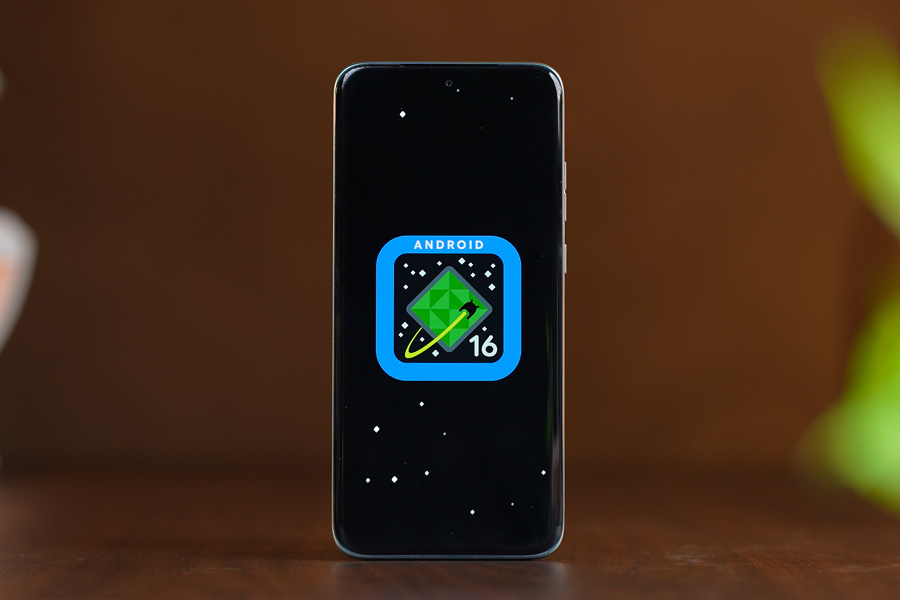
I also like Motorola's gestures and shortcuts. They make everyday tasks a little more convenient and add some fun to an otherwise straightforward Android experience.
Customisation is another strong point. You can change icon shapes and sizes, system fonts, themes, and widgets. There are plenty of options to make the phone look and feel the way you want.
Then there are the Moto AI features. Motorola has included a separate AI experience with features such as image generation, reminders, notification summaries, and voice-note transcription. There are quite a few things to explore here.
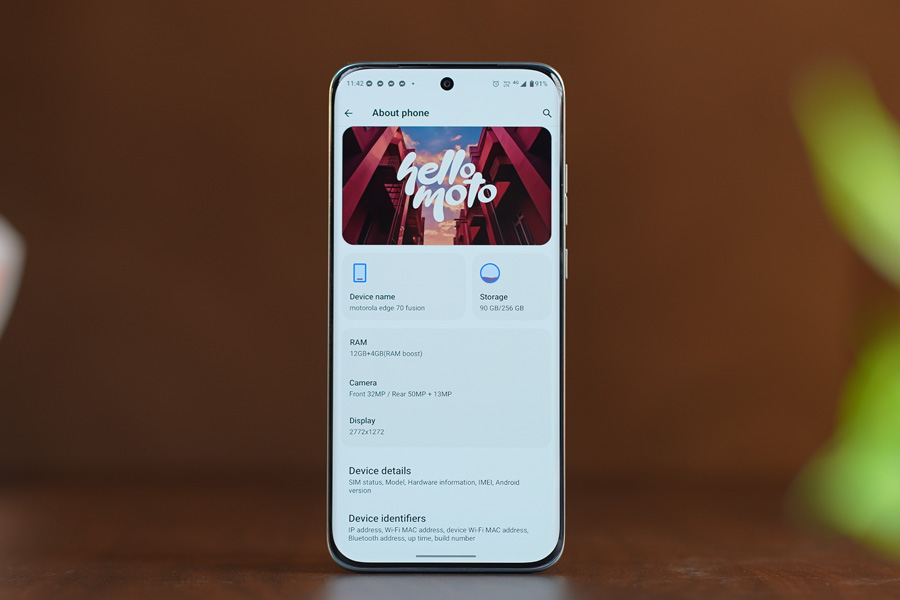
The company has also promised three major Android OS updates and five years of security updates, which is a welcome addition.
My only real complaint with Hello UI is the control centre. It looks quite outdated to me, almost like something from an Android phone released back in 2018. I wish Motorola would give it a more modern design.
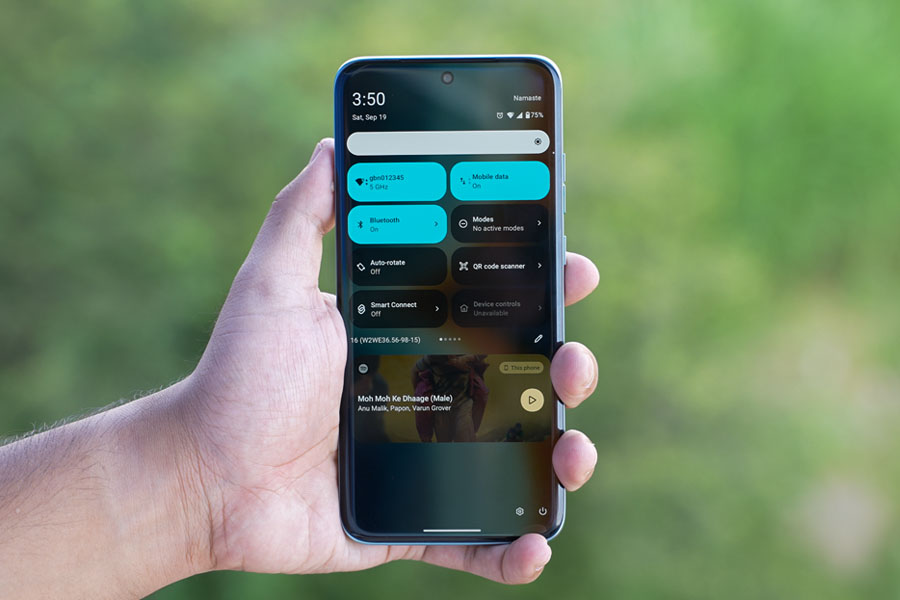
But apart from that, I am pretty satisfied with the software experience.
Performance and Gaming
- Qualcomm Snapdragon 7s Gen 4 (4nm)
- 12GB RAM, 256GB storage on the tested variant
- Adreno 810 GPU
For performance, the Motorola Edge 70 Fusion uses Qualcomm's Snapdragon 7s Gen 4 chipset, paired with 12GB of RAM on my unit.
Now, this isn't a particularly powerful processor for the price, especially if you care a lot about gaming or raw performance. But for regular everyday use, I found it more than capable.
Switching between different apps, multitasking, and navigating through the interface all feel smooth. The lightweight software also helps here, and I haven't experienced any noticeable stuttering during normal use.
In fact, the Edge 70 Fusion feels slightly faster and more responsive to me than the Redmi Note 17 Pro Max in everyday use.
Gaming Performance
Gaming, however, is a different story.
I tried games like PUBG Mobile, Call of Duty Mobile, and Genshin Impact, and I would describe the overall experience as average. It isn't particularly impressive, but it isn't bad either.

The phone can handle gaming, although it doesn't offer the kind of performance you would expect from a gaming-focused smartphone.
One thing I noticed was that the front of the phone, particularly around the display, gets slightly warm while playing games. I experienced similar warmth when using the camera continuously for a longer period.
For regular use, I didn't really notice this issue. It only became apparent when I pushed the phone a little harder.
So, if your main priority is smooth everyday performance, the Edge 70 Fusion does a good job.
Battery and Charging
- 7,000mAh silicon-carbon battery
- 68W TurboPower wired charging
- Charger included in the box
One of the most impressive things about the Edge 70 Fusion is how Motorola has managed to fit a massive 7,000mAh battery inside such a slim phone.
And thankfully, the battery life is just as good as you would expect.
During my usage, I could fully charge the phone in the morning, head out, and keep Wi-Fi, Bluetooth, and mobile data enabled throughout the day without worrying too much about the battery.
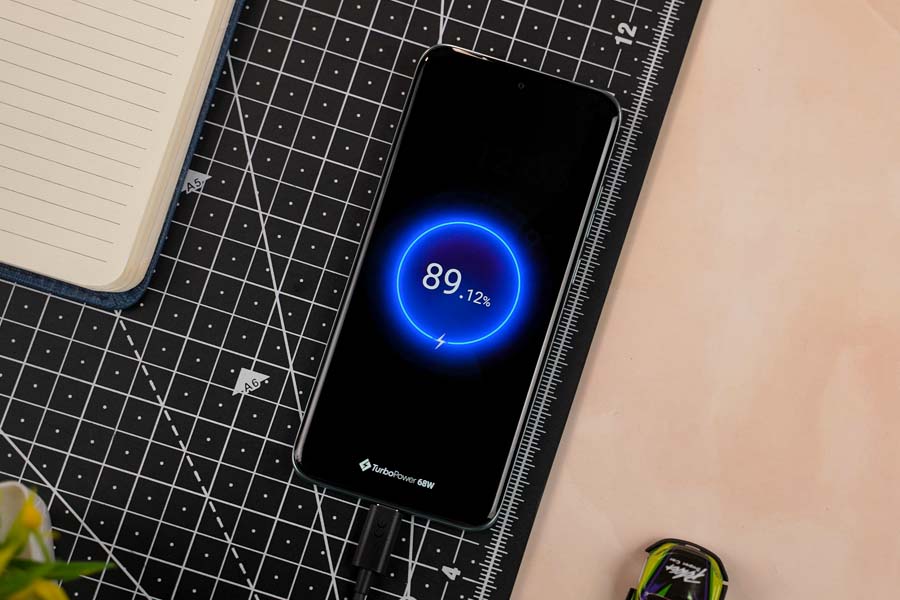
Even with heavy usage, I was comfortably getting around a day and a half of battery life.
With lighter, more normal usage, I believe this phone could stretch to around two days on a single charge.
For charging, Motorola officially lists 68W TurboPower support, and a charger is included in the box. However, I don't have a verified full-charging time from my testing to share here.
Overall, battery endurance is definitely one of the biggest reasons to consider this phone. You get excellent battery life without having to carry around an unnecessarily thick or heavy device.
Cameras
- 50MP Sony LYTIA 710 primary camera with OIS
- 13MP ultrawide camera with autofocus
- 32MP front camera
Moving on to the cameras, the Edge 70 Fusion has an interesting-looking rear camera module. At first glance, it might look like there are four cameras, but there are actually only two imaging cameras: a 50MP primary sensor and a 13MP ultrawide.
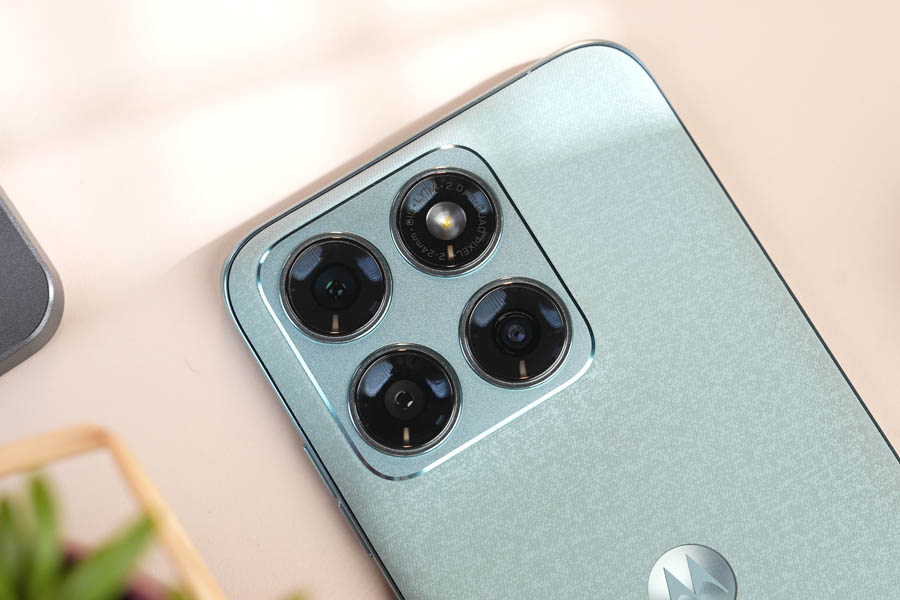
And sadly, there is no dedicated telephoto camera.
Main camera
Starting with the main camera, I was pleasantly surprised by its color reproduction.
Older Motorola phones often produced overly boosted and punchy photos, but that doesn't seem to be the case here. The colors are much better balanced this time around.
The pictures look pleasing and are pretty much ready to share on social media without much editing. Close-up shots also turn out nicely, with a natural-looking shallow depth of field that helps separate the subject from the background.
Overall, I think the primary camera is quite capable of handling everyday photography.
Ultrawide camera
Unfortunately, the ultrawide camera isn't as impressive.
Photos sometimes look a little overprocessed, and the dynamic range isn't particularly good in difficult lighting conditions. I also noticed that ultrawide shots often look brighter than the actual scene.
Because of this, the exposure isn't always consistent with the main camera, which becomes noticeable when switching between the two lenses.
One good thing, however, is that the 13MP ultrawide camera supports autofocus. This means you can also use it for macro photography, and I found the close-up macro results quite nice.
But for regular ultrawide photos, I would say the camera is just average.
Portraits and zoom
This is where I really missed having a dedicated telephoto camera.
The Edge 70 Fusion lets you take digitally cropped portraits at a 50mm equivalent focal length, but I wasn't impressed with the results.
The photos look quite contrast-heavy, and the edge detection is poor. The subject separation isn't particularly clean either.
And since there is no dedicated telephoto camera, you also have to rely on digital zoom for zoomed-in shots. This is one area where the Edge 70 Fusion falls behind phones with a dedicated telephoto lens.
Low-light photography
At night, the Edge 70 Fusion's main camera performs reasonably well.
It manages exposure quite nicely, and the photos retain a decent amount of detail. I wouldn't call the results exceptional, but they are perfectly acceptable for general nighttime photography.
The ultrawide camera, on the other hand, struggles quite a bit. I noticed considerable glare and lens flare in nighttime photos, while the details also appear very soft.
So, I would mostly stick to the primary camera when shooting after dark.
Selfies
The 32MP selfie camera is another area where I feel Motorola could have done a better job.
Selfies look a little too contrast-heavy and saturated for my liking. I wasn't particularly happy with the skin tone reproduction either.
On the positive side, the field of view is quite wide. You can comfortably fit three or four people into a group selfie, which is useful.
How does it compare to the Nothing Phone (4a)?
Compared to the Nothing Phone (4a), both phones have their strengths, but I would give the Nothing an advantage in a few camera areas.
Starting with the main camera, the Motorola produces slightly more vibrant photos, while the Nothing tends to have warmer tones. Personally, I prefer the Motorola's more neutral colour reproduction, although both deliver pleasing results.
However, the Edge 70 Fusion's ultrawide photos can look overprocessed, with inconsistent exposure. Portraits are also noticeably better on the Nothing Phone (4a), thanks to cleaner edge detection and a more pleasing perspective. Plus, its dedicated telephoto camera delivers better zoom shots, something the Motorola lacks.
Overall, I prefer the Motorola's main camera colors, but the Nothing Phone (4a) has the upper hand in portraits and zoom photography.
Videography
Interestingly, the Edge 70 Fusion does a better job when it comes to video recording.
You can record 4K videos at 30fps using both the main and ultrawide cameras, which is a nice advantage.
The main camera delivers good details, while the ultrawide footage isn't quite as sharp. Still, having the option to record 4K videos using both lenses is useful.
The front camera also supports 4K 30fps video recording, and I found the sharpness and colours to be decent.
In comparison, the Nothing Phone (4a) doesn't offer 4K 30fps recording through its ultrawide or selfie cameras.
So, when it comes to video capabilities, I would give the Motorola a slight advantage. But for photography, especially portraits and zoom shots, I still prefer the Nothing Phone (4a).
Motorola Edge 70 Fusion Review: Conclusion
Is the Motorola Edge 70 Fusion worth buying in Nepal?
At Rs. 69,999, I think the Motorola Edge 70 Fusion is actually one of the most balanced options available right now.
Honestly, there aren't many good smartphone options around this price in Nepal right now. The Vivo V70 FE is available for around Rs. 65,000, but I wouldn't call it a particularly balanced option. Samsung's Galaxy A27 and Galaxy A37 are also quite average for their prices. The Nothing Phone (4a), which was previously my favourite balanced option, has become more expensive. And the Redmi Note 17 Pro Max feels a little too expensive for a Redmi phone.
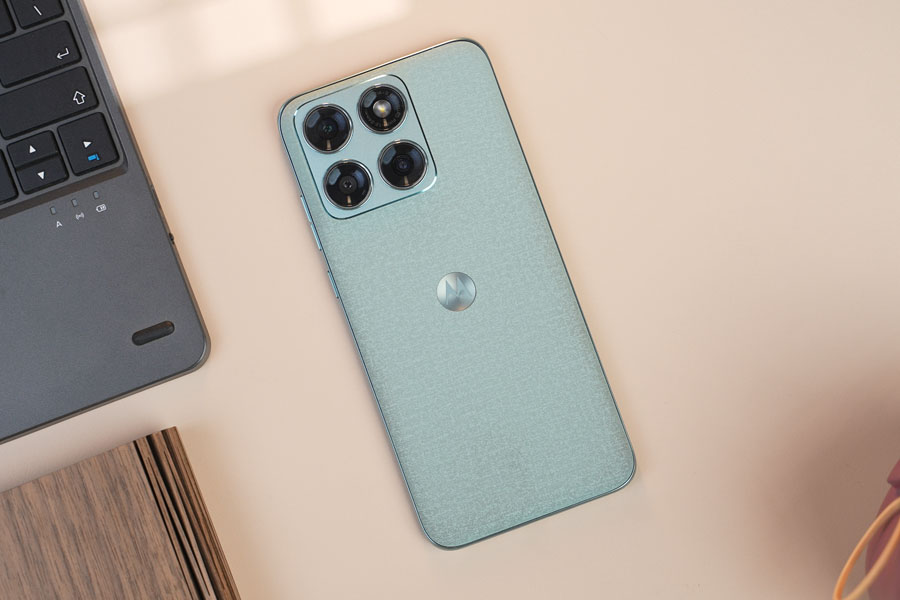
So, this is where the Edge 70 Fusion makes sense. What I particularly like about it is that it gets the everyday experience right. You get a big battery, a slim and handy design, an excellent AMOLED display, and a clean and smooth software experience. These are some of the things that make it a pretty balanced phone.
Of course, there are compromises. Gaming performance is only average, and I really wish Motorola had included a telephoto camera. Portraits, ultrawide photos, and selfies could have been better too.
Yes, Rs. 69,999 is a little expensive, but then again, which phone isn't expensive these days? Prices have gone up across pretty much every segment, so considering the current market, I don't think the Edge 70 Fusion is a bad option at all. If cameras or gaming aren't your biggest priorities, it's definitely worth considering.
Motorola Edge 70 Fusion Review: Pros and Cons
| Pros | Cons |
|---|---|
| Slim, comfortable design | Average gaming performance |
| Excellent AMOLED display | No telephoto camera |
| Clean and smooth Hello UI | Inconsistent secondary cameras |
| Excellent battery life | Slight heating during demanding tasks |
| Good main camera and video recording | Outdated-looking control centre |
Article Last updated: November 3, 2026