Here are some of the best action cameras you can buy in 2026.
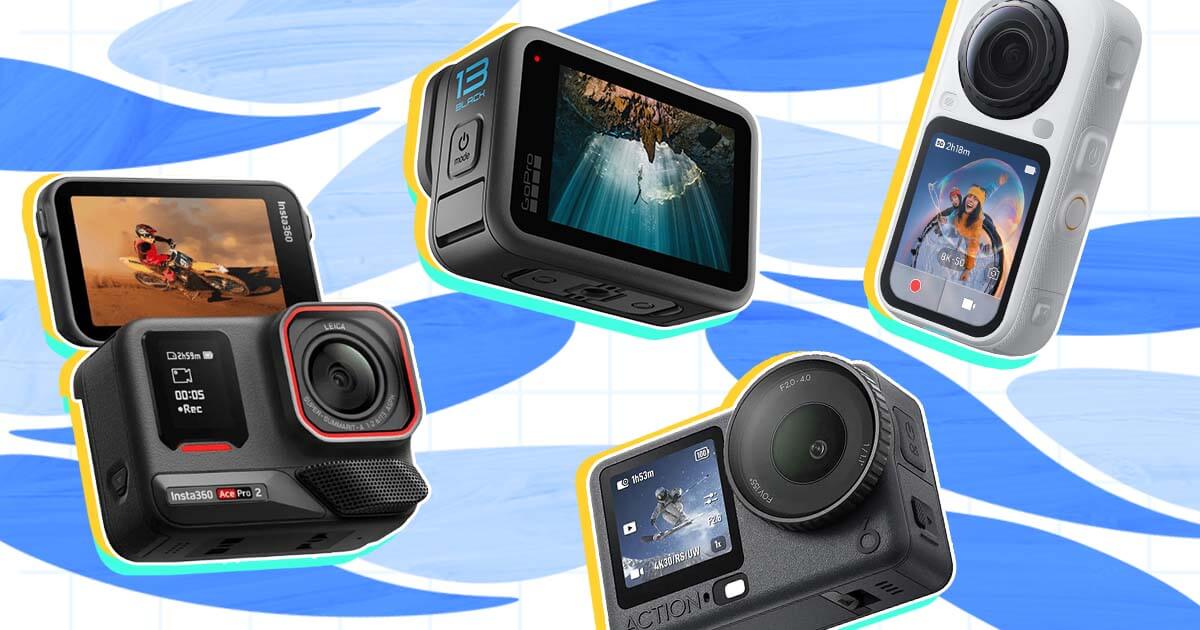
If you are into outdoor or adventurous activities like trekking, motorcycling, cycling, and more, you might want to capture those experiences along the way. An action camera is a practical option for this, thanks to its compact design, rugged build, and strong stabilization. And with newer models offering features like 360-degree recording, you can now capture a wider perspective and have more flexibility when editing your footage.
With so many action cameras available in Nepal, choosing the right one can be tricky, especially when you have to consider factors like image quality, stabilization, battery life, and price. So, which action camera should you buy in Nepal? In this article, we have put together our picks of the best action cameras available right now to help you find the one that best suits your needs and budget.
Oh! A little heads-up: you are going to find a lot of DJI and Insta360 models, as they are the prominent players in action cameras both globally and in Nepal.
How to choose an Action camera in Nepal
Choosing an action camera is not just about picking the newest or most expensive model. So, before jumping straight to the list of action cameras, let’s first understand the different types available in the market and how they differ.
What is an Action camera?
To put it simply, an action camera is a small, rugged camera designed to capture videos and photos during outdoor activities. Unlike regular cameras, they are built to handle movement, bumps, and different weather conditions. They also come with features like wide-angle lenses and image stabilization that help you capture smoother footage.
Their small size makes them easy to mount on helmets, motorcycles, bicycles, and other gear, making them a convenient choice for hands-free recording.
What is a 360 action camera?
Likewise, a 360 action camera is similar to a regular action camera, but as the name suggests, it can capture footage in every direction around you. It usually uses multiple lenses to record a 360-degree view, which you can then reframe from different angles while editing.
Action camera vs 360 Action camera
That said, while both are action cameras designed for outdoor action footage, they are different in many ways. Some of them are as follows:
| Features | Action Camera | 360 Action Camera |
| Video capture | Records in one direction | Records in all directions |
| Framing | Set the framing before recording | Choose the angle while editing |
| Video Quality | Higher sharpness, as full resolution is focused on a single view | Lower cropped sharpness because resolution is stretched over a full sphere |
| Lens | Flat lens | Protruding fisheye lenses |
| Durability | Lenses are generally easier to protect | Exposed lenses require more care |
| Ease of use | Simple to shoot and share | Requires more editing |
| Video editing | Minimal editing needed | More flexibility but takes more work |
| Best suited for | Vlogging, trekking, cycling, mountain biking etc. | Zip-lining, bungee jumping, paragliding etc |
| Advantage | Simple and straightforward | More freedom to choose the angle later |
Best Action cameras to buy in Nepal
DJI Osmo 360 II
Starting the list with the latest action camera available in Nepal is the DJI Osmo 360 II. It is not only the latest, but I can surely say it is among the best action cameras too. The Osmo 360 focuses on improving some of the areas that matter most when you are actually using a 360 camera for action. The dual 1/1.1-inch sensors now allow it to shoot at up to 8K@60fps, while the improved dynamic range helps retain more detail in both bright and dark areas. Its upgraded Super Night mode also makes it more capable when you are shooting in less-than-ideal lighting.
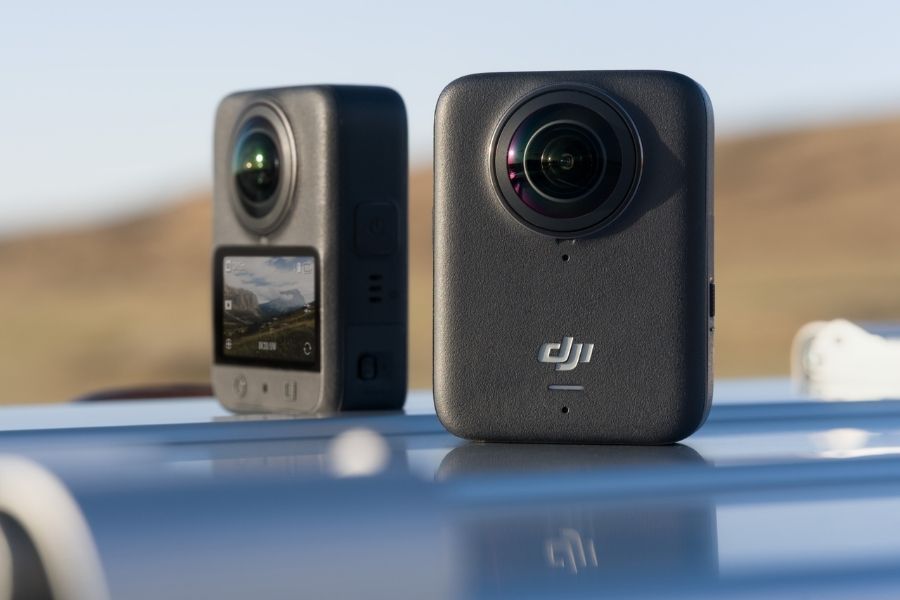
The most interesting and appreciated part about the camera is that DJI has finally added replaceable lenses. Since 360 cameras' lenses are exposed on both sides, they are much more prone to scratches and damage compared to a regular action camera. Being able to replace them makes the Osmo 360 II easier to move around with when talking about more demanding adventures. You also get 105GB of built-in storage, 4K 240fps slow motion, and features such as Spotlight Follow and Dual Recording for more flexible shooting.
That said, if you already have the first-gen Osmo 360, the upgrade is not dramatic, but 8K 60fps, better low-light performance, and replaceable lenses make it a more complete package. It also offers a strong alternative to Insta360’s X-series if you prioritize high-resolution recording and DJI’s shooting features, although Insta360 still has the more established editing ecosystem.
DJI Osmo 360 II Specifications:
- Dimensions: 61 x 36.3 x 81 mm
- Camera: Dual 1/1.1" 30.72MP sensors, f/1.9
- Display: 2.0-inch OLED, 556 x 314 pixels, 800 nits
- Video: 8K@60 fps / 6K@60 fps (360 mode), 4k@60 fps / 2.7K@60 fps (single lens mode)
- Stabilization: RockSteady 3.0, Horizon Steady
- Battery: Up to 100 minutes
- Waterproof: 10m (without case), 50m (with case)
- Storage: 105GB (expandable up to 1TB via microSD)
- Price in Nepal: NPR 91,500 (Standard), NPR 115,000 (Adventure combo)
DJI Osmo 360 II Pros and Cons
| Pros | Cons |
| Replaceable lens | Upgrade is less significant for existing Osmo 360 users |
| 8K@60 fps video recording and 4K@240 fps for slow motion | Its editing experience still isn’t as simple as Insta360’s |
| Improved low-light performance |
DJI Osmo Action 6
Okay, next on the list of the best action cameras is another DJI camera, the Osmo Action 6. When DJI first discussed the square sensor, there were many noises regarding how it wasn't going to be transformational. Fast forward, and everyone has now come to appreciate it greatly. However, many of those who do not know what a square sensor does. In essence, when you shoot once with a normal camera, you cannot change the vertical or horizontal format in post-production.
But through this, the footage provides you with both horizontal and vertical without any crop penalty. For anyone who posts on YouTube and Instagram, this will be a big deal. Which essentially means you no longer have to frame your shot twice, and you won't have to guess if you're centred for both.
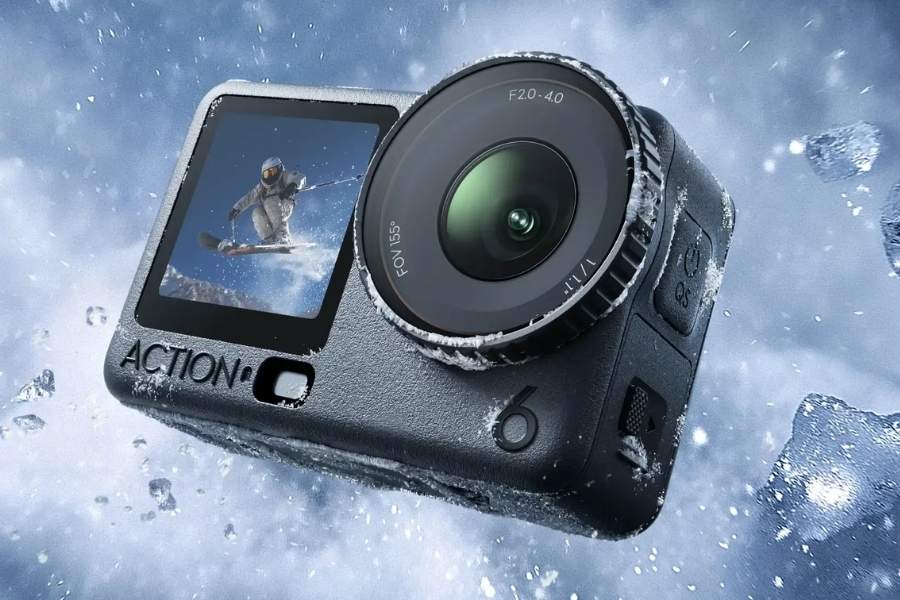
The variable aperture is the other thing that surprised me. f/2.0 to f/4.0, on an action camera, does some real work while pulling in twice the light. It handles low-light conditions better than the Ace Pro 2's bigger sensor, because this aperture does wonders when the sensor gap isn't huge. Honestly, the only knocks I have are that the Ace Pro 2 still wins for pure horizontal video, as that Leica look is still hard to beat, and the variable aperture takes a minute to learn for close-up shots. But at this price, it's the best value traditional action camera in this bunch, for sure.
DJI Osmo Action 6 Specifications:
- Dimensions: 47.2 x 72.8 x 33.1 mm
- Camera: 1/1.1" 38MP square sensor, f/2.0–4.0 variable aperture
- Display:
- Front: 1.46-inch OLED, 342 x 342 pixels, 800 nits
- Rear: 2.5-inch OLED, 400 x 712 pixels, 1,000 nits
- Video: 8K@30 fps, 4K@120, 2.7K@120 fps, 1080p@240 fps, D-Log M 10-bit colour
- Stabilization: RockSteady 3.0, RockSteady 3.0+, HorizonBalancing, HorizonSteady
- Battery: Up to 240 minutes
- Waterproof: 20m (without case), 60m (with case)
- Storage: 64GB (expandable up to 1TB via microSD)
- Price in Nepal: NPR 70,500 (Standard) / NPR 83,500 (Adventure combo)
DJI Osmo Action 6 Pros and Cons
| Pros | Cons |
| Deep waterproofing | Variable aperture needs attention for close-up focus in POV shots |
| 10-bit D-Log M colour gives real grading flexibility | No 360° capability |
DJI Osmo Nano
Next up on the list is the DJI Osmo Nano. It takes a different approach from conventional action cameras, and if you're thinking, how so? This guy, instead of focusing mainly on handheld or helmet-mounted shooting, is designed as a tiny wearable camera that can be attached magnetically to your clothes, a hat, or compatible mounts. This makes it useful for POV footage, vlogging, travel, and creative angles that would be difficult to capture with a regular action camera.
Despite its compact size, the Nano doesn’t fall too far behind standard action cameras in terms of video capabilities. It uses a 1/1.3-inch sensor and records up to 4K at 60fps, with 4K at 120fps available for slow-motion footage. You also get 10-bit color and D-Log M, which gives it more flexibility for editing than you might expect from such a small camera. Additionally, the camera comes with a vision dock that gives you a screen to monitor the camera remotely and also works as a controller, while the magnetic system makes it easy to change the camera’s position or shooting angle.
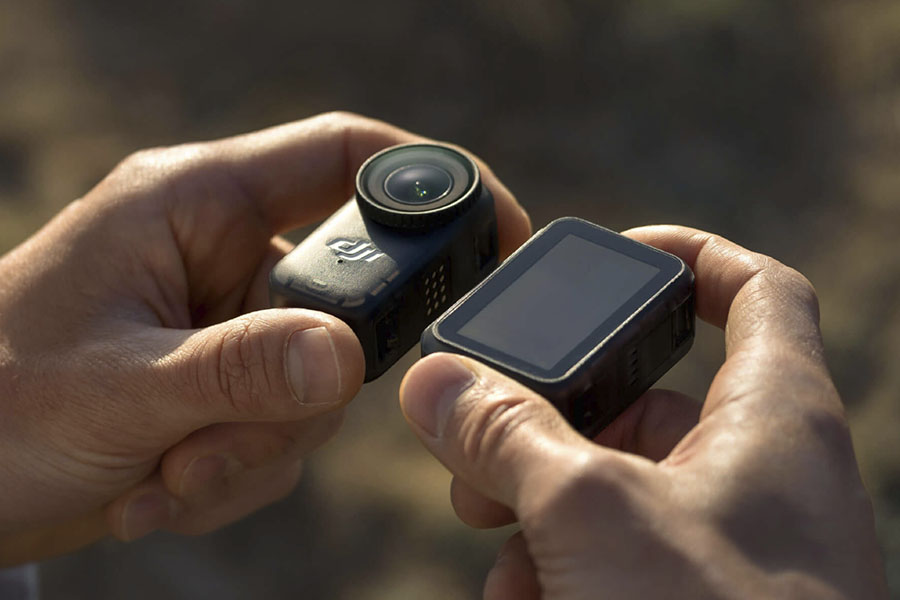
Overall, the biggest advantage you get with the Osmo Nano is the freedom to shoot from different perspectives where other action cameras like Osmo Action 6 or GoPro Hero 13 Black won’t be as convenient. But this also doesn’t mean that the Nano would be an obvious choice for everyone. If you are mainly into cycling or trekking, a larger model offers a more conventional experience. The DJI Osmo Nano makes sense if you are looking for a more compact wearable design and hands-free shooting.
DJI Osmo Nano Specifications:
- Dimensions: 29.5 x 57.3 x 28 mm, 42.2 x 59.1 x 22.3 mm (with vision dock)
- Camera: 1/1.3" 35MP sensor, f/2.8 aperture
- Display: 1.96-inch OLED, 556 x 314 pixels, 800 nits
- Video: 4K@120 fps, 10-bit D-Log M
- Stabilization: RockSteady 3.0, HorizonBalancing
- Battery: Up to 90 minutes, up to 200 minutes (with vision dock)
- Waterproof: 10m, IPX4 rating (vision dock)
- Storage: 64/128GB (expandable up to 1TB via microSD)
- Price in Nepal: NPR 56,999 (Standard)
DJI Osmo Nano Pros and Cons
| Pros | Cons |
| Compact and wearable design | Less suited to traditional action camera shooting |
| Magnetic mounting allows for more creative perspectives | Standalone camera battery life is limited |
| Useful for POV and hands-free shooting | Vision Dock is important to the overall experience |
Insta360 Go Ultra
Moving on, we have the Insta360 Go Ultra, which is a fair competitor to DJI; however, it now appears as if it has lost some of its original charm. The first Go series worked because it was tiny, cheap, and it was one of the reasons it was appealing to many. Now, at the price it comes, none of that’s true. You’re paying flagship money for a camera that uses a new proprietary mount, which breaks compatibility with every GoPro-style setup you already own. There’s no adapter in the box, so you’ll need to spend more just to make it work with what you’ve got.
That said, the camera itself is pretty impressive. The new 1/1.28" sensor handles low light better than the Go 3S. The fast charging is also quite fast, and now you also get a microSD slot. The most useful thing for us was the fact that using the magnetic pendant, chest mount, and clip made it supremely easy to get shots in tricky spots. But underwater footage is still tricky, as the bundled lens blurs things unless you buy the Aqua Lens separately.
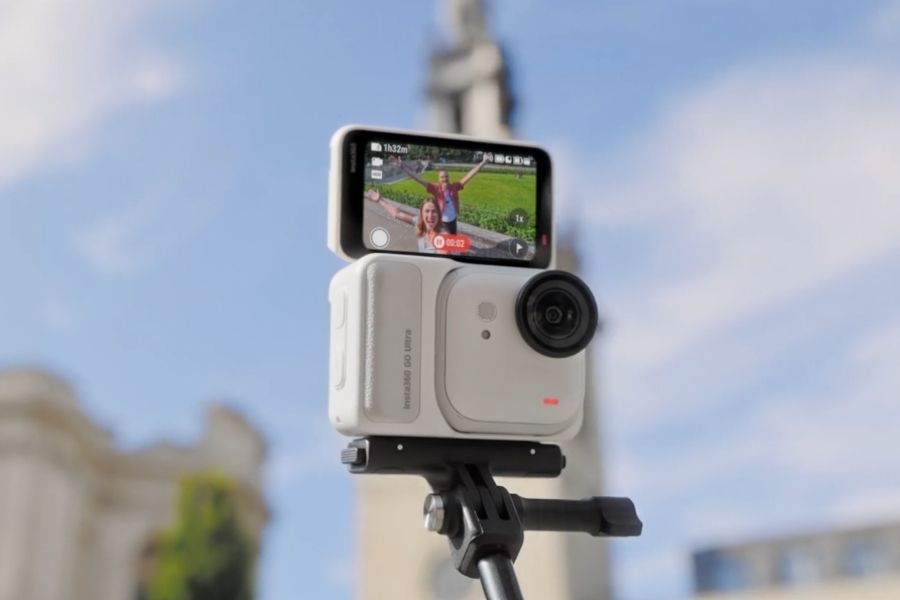
On the plus side, the Action Pad (the part that also acts as a battery and control hub) now includes its own display. That lets you see essential settings and preview what you’ve captured easily, which makes the GO Ultra feel more like a modular action camera as you get more battery life and a much easier way to adjust things on the fly. Overall, it’s still great as a secondary camera for creators, but as a solo purchase at this price, it might not make much sense.
Insta360 GO Ultra Specifications:
- Dimensions: 46 x 18.3 x 45.7 mm, 70.4 x 33.3 x 48.8 mm (action pod)
- Camera: 1/1.28" 50MP sensor, f/2.85 aperture
- Display: 2.5-inch Flip Touchscreen (built natively into the action pod)
- Video: 4K@60 fps, 2.7K@120 fps, 1080p@240 fps; Active HDR (4K@30 only)
- Stabilization: FlowState Stabilization, 360° Horizon Lock
- Battery: Up to 70 minutes, up to 200 minutes (with Action Pod)
- Waterproof: 10m / IPX8 rating (camera pod), IPX4 rating (action pod)
- Storage: microSD (up to 2TB)
- Price in Nepal: NPR 72,500 (Standard combo) | NPR 85,000 (Creator combo)
Insta360 GO Ultra Pros and Cons
| Pros | Cons |
| Small form factor | Waterproof only with default lens — underwater shots need paid Aqua Lens |
| FlowState stabilization remains rock solid | Image quality is softer than Ace Pro 2 or Osmo Action 6 at the same price |
| Mounts anywhere nothing else can | Active HDR locked to 4K30 while competition offers 4K60 HDR |
Insta360 Ace Pro 2
Another Insta360 action camera you can buy in Nepal is the Ace Pro 2. It is often regarded as an action camera trying to beat GoPro at its own game. And in some ways, it still feels like that. The GoPro’s sales have been declining year after year, while competitors like DJI and Insta360 continue to grow. Both DJI and Insta360 appear to be investing heavily in R&D, whereas GoPro seems largely stuck with its existing approach.
Anyway, the mounting system this action camera uses is Insta360's magnetic latch instead of the standard GoPro fingers, which means if you have a drawer full of old mounts, you'll need to use the included adapter. It definitely works, no doubt about that, but it was also my problem to keep track of that one extra piece. On the other hand, it also features a flip-up screen, which has long been beloved in action cameras for its usefulness. But in the meantime, it also adds a little thickness compared to the Osmo Action 6.
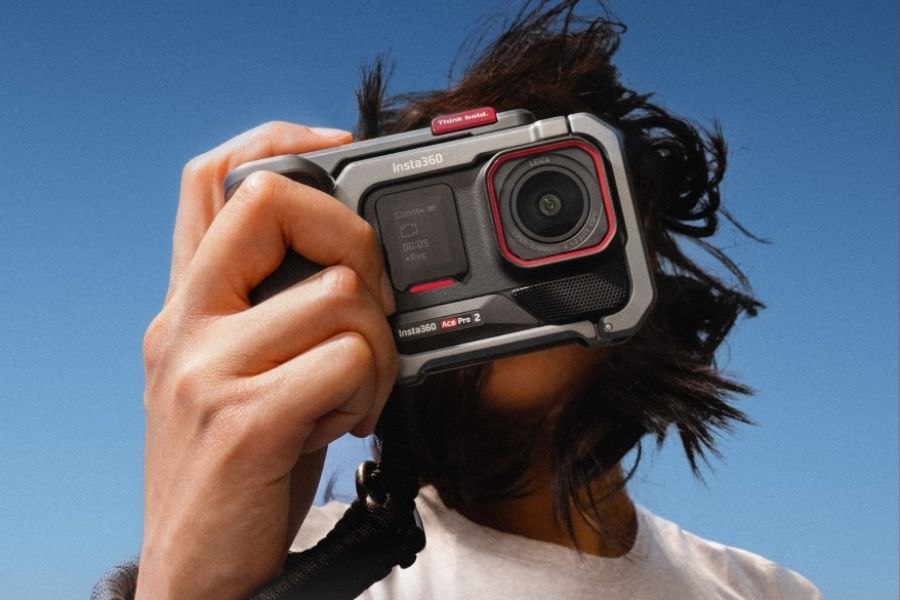
That said, once you actually use it, the Ace Pro 2 is also unique on its own. The Leica-tuned optics, far from being marketing fluff, produce pretty nice output. The highlights, on the other hand, hold together in bright sun where a GoPro would blow out, and shadows in mixed light stay detailed longer than what I've gotten from the Osmo.
The colour science here is also quite punchy and not cartoonish as I had expected before. Audio is also pretty usable without an external mic, which I can't say for half this list. The only reason I'd point someone toward the Osmo Action 6 is the square sensor for multi-platform reframing. For everything else, including low-light, vlogging, and image quality, the Ace Pro 2 has quietly become the standard.
Insta360 Ace Pro 2 Specifications:
- Dimensions: 71.9 x 38 x 52.2 mm
- Camera: 1/1.3" 50MP sensor, Leica optics, f/2.6
- Display:
- Front: 2.5-inch Flip Touchscreen, 96 x 128 pixels, 900 nits
- Rear: 2.5-inch Flip Touchscreen, 440 x 696 pixels, 900 nits
- Video: 8K@30 fps, 4K@120 fps, PureVideo low-light mode
- Stabilization: FlowState Stabilization, 360° Horizon Lock
- Battery: Up to 180 minutes
- Waterproof: 12m (without case), 60m (with case)
- Storage: microSD (up to 1TB)
- Price in Nepal: NPR 70,499 (Standard combo), NPR 82,499 (battery combo), NPR 89,999 (Xplorer combo)
Insta360 Ace Pro 2 Pros and Cons
| Pros | Cons |
| Best image quality of any traditional action cam in this list | Proprietary magnetic mount needs an adapter for GoPro accessories |
| 4K120 slow-motion that genuinely looks great | No 360° capability |
| Flip-up screen makes vlogging dead simple | No square sensor, can't reframe for vertical after the fact |
| Usable audio without an external mic |
Insta360 X5
If we move back a little to the older generation of action cameras, the Insta360 X5 is well worth considering. It is the first 360-degree camera that successfully avoids obvious design compromises. Earlier models offered limited options, forcing creators to make tough trade-offs like accepting poor low-light performance, fragile fixed lenses, or short battery life. However, the X5, in my experience, deviates from many of those. Interestingly, it has dual 1/1.28-inch sensors, which are also 144% larger than the X4’s. Because of this, the low-light performance in this action camera is also very clean. Perhaps the most useful feature is InstaFrame mode, which records both a standard 16:9 or 9:16 clip alongside the full 360 footage.
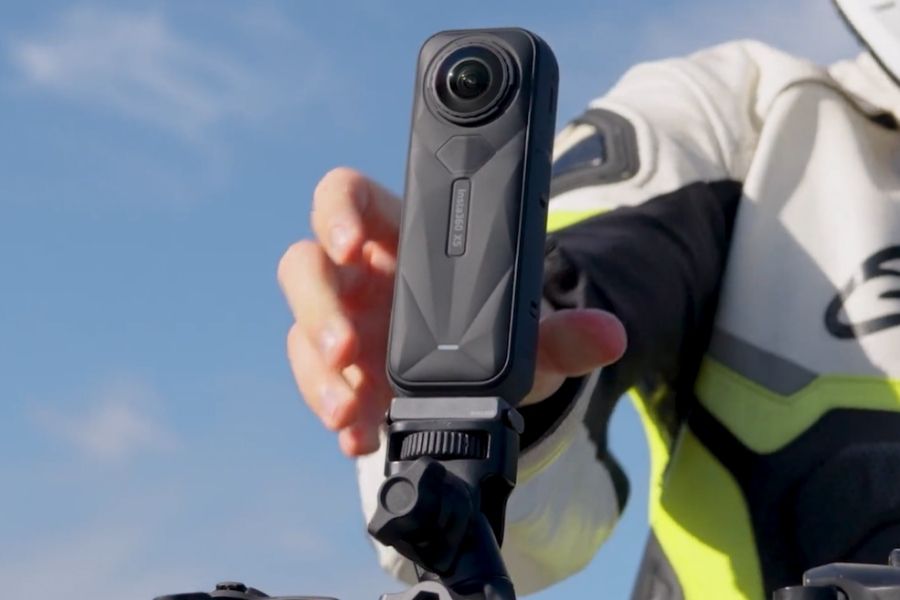
Similarly, there is also Active HDR at 60fps, which preserves detail on fast-moving subjects in high-contrast light, such as waterfalls or sun-dappled trails. Other than that, the X5 has improvements that are worth looking at. The 15-metre waterproofing, 185-minute battery in endurance mode, and wind-reducing microphone are some of them, if I had to name them. And by the way, the lenses are also replaceable without any specialised tools.
This is one of the most expensive cameras we have on our list, but overall, I think the price difference with the X4 makes sense. And the benefits, such as better low-light performance, lens flexibility, dual-stream recording, and faster HDR, make it worth purchasing.
Insta360 X5 Specifications:
- Dimensions: 46 x 124.5 x 38.2 mm
- Camera: Dual 1/1.28" 72MP sensors, f/2.0
- Display: 2.5-inch LCD, 400 x 696 pixels
- Video: 8K@30 fps / 5.7K@60 fps / 4K@120 fps (360 mode), 4k@60 fps / 2.7K@60 fps / 1080p@120 fps (single lens mode)
- Stabilization: FlowState Stabilization, 360° Horizon Lock
- Battery: Up to 208 minutes
- Waterproof: 15m
- Storage: microSD (up to 1TB)
- Price in Nepal: NPR 94,500 (Standard), NPR 114,000 (Essential combo)
Insta360 X5 Pros and Cons
| Pros | Cons |
| InstaFrame records flat + 360° simultaneously | Chunky |
| Replaceable lenses in two minutes | Editing still leans heavily on the Insta360 app for best results |
| Active HDR at 60fps, not locked to 30 like competitors |
DJI Osmo 360
Continuing the list, the DJI Osmo 360 is one of those cameras that I often recommend to my friends. It comes with dual 1/1.1" sensors, an f/1.9 aperture, and a Super Night mode. All of these features make sure the low‑light footage looks clean most of the time. The 8K at 50fps is also worth looking at, especially when most 360 cams only do 30fps, through which you get a smooth 50% slow‑motion that is useful whenever one tries to reframe. Similarly, the OSMO 360 also supports 10‑bit D‑Log M color, which gives you grading room that Insta360 often does not match. There's also built‑in 105GB storage, which ended up being more convenient than I expected.
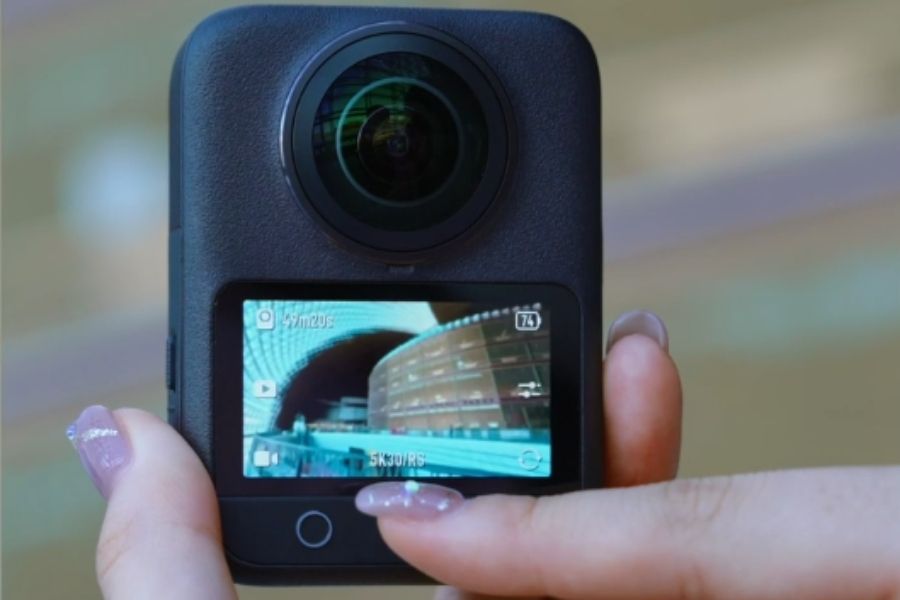
However, there are still a few compromises compared with the newer and more expensive options. The non-replaceable lenses are a real concern at this price, while the software experience is not quite on par with Insta360. DJI Mimo does the basics, but it lacks some of the creative one-tap effects found in Insta360's app.
So, if you want a high-quality 360 camera and don't necessarily need the latest model, the Osmo 360 remains a compelling option at its lower price. You get strong image quality, 8K/50fps recording, and useful features like D-Log M and built-in storage, while accepting the fixed lenses and less polished software experience.
DJI Osmo 360 Specifications:
- Dimensions: 61 x 36.3 x 81 mm
- Camera: Dual 1/1.1" 30.72MP sensors, f/1.9
- Display: 2.0-inch OLED, 556 x 314 pixels, 800 nits
- Video: 8K@50 fps / 6K@60 fps / 4K@100 fps (360 mode), 5K@60 fps / 4K@120 fps / 2.7K@120 fps (single lens mode), 10-bit D-Log M colour
- Stabilization: RockSteady 3.0, HorizonBalancing
- Battery: Up to 190 minutes
- Waterproof: 10m (IP68)
- Storage: 128GB (expandable up to 1TB via microSD)
- Price in Nepal: NPR 87,500 (Adventure combo)
DJI Osmo 360 Pros and Cons
| Pros | Cons |
| 105GB available internal storage, no need to panic about SD card | App ecosystem significantly behind Insta360 |
| Adventure Combo includes charging case and extra batteries | Heats up after 20–25 min of continuous 8K recording |
DJI Osmo Action 5 Pro
Likewise, the DJI Osmo Action 5 Pro is one of the most well-rounded action cameras you can get right now. It uses a 1/1.3-inch sensor that delivers good image quality in daylight while also handling low-light scenes better than most traditional action cameras. It also supports 4K at 120fps, 10-bit D-Log M recording, and DJI’s RockSteady stabilization, giving you plenty of flexibility whether you’re shooting travel videos, cycling, or everyday content.
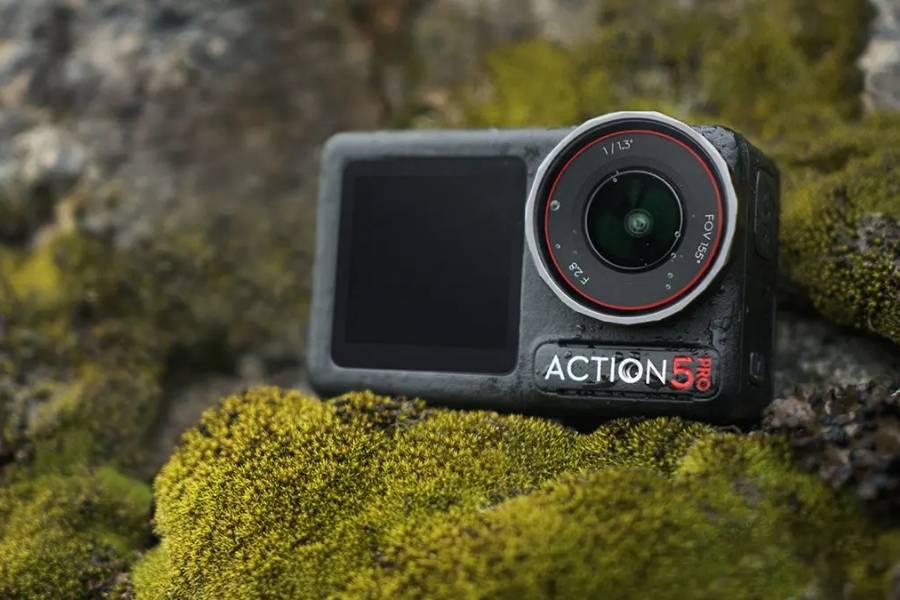
Another feature I particularly like is its subject tracking, which can keep you centered in the frame while vlogging. The camera is also waterproof up to 20 meters without a case and has a 1950mAh battery with fast charging, so it is well suited to longer outdoor shoots. And if you already use DJI’s wireless microphones, the integration makes getting better audio considerably easier.
Overall, the Action 5 Pro is a strong choice if you want an action camera that can do a little bit of everything. It may not have the newest hardware anymore, but its image quality, stabilization, battery life, and 10-bit recording still make it a very capable option for both casual users and content creators. And if you are looking for an alternative, the Insta360 Ace Pro 2 is worth checking out, especially if 8K recording isn’t a priority.
DJI Osmo Action 5 Pro Specifications:
- Dimensions: 44.2 x 70.5 x 32.8 mm
- Camera: Dual 1/1.3" 40MP sensors, f/2.8
- Display:
- Front: 1.46-inch OLED, 342 x 342 pixels, 800 nits
- Rear: 2.5-inch OLED, 400 x 712 pixels, 800 nits
- Video: 4K@120 fps, 2.7K@120 fps, 1080p@240 fps, 10-bit D-Log M colour
- Stabilization: RockSteady 3.0, RockSteady 3.0+, HorizonBalancing, HorizonSteady
- Battery: Up to 240 minutes
- Waterproof: 20m (without case), 60m (with case)
- Storage: 64GB (expandable up to 1TB via microSD)
- Price in Nepal: NPR 52,500 (Standard combo), NPR 70,800 (Adventure combo)
DJI Osmo Action 5 Pro Pros and Cons
| Pros | Cons |
| Large 1/1.3-inch sensor with good low-light performance | Subject tracking limited to 2.7K |
| Excellent stabilization and HorizonSteady | 4:3 recording is not available in every shooting mode |
| Fast charging and long battery life | |
| DJI Mic 2 and Mic Mini support |
DJI Osmo Action 4
Talking about the previous generation, we can’t skip the Osmo Action 4, as it still deserves to be on the list if you want a capable action camera without spending on the latest model. Its 1/1.3-inch sensor delivers good image quality, particularly in challenging lighting, while features like 4K@120fps, 10-bit color, and RockSteady stabilization give you plenty of flexibility for different types of shooting. The built-in color temperature sensor is also useful when shooting in Auto, as it helps maintain more consistent colors when lighting conditions change.

Additionally, I liked how practical the Action 4 is. It supports the DJI Mic 2 directly over Bluetooth, so you can use the microphone without a receiver, while its 18-meter waterproofing makes it suitable for more demanding outdoor use. The fast charging is another nice touch, with the camera reaching up to 80% in around 18 minutes.
All in all, while the Action 5 Pro brings some upgrades, the Action 4 still covers the basics pretty well and makes sense if you are looking for a capable alternative at a lower price.
DJI Osmo Action 4 Specifications:
- Dimensions: 44.2 x 70.5 x 32.8 mm
- Camera: 1/1.3" 10MP sensors, f/2.8
- Display:
- Front: 1.4-inch LCD, 320 x 320 pixels, 750 nits
- Rear: 2.25-inch LCD, 360 x 640 pixels, 750 nits
- Video: 4K@120 fps, 2.7K@120 fps, 1080p@240 fps, 10-bit D-Log M colour
- Stabilization: RockSteady 3.0, RockSteady 3.0+, HorizonBalancing, HorizonSteady
- Battery: Up to 160 minutes
- Waterproof: 18m (without case), 60m (with case)
- Storage: microSD (up to 512GB)
- Price in Nepal: NPR 40,500 (Standard combo), NPR 55,000 (Adventure combo)
DJI Osmo Action 4 Pros and Cons
| Pros | Cons |
| Large 1/1.3-inch sensor with good low-light performance | No built-in GPS |
| Reliable stabilization | No built-in storage |
| Built-in color temperature sensor | Low-light performance still has its limitations |
| Direct Bluetooth support for DJI Mic |
Insta360 X6
Finally, the latest model coming soon in Nepal is the Insta360 X6. It brings a pair of larger 1/1.1-inch sensors that should help capture more detail, particularly when lighting gets difficult, while the ability to shoot 8K at 50fps gives you more flexibility when reframing and cropping your footage. You can also switch to single-lens mode for more conventional action-camera footage, including 4K at 120fps for slow-motion shots.
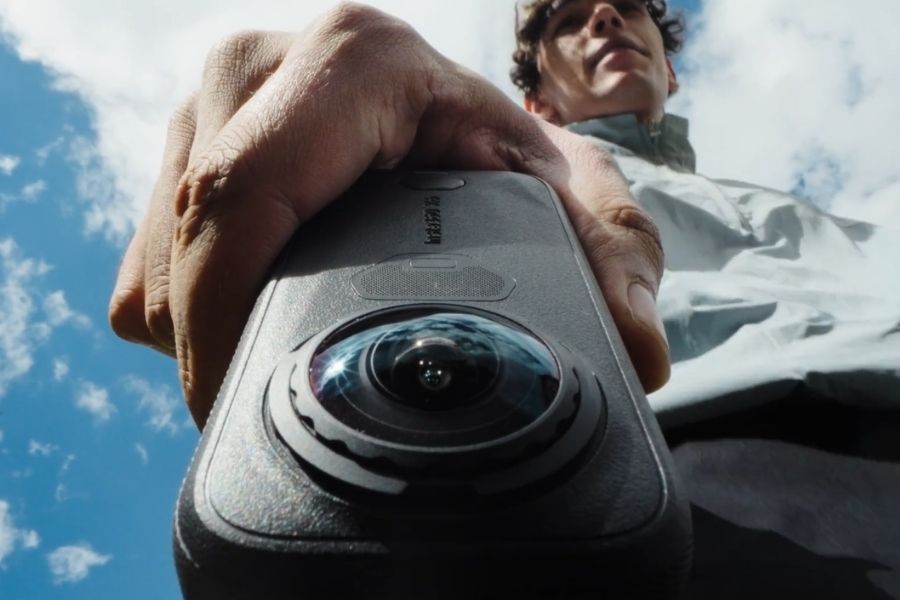
Moreover, it comes with an InstaFrame 2.0, which lets you record a ready-to-share flat video while keeping a 360-degree version of the same shot as a backup. This means you don’t have to decide how you want to frame a shot before recording—you can simply capture it and decide later. In terms of storage, the X6 has 47GB of built-in storage, so you can start recording even without a microSD card. Its 2,600mAh battery is rated for up to 140 minutes of 8K/30fps recording, while the camera is waterproof up to 20 meters without a case.
As said before, the X6 is not available in the local market now. But it is expected to arrive soon, with an estimated starting price of NPR 144,999 for the Standard bundle, so I can certainly say it's not a budget option. Still, if you specifically want a high-end 360 camera, the X6 is one worth keeping an eye on when it officially lands here.
Insta360 X6 Specifications:
- Dimensions: 50 x 26.4 x 100 mm (without lens), 50 x 40 x 100 mm (with lens)
- Camera: 1/1.1" 120MP sensors, f/2.0
- Display: 2.32-inch OLED, 480 x 600 pixels, 1,200 nits
- Video: 8K@50 fps / 6K@60 fps / 4K@100 fps (360 mode), 5K@60 fps, 4K@120 fps / 2.7K@120 fps (Single lens mode), 10-bit Log, Dolby Vision
- Stabilization: FlowState Stabilization, 360° Horizon Lock
- Battery: Up to 140 minutes
- Waterproof: IP68 rating / 20m (without case), 60m (with case)
- Storage: 47GB (expandable up to 1TB via microSD)
- Expected price in Nepal: NPR 144,999 (Standard combo), NPR 179,999 (Creators combo)
Insta360 X6 Pros and Cons
| Pros | Cons |
| 8K@50fps 360-degree video, 120MP 360-degree photos | Bulky form factor |
| InstaFrame 2.0 | Some advanced shooting modes require additional accessories |
| 20m waterproofing and IP68 rating | Exposed dual lenses |
Best Action Cameras in Nepal (Summary)
| Action Camera | Model | Price in Nepal |
| DJI Action camera | Osmo 360 II | NPR 91,500 (Standard) |
| NPR 115,000 (Adventure combo) | ||
| Osmo Action 6 | NPR 70,500 (Standard) | |
| NPR 83,500 (Adventure combo) | ||
| Osmo Nano | NPR 56,999 (Standard) | |
| Osmo 360 | NPR 87,500 (Adventure combo) | |
| Osmo Action 5 Pro | NPR 52,500 (Standard) | |
| NPR 70,800 (Adventure combo) | ||
| Osmo Action 4 | NPR 40,500 (Standard) | |
| NPR 55,000 (Adventure combo) | ||
| Insta360 | Go Ultra | NPR 72,500 |
| NPR 85,000 (Creator combo) | ||
| Ace Pro 2 | NPR 70,499 (Standard) | |
| NPR 82,499 (Battery Combo) | ||
| NPR 89,999 (Xplorer combo) | ||
| X5 | NPR 94,500 (Standard) | |
| NPR 114,000 (Essential combo) | ||
| X6 (Upcoming) (Expected price) | NPR 144,999 (Standard) | |
| NPR 179,999 (Creators combo) |
Article Last updated: September 21, 2026